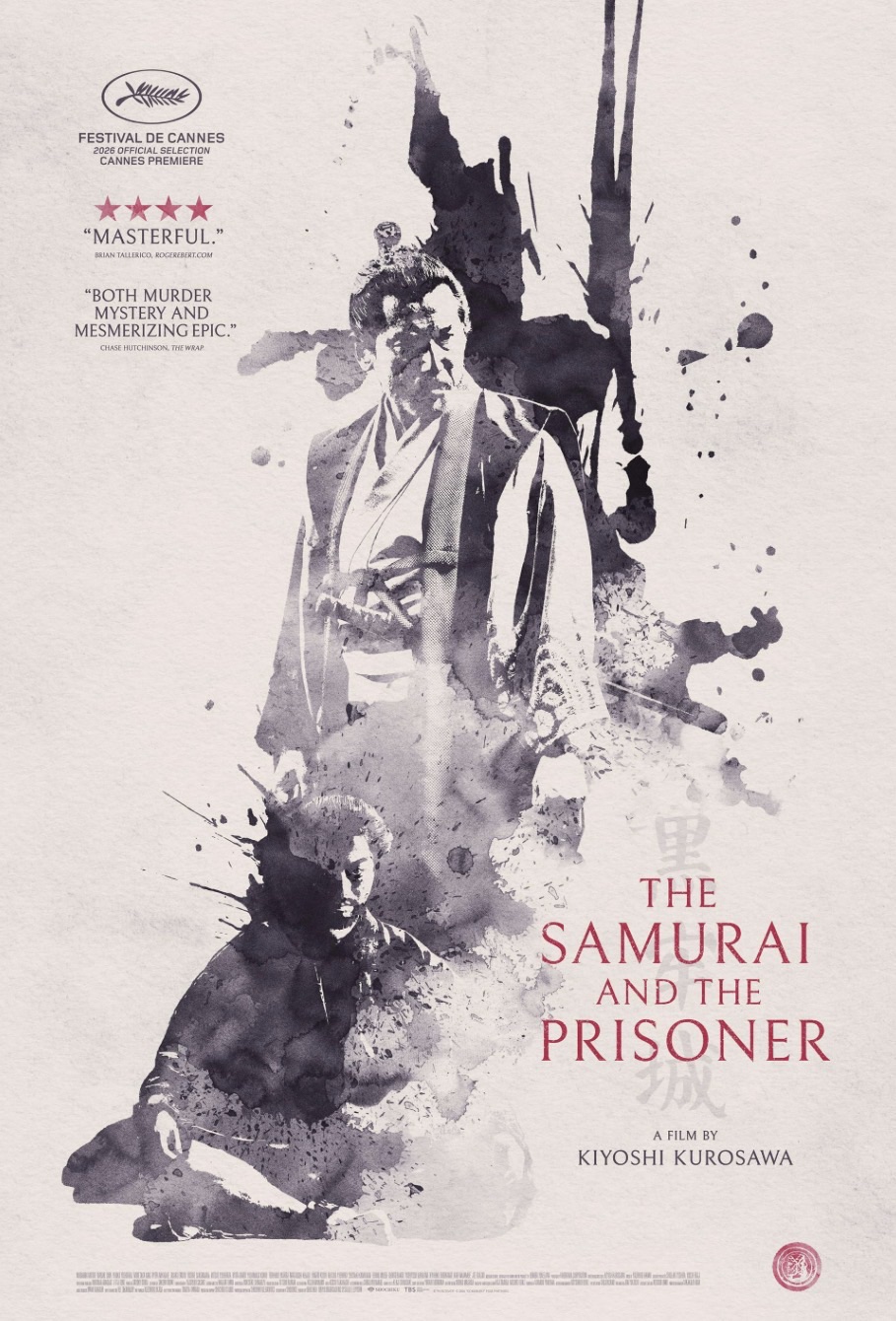
I haven’t enjoyed a movie so much since I saw Oppenheimer in theaters. The Samurai and the Prisoner is a tense, moody, perfectly paced whodunnit set in the Warring States period in Japan. The story is based by the Yonezawa Honobu novel of the same name, which is based (loosely) in turn on a real mystery: Why did Araki Murashige, the by all accounts benevolent and wise Lord of Settsu, first take a brave and risky stand against Oda Nobunaga in 1578, then imprison his emissary and famous strategist, Kuroda Kanbei, when he came to sue for peace—then, after withstanding a 10-month siege of his castle by Oda’s forces, suddenly abandon it, fleeing to safety in Harima and leaving his family and retainers to the mercy of Oda’s revenge?
Kurosawa Kiyoshi’s (no relation to the famous director) take on what actually went down in the flickering corridors and austere gardens of Arioka Castle during those 10 months is a masterclass in ambivalence: not in terms of what happens, which is clearly plotted and, for the most part, tidily resolved—but rather in terms of why it happens. Almost immediately after Kuroda is imprisoned, a series of perplexing murders haunt the besieged castle. Araki must solve these mysteries before they drive his retainers—and his wife, whose mental health wasn’t super-solid to begin with—mad. So, he’s forced to turn again and again for help to the one person least likely to give it—the brilliant strategist he’s holding prisoner in his dungeon. Surprisingly, Kuroda is only too willing to help; however, with each solution he proffers, he leads Araki further and further down a psychological path of no return. His motivations, as well as Araki’s (who’s no idiot) in going along with it, and Lady Araki’s, and the retainers’—these all remain as murky as the depths of Arioka’s oubliette. Or, more accurately, they’re all double-edged, like a Chinese sword. Even in the final scene, you’re not sure which way Araki’s and Kuroda’s intentions are cutting. Maybe both ways.
The acting by Motoki Masahiro (Araki), Suda Masaki (Kuroda), and the rest of the cast is top-notch, and it’s a gorgeous film to boot—best seen on the big screen, but since it had a very limited North American run, more likely to pick up on streaming services when it becomes available there.
 The Rookery