TL;DR: not a whole heckuva lot—it’s mostly about the fineness of the grind and whether the corn has been nixtamalized or not. But for the fine print, read on….
If you try to cook even a little bit outside the box, you’ve run into this issue before. You’ve found yourself staring at a recipe that calls for polenta on the one hand and a slightly dusty bag of grits or coarse cornmeal on the other and thought, could I?
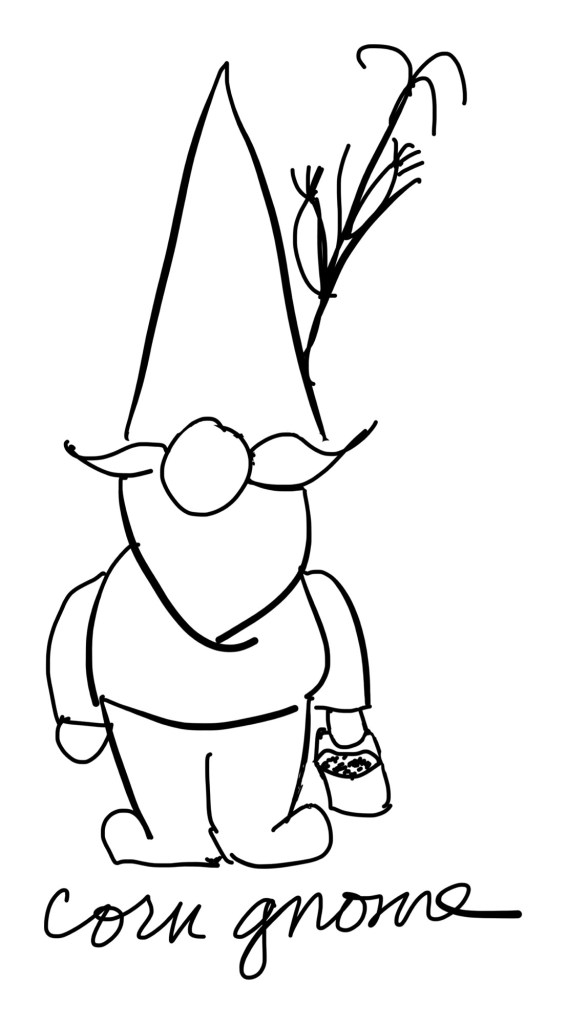
For the most part, yes, you can. I used to believe that grits were specifically and only the germ of the corn kernel, but that’s not really true—traditionally, they’re coarsely ground whole dent corn, including the germ. It is true that the vast majority of the time, that corn has been nixtamalized, meaning it’s been boiled with an alkalizing agent (like wood ash or lime) that loosens the hull and softens the kernel, making it easier to grind into a consistent meal. The corn is then hulled, dried, ground, and sifted: the smaller pieces are sold as cornmeal and the larger as grits. It just so happens that the outer layer (endosperm for the botany nerds) of the kernel tends to fracture more easily and get sifted out as cornmeal, leaving more of the germ behind as grits. It’s not like there are Corn Gnomes painstakingly separating out the whole germ of each kernel and putting it in a grits bucket.
Roughly the same process happens with polenta, though it’s generally made from yellow flint corn while grits come in all colors. If they’re blue, and you’re in New Mexico, you’re probably looking at atole. As I’ve written about before, we eat atole as a porridge (like grits or soft polenta). In Mexico, meanwhile, atole is a drink made with a finer masa (see below) that comes out something like a thick horchata. Porridge-style atole was originally called chaquewe by the Pueblo Indians in whose diet it was a staple (among many other maize-based foods, like the super-fascinating and very difficult to make piki bread).
So, there you go. Really there are 2 things you need to watch out for when making various cornmeal substitutions:
- If a recipe calls for “cornmeal,” it wants fine or medium-fine-ground corn. If you use polenta or grits (or coarse cornmeal) in these recipes, the starches in the pieces won’t gelatinize in the allotted cooking time, and instead of a tender crumb you’ll end up with a sandy, crunchy result.
- If a recipe calls for “masa,” you shouldn’t substitute plain cornmeal. Masa (masa harina) is always made with nixtamalized corn, very finely ground, so that the starches will gelatinize within the minute or so that a tortilla is on the griddle. If you’ve got some grits around, you could throw them in the food processor and try to grind them to a flour-like consistency as a substitute for masa. But honestly it’s probably faster to drive to the grocery store and buy masa…. Once you do, if you’re not making tortillas on the daily, freeze the leftover masa in an airtight container; nixtamalized corn goes rancid really quickly.
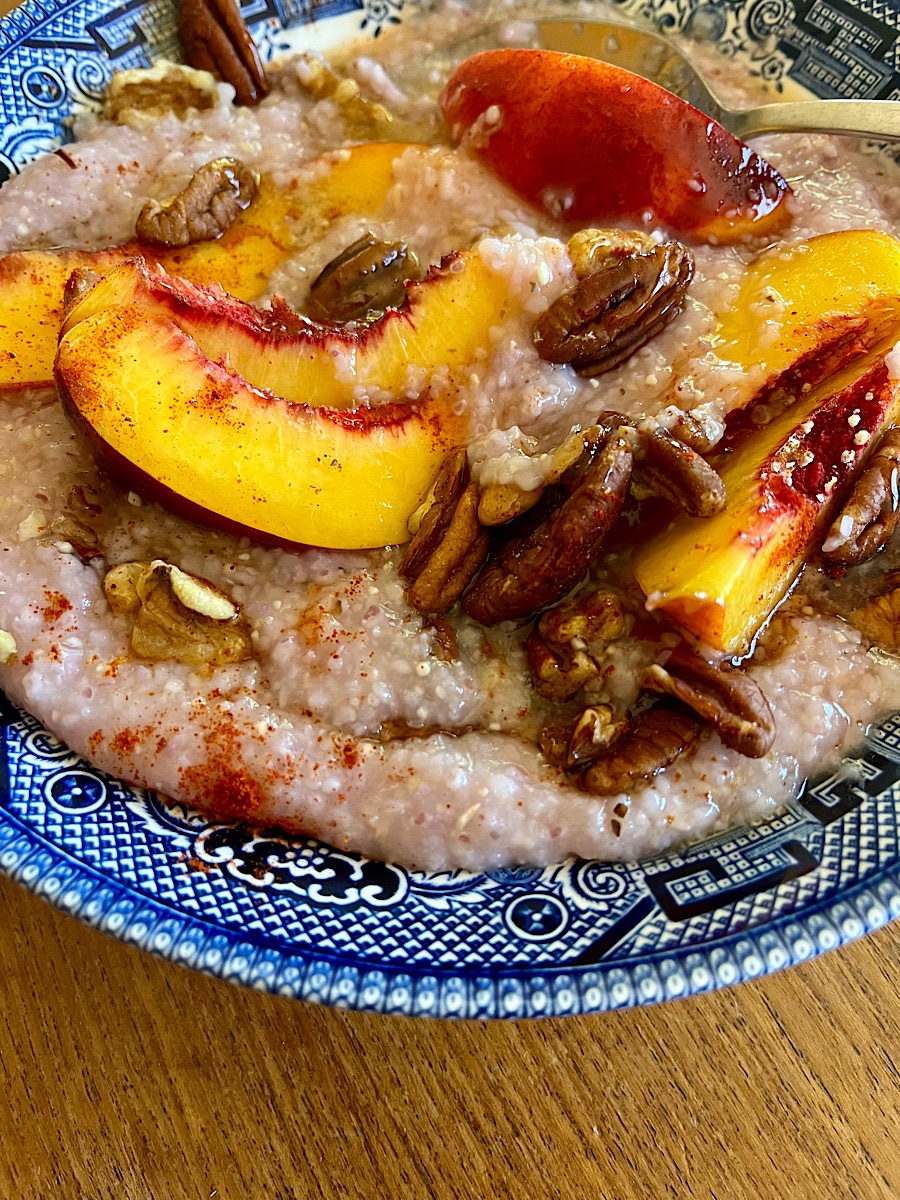
BTW those are Unicorn grits up there from Marsh Hen mill, a very cool traditional mill on Edisto Island. They have an amazing floral aroma in addition to the natural orchid coloration. I had them with peaches, honey, butter, pecans, and of course a little chile molido because you can take the girl out of New Mexico but….
 The Rookery