During the process of being discarded by my ex-husband, the toughest part to wrap my head around was how, in his head in the space of a week or so, I could go from his beloved wife–whom he posted glowing pictures of and tributes to on social media, whom he told how lucky he was to have her and that she was the most beautiful woman in the world–to a thing he wanted nothing to do with, that he couldn’t even look at, that clearly revolted him. You should have seen his face a week after discard when I looked at him, tears in my eyes, and pleaded with him, “I love you!” It looked like he was trying hard not to throw up in his mouth.
Of course if you’re a normal human being, this is devastating–particularly if you have any self-esteem or attachment issues (which I did). You think, whether you want to or not, “See, I was right all along, in spite of everything my beloved said and did to the contrary all those years: I really am worthless.” The bewilderment of this switch happening basically overnight only adds to the anguish. For about two weeks, I felt like someone had literally torn my chest open. (Believe it or not, it’s actually a medical condition: Broken Heart Syndrome.)
As I recovered over the following months and did a lot of study and therapy, this fact dawned on me: there was never a switch. My husband had never grasped me as a full, complex human being, separate from himself, with both good and bad traits. Most days I was just a human-shaped mirror he saw himself reflected in: if it was a good day, I was the most beautiful, wonderful woman on the planet; it it was a bad day, I was an obnoxious brat he wanted to get as far away from as possible. If he did manage to really focus and concentrate, he could occasionally see and hear me as myself. But even then, he still wasn’t able to integrate the pleasant and unpleasant aspects of my personality. I was either a pin-up girl with a PhD or a snotty, fat bitch.
Experts call this kind of narcissistic behavior “splitting” and say it’s a coping mechanism for dealing with childhood abuse or neglect: the child splits off the part of themselves that their caregiver doesn’t like, the “shadow self,” and rejects it in order to maintain their ego. But the opportunity cost there is that they fail to develop an integrated sense of self; thus, they can’t understand anyone else as integrated beings either.
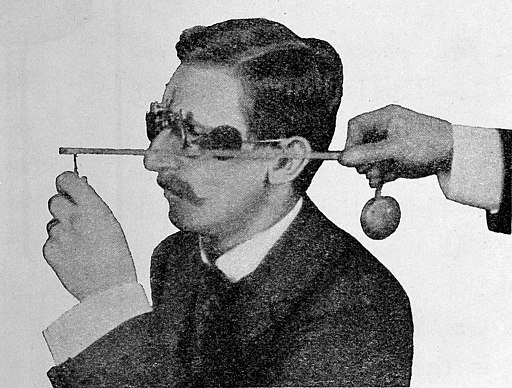
The way I understand it is like emotional depth perception or stereovision. Narcissists never develop it; so, emotionally speaking, they move through a flat, two-dimensional, black-and-white world. It’s like they navigate through life with one eye closed. So, if another person’s mood changes or they do something unexpected, the narcissist can’t grasp this as a normal emotional pivot; to them it’s like the person they were dealing with suddenly disappears, and a different person is standing there–one they don’t like. They have no ability to connect or integrate the rich, variable emotional states a single human can present; they can’t do it inside themselves, and they can’t do it in other people. I know one narcissist, not my ex-husband, in whom this disability is so pronounced that he literally cannot remember bad things he’s done. When you confront him with one of them, he looks genuinely shocked and says how hurt he is that you would fabricate something like that–and he’s telling the truth because he doesn’t have emotional access to his shadow self; he walled it off, like Fortunato in “The Cask of Amontillado,” when he was very young in order to survive his abusive father.
So, though it hurt, I had to acknowledge that my ex-husband never loved me the way I thought he did. He loved a two-dimensional pin-up of me–one that looked an awful lot like his own best qualities…. Admitting this helped me deal with the discard, once I recognized the disability my ex-husband was going through life with, this emotional monovision. It wasn’t that he didn’t love me the way I needed to be loved; it was that he couldn’t. Honestly, he probably did the best he could to be a good husband as long as he could; and then he couldn’t do it anymore. That doesn’t excuse what he did, but it does explain it to some degree, and that helps.

