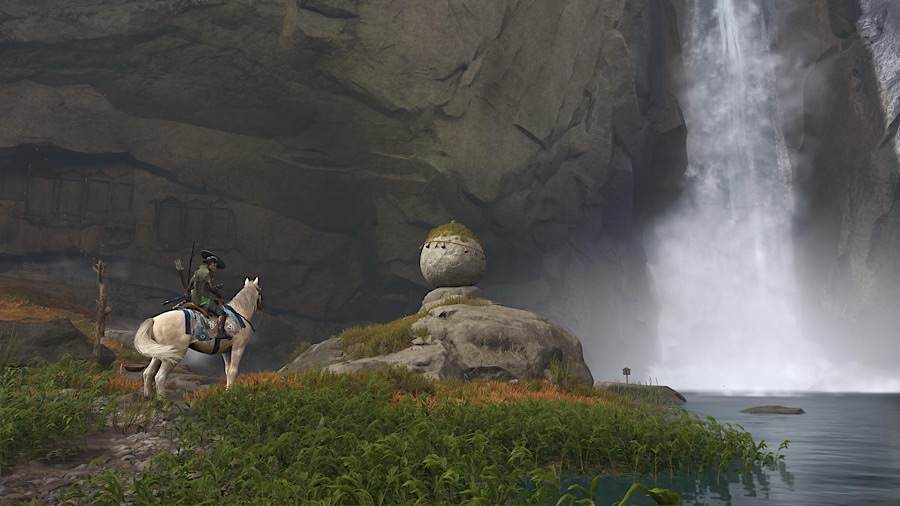
I was pretty conflicted about playing this game. Don’t get me wrong: I *loved* Ghost of Tsushima, but for reasons that had nothing to do with the main point of the game, i.e., killing people. I loved riding my horse through the jaw-dropping landscape, taking screen-caps of the jaw-dropping landscape, soaking in hot springs, writing haiku, petting foxes, and changing my outfits so that I looked *fly*. I didn’t love the arterial spray, no matter how justified by the narrative arc and actual history. And Ghost of Yōtei was looking to be more of a bloodbath for less reason—namely, revenge. I’m just not a vengeful person at heart, so I have trouble ginning up the motivation to spend 70+ hours on a $70 game just to get back at imaginary people for imaginary crimes to my imaginary family. Not to mention that we all know by now that I’m not great at combat, and GOY was advertising a more complex combat system than GOT, which I greatly struggled with for at least the first half of the game.
But, obviously I ended up playing GOY, so let’s dispense with the naysaying and move on to why I loved it.
What it’s about: Um, revenge. Atsu’s family was killed by the Saito clan for betraying them in ways that honestly never become completely clear. Something about Atsu’s father, Kengo, who is an unparalleled swordsmith, refusing to continue to work for Lord Saito’s retainers, the Yōtei Six, after it becomes clear to him that their goal is not the liberation but the domination of his homeland of Ezo (Hokkaido). At any rate, whatever it was, Lord Saito is so butt-hurt about it that he slaughters Kengo’s entire family, or thinks he does…. Atsu escapes south to the mainland, and spends the 15-ish years honing her revenge skills by serving as a mercenary, including for the losing side at Sekigahara. Then, she heads back north to Ezo to cross some names off her list. Literally. With a bloody katana blade. Yep, it’s a Kurosawa-style Western, folks—an Udon Western, if you will, with a snowy pile of grated melodrama on top to rival Mt Yōtei itself. Atsu has written six names on her sash (actually, you have—one of several ingenious uses of the D-pad on the PlayStation 5 controller): the Snake, the Oni, the Kitsune, the Spider, the Dragon, and Lord Saito himself. And she has no plans to live through it, at least in the beginning.
Gameplay: AAA open-world action-adventure, a little less combat-focused than Ghost of Tsushima, at least at first. Sucker Punch stated in gameplay previews that they wanted to give the player more latitude in choosing their adventure. There are a few more activities to do than in GOT—wolf dens, zeni-hajiki (gambling) tables that are surprisingly entertaining, bounty hunting, camping and cooking, meeting a “Wolf Pack” of NPC allies, locating hidden altars of reflection to unlock your skill trees, fun little Easter eggs at hot springs. And the enemies give you more breathing room to enjoy all of this, at least in the first act. I was so relaxed during this part of the game that I wondered if I were really still in the Ghost franchise. Fear not, if that’s not your jam: In later acts the gameplay gets more linear and kill-y.
A note on the combat system: It is definitely more complex than GOT, with more weapons and more skill trees. And CAVEAT LECTOR: BEYOND HERE THERE BE SPOILERS you don’t get some clutch abilities and weapons from GOT until quite late in the game (focus hearing, how I missed thee). When I first heard about all this complexity, plus the ability to pick up dropped weapons from enemies and throw them, I thought, Oh no, I’m going to die. And I did die, a lot, but honestly about the same as or less than in GOT. Part of my improvement can likely be chalked up to playing on a PS5 controller instead of on PC with mouse-and-keyboard. But truthfully I really took to the thrown-weapons mechanic, and I customized my armor loadouts to exploit this knack. In general, I would say you have more flexibility in GOY to create combat builds that suit your play style, and they’re all pretty well balanced—whether you want to rush in headlong and standoff everyone (with an assist from your wolf friend), or you want to put on your sneaky pants and assassinate outlaws from rooftops, or you want to light up an encampment from a nearby cliff with ranged weapons. Somehow it felt more intuitive to me to switch melee weapons to match opponents (in what one reviewer aptly called a lethal game of rock-paper-scissors) than switching stances did in GOT. But that might just have been the controller again. What I could never sort out for the LIFE of me was ranged weapons v. thrown things like kunai v. thrown things like bombs. Maybe I could have customized the locations of these better on the right and left pads? Who knows? What I know for sure is the number of times I got plastered while trying to remember where the heck my pistol went. Whatever assignment logic the designers used was opaque to me and only got worse as weapons got added to the slots.
What I loved:
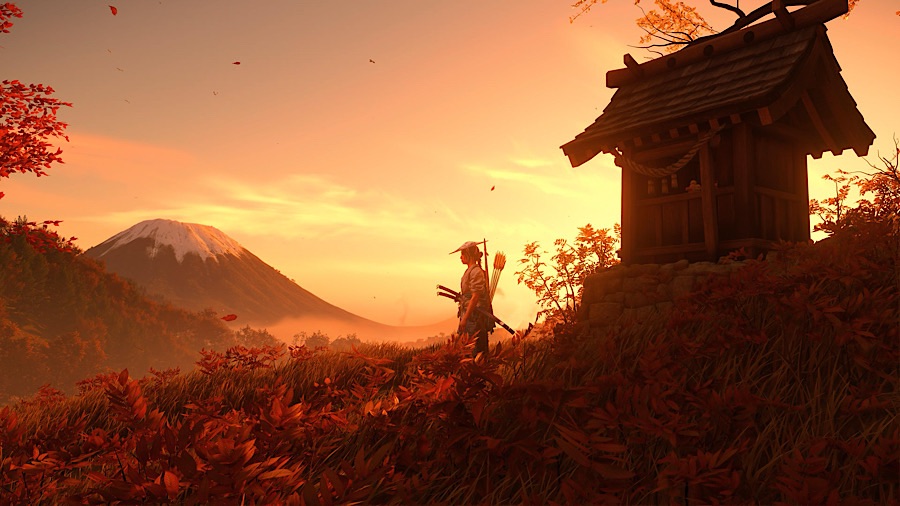
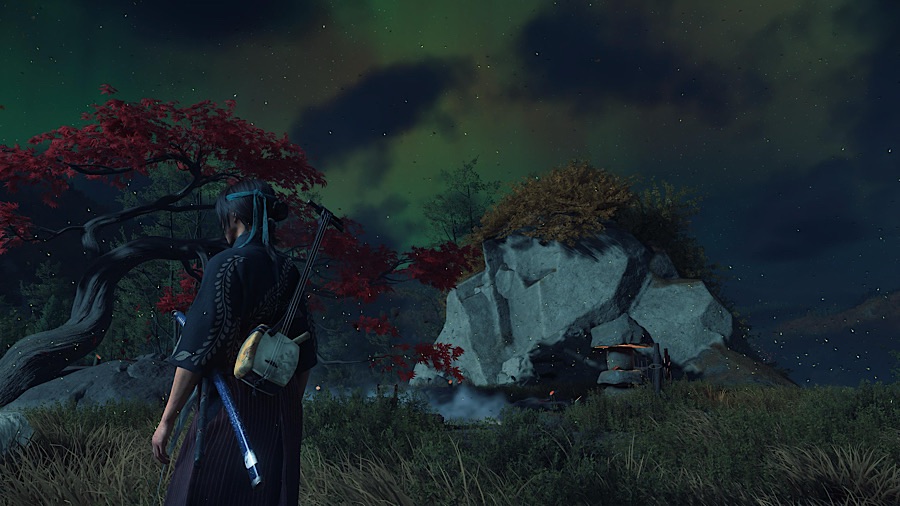
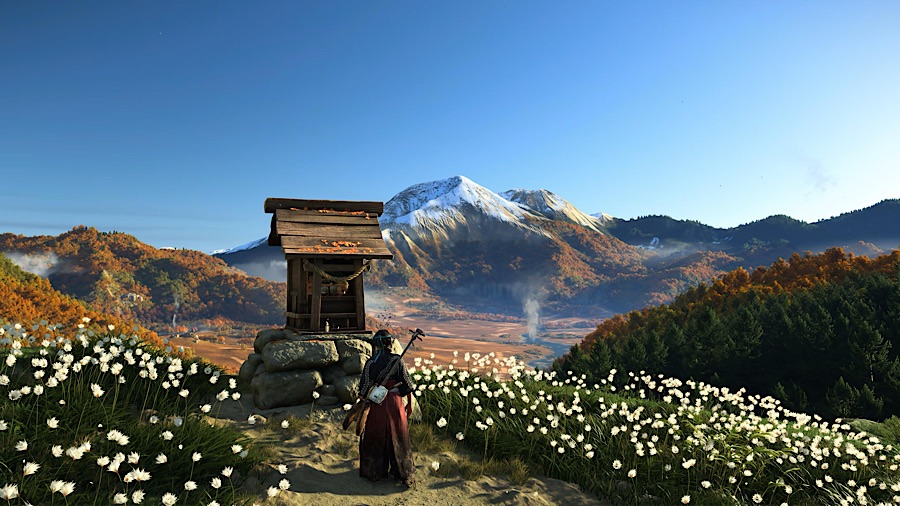
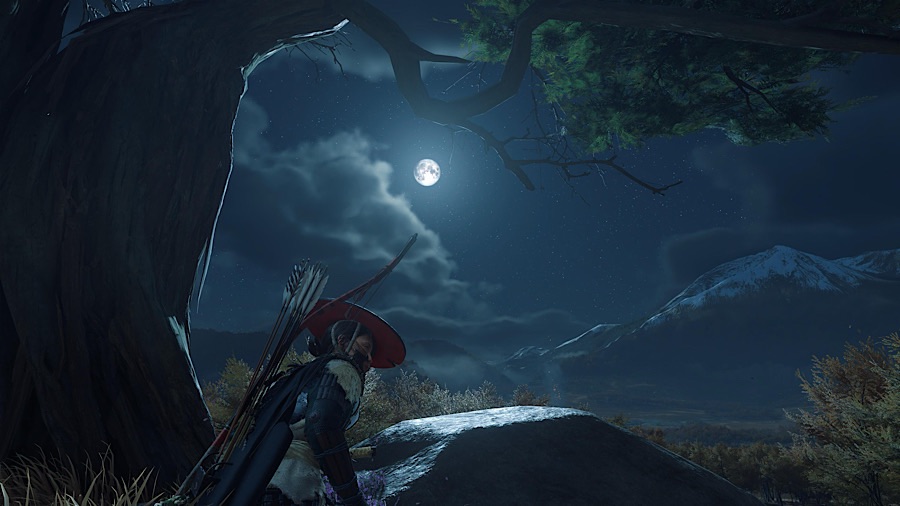
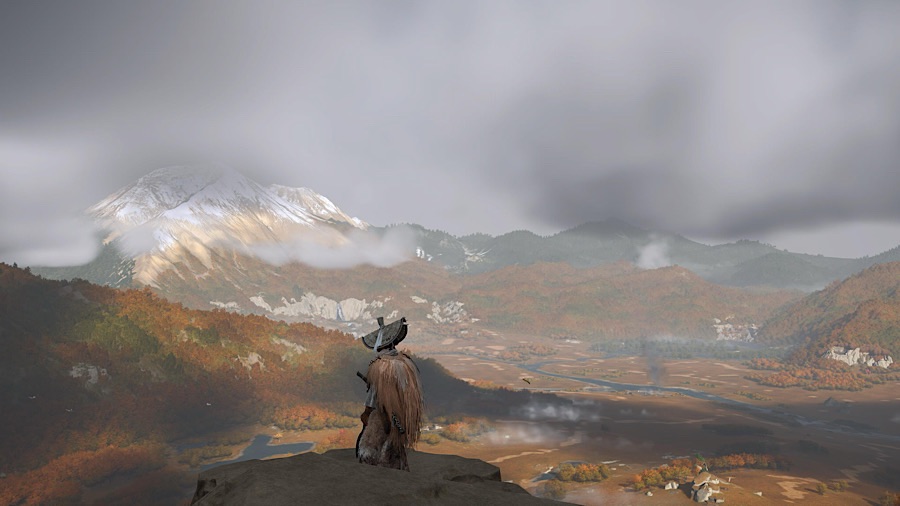
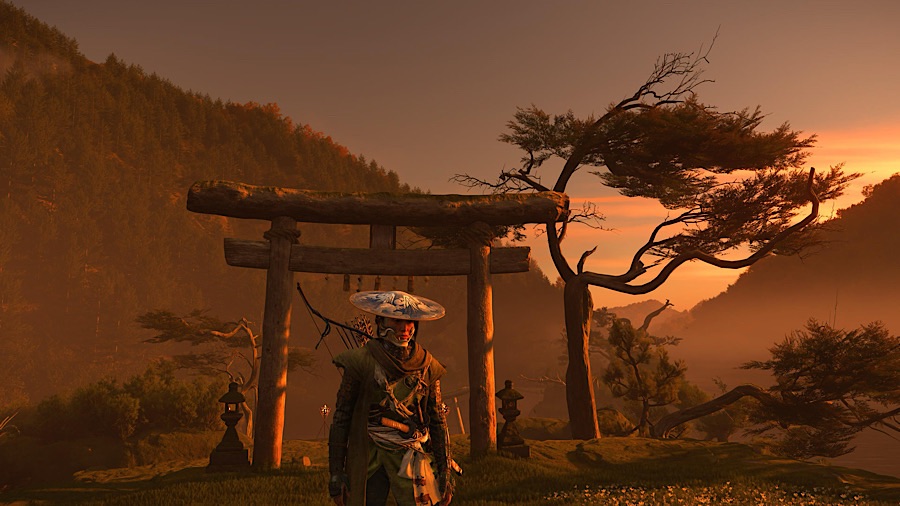
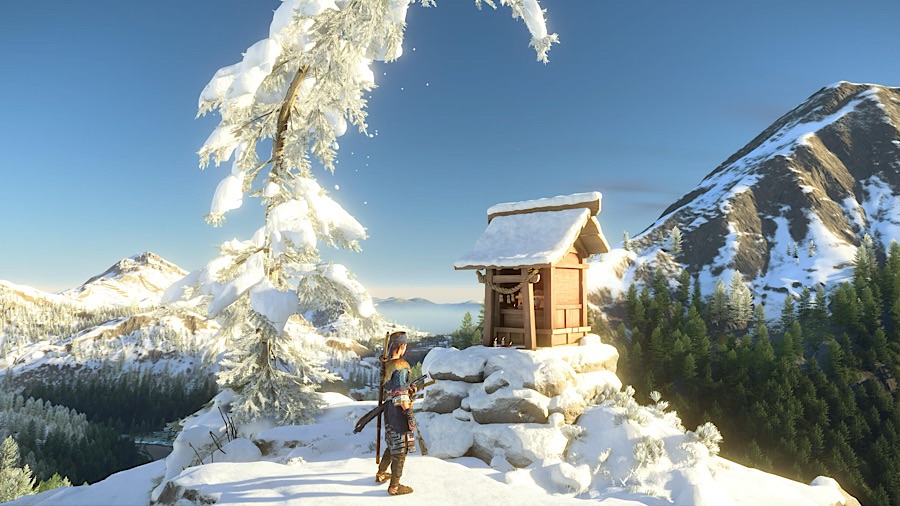
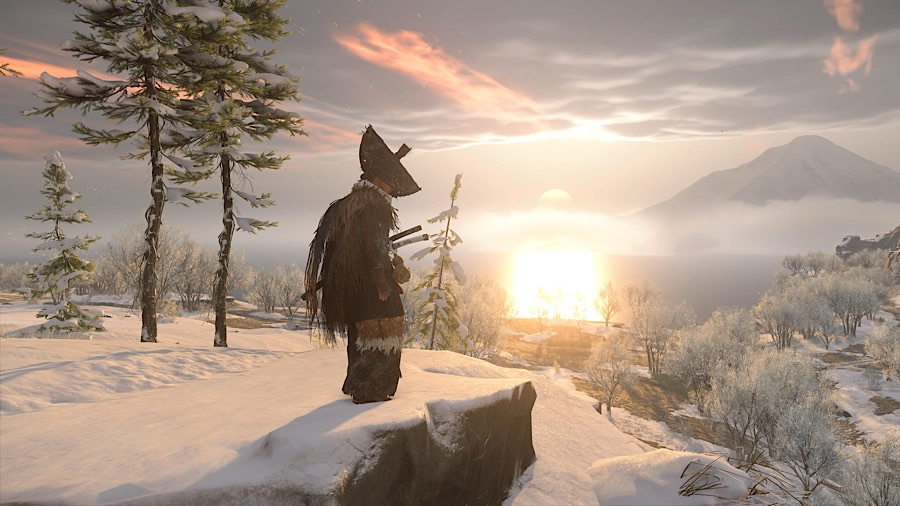
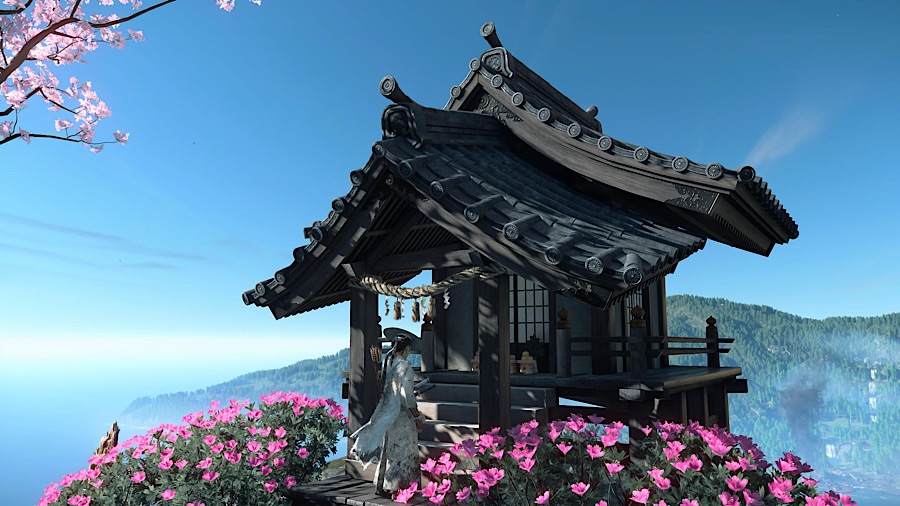
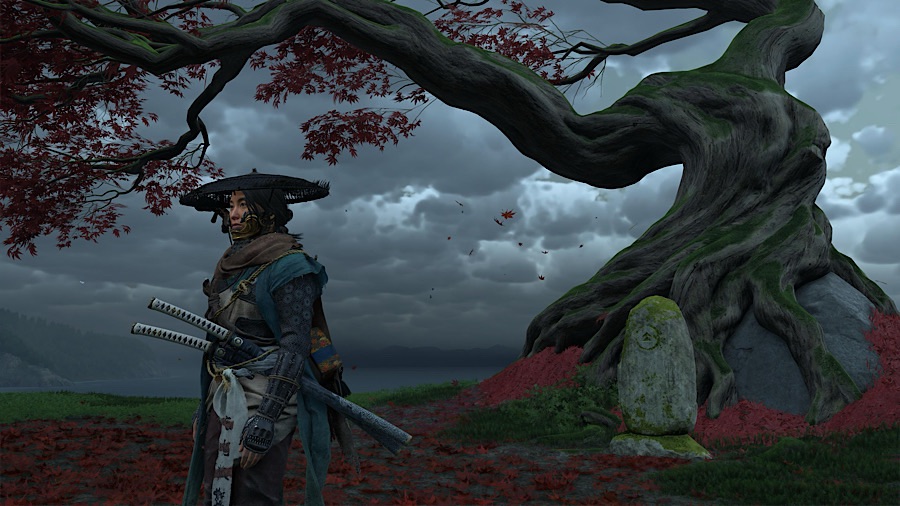
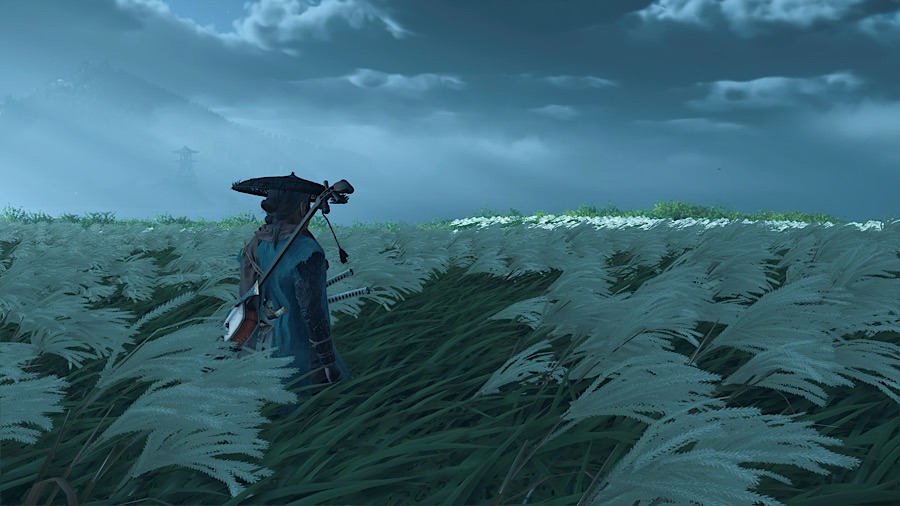
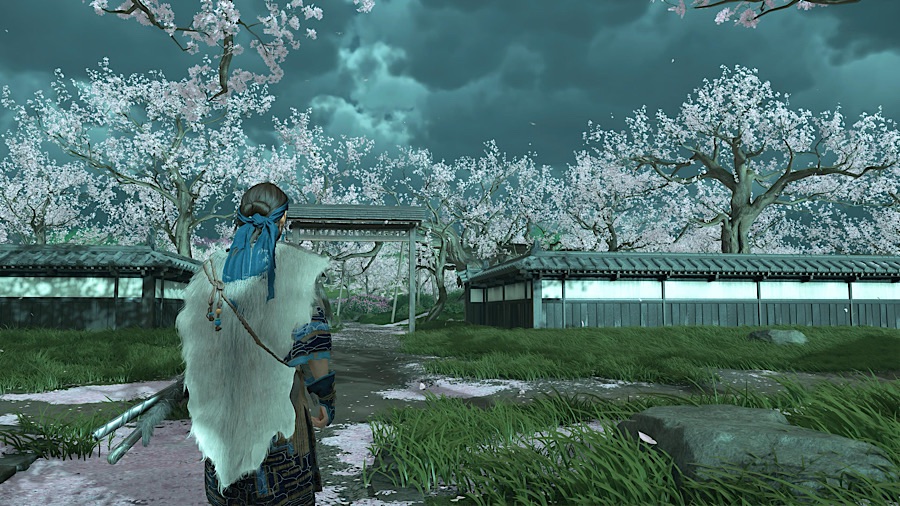
- Once again, the landscape and physics engine. It’s Hokkaido, man—one of the most beautiful places on the planet. And Sucker Punch’s physics engine is just next-level: the way the light changes at dawn or dusk, the wind guidance mechanic, the way grass or snow moves as you move through it. It’s not realistic, it’s hyper-realistic, the way that Hokusai’s landscapes are. Just. So. Pretty.
- Atsu’s interactions with the NPCs, including the animal ones. The designers let her have more personality and emotion than they gave Jin Sakai in GOT, and they wrote a larger cast of characters for Atsu to interact with, which enriched the gameplay for me and made her character development feel more authentic. The Ainu chapter and characters were my absolute favorite part of the name. And Erika Ishii did a great job acting Atsu.
- Again, the thrown weapons. As a player who doesn’t excel at combat, it was a nice way of salvaging (some) melees that had gone sideways while still making me feel good about myself as a combatant. SPOILER: Though I groused about it, I also think it was nice not having the really OP shinobi weapons/skills (smoke bombs and focus hearing) show up until the Kitsune chapter: not only did it make narrative sense for them to show up then, but it made players coming from GOT (like me) have to get creative with the skill system to make do without these tools in the interim—and *really* appreciate them when they did show up.
- I enjoyed the new activities—particularly the wolf dens and puzzle boxes—and the encouragement to engage with them: the rewards for side quests made them compelling. I’m like an 85%-er usually: I do a dutiful amount of side quests, mostly to level myself up because I’m so terrible at combat, but at some point I find completion tedious and unmotivating and stop. I got pretty close to platinum-ing GOY, and I think that fact speaks to the overall quality of the game design.
- I thought Atsu’s character development was organic and moving. I have a few qualms about the linearity of her story arc, which many others do as well and I’ll get to in a minute, but overall Atsu’s growth from lone wolf with a death wish to pack member was believable and satisfying. Man, I loved the camping scene at the end of the second act: I’m not crying, you’re crying.
- The music was beautiful, and I enjoyed playing the shamisen—and the role that mechanic played in the story. I also enjoyed turning on Watanabe mode for the lo-fi vibes (I love me some Samurai Champloo).
- Some of the vanity gear (outfits and accessories that don’t have an impact on stats) was incredible —particularly the masks. I slapped the Yōtei’s Shelter hat on whenever I possibly could (you can see it in the gallery—it’s the hat lacquered blue and white to look like Mt Yotei): I would have worn it into the hot springs if they had let me.
- Speaking of hot springs, HINT: make sure to read the signs by hot springs if you come across them and follow the directions; the little Easter eggs you can unlock if you do this are great.
- I also liked the variety within activity types: outlaw camps weren’t as cookie-cutter as in GOT, and patrols acted more randomly, sometimes even ambushing you. I never got tired of the shinobi traps in Teshio Ridge—it made me laugh to think of those guys shivering under the snow for hours just hoping I would walk up that particular patch of hillside.
- Taro the Scavenger: Hilarious and adorable. Somehow, Aleks Le managed to make his sign-off line, “Stay alive! If you don’t, I’m selling your stuff!”, the dearest thing ever. Also loved Robbie Daymond’s twitchy cartographer-on-the-run, Isaburo.
- SPOIILER: I cannot overstate how much I loved the GOT callback on the Lost Sword mythic quest. It felt like old-home week (literally) in the best possible way and was such a beautiful homage to the legacy of the first game in the world of the second.
- The shrine at the top of Mt Yotei (see gallery below); just the most amazing shrine climb and payoff. It’s totally fitting that SPOILER: this is where you go back to duel Takezo, the hardest boss fight in the game. UPDATE: I beat Takezo! I cannot believe it. On my first run, he one-hit me, and I laughed out loud. I thought, “There’s no way.” And truly I don’t know how many runs I took at him before I got him. The trick if you’re not super-great at parrying like me is to disarm him right away and then keep him off-balance as long as you can while chipping away at his health bar; rinse and repeat. I used Oni’s flame and Homusubi’s Charm to boost fire damage, a couple charms to boost spirit for the disarms, and I think I had that charm on that heals you when you use a smoke bomb? I went through a lot of different loadouts. I’m sure folks who are good at parrying can just get in there with Kanemori’s mask to boost damage and make short work of it, but I had to play a longer game. The sense of accomplishment, the incredible setting on top of Yōtei, and the two gorgeous kintsugi sword kits you get as a reward make it all worth it.
What I did not love:
- HUGE SPOILER: Killing Jubei off—it just felt unnecessary at that late juncture in the story, when Atsu had already lost him and gotten him back twice at that point. It felt like a cheap way to sandbag the happiness of the ending—after having missed a much more natural opportunity to do so at the siege of Matsumae castle, when losing her only surviving family member as a direct result of her failure to let go of her obsession with revenge would have levied meaningful consequences, and that would in turn have made the ending feel earned and organic. But if you were going to let Jubei survive until the final boss fight…come on, just let the man get a hot bath and some sake in his belly. He’s done enough.
- The linearity of the story. I didn’t mind it as much as some, but it was by far the largest criticism of GOY, and it’s not off-base. If GOT was a straight-forward rescue plot, GOY is an arrow-straight revenge plot. Twists and turns are few and far between, and there’s no opportunity as the player to make a choice that has any serious impact on the game’s outcome. That feels a bit cheap, and in fact, it probably was: As others have pointed out, the low-budget approach Sucker Punch took to the sequel meant they couldn’t invest in multiple storylines and all the cut-scenes and dungeons that would come with those. That all being said, I did enjoy the way the story developed Atsu’s character arc. However, I think you needed to really invest some time as a player in building her Wolf Pack with side quests to see the arc: players who just focus on progressing the main story will lose the curve in the line.
- Like I said above, the assignment of weapons to the R2 and L2 pads. It just got to be too much to keep track of in any kind of timely fashion.
- The Nine-Tails code puzzles. They…weren’t puzzles. It wouldn’t have killed Sucker Punch, or cost much of anything, to put a little more effort into this part of the game.
- On that note: this is petty, but the torch mechanic within the code puzzles was glitchy. I swear f I dropped my torch on my foot one more time while being prompted “R2: Light Lantern” I was going to give up on revenge and go play shamisen in a bar on the mainland.
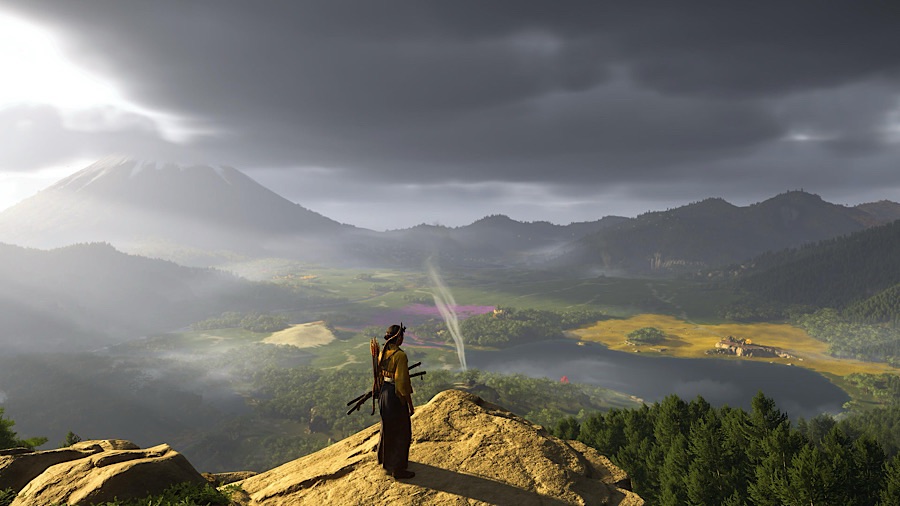
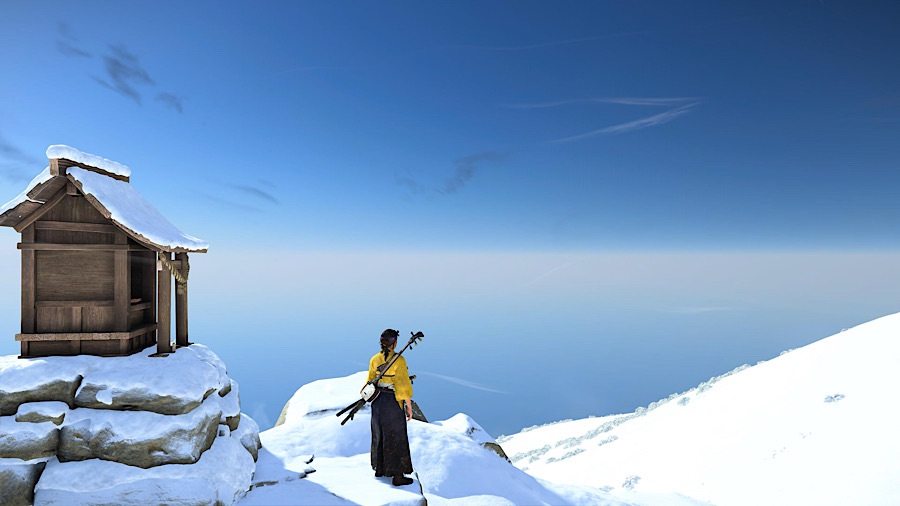
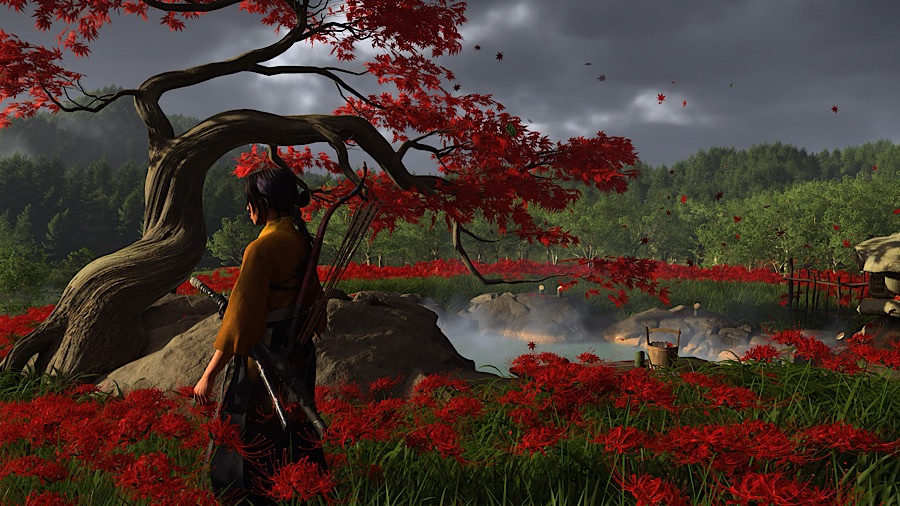
 The Rookery