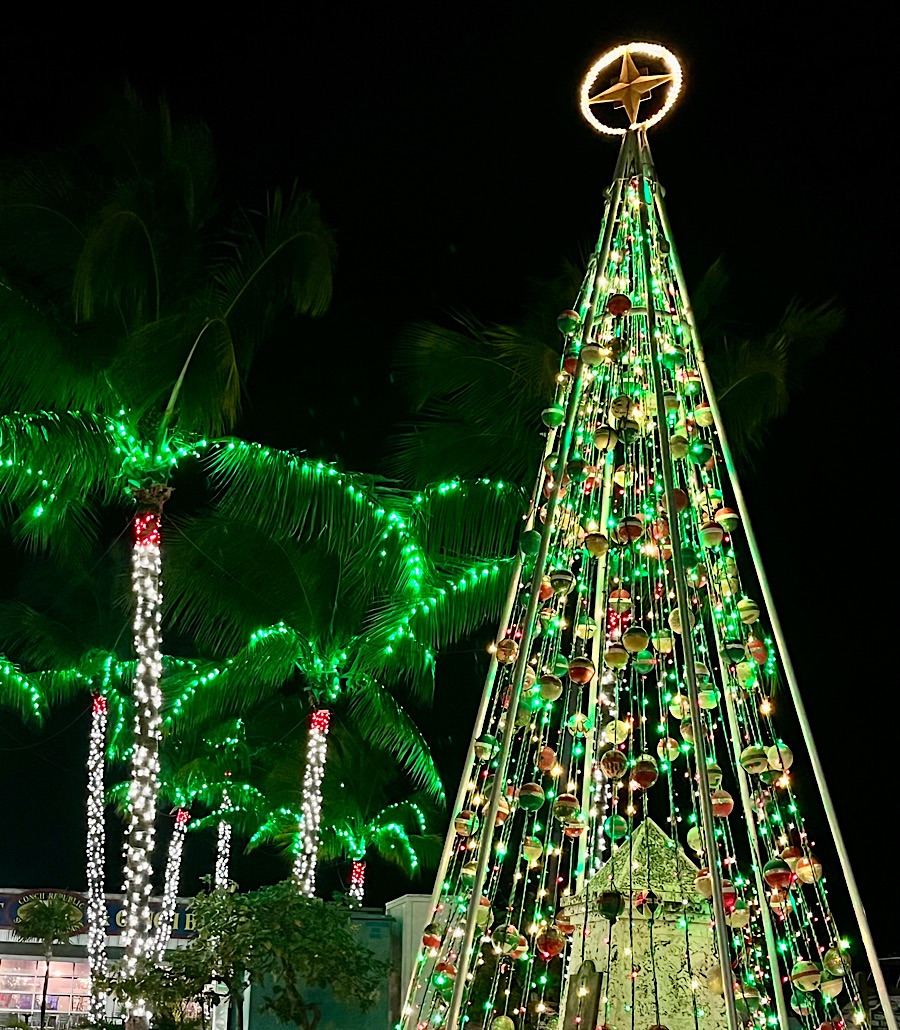
If you’re thinking, blah, blah, blah, palm trees, Jimmy Buffett, and key-lime pie, boy are you are in for a surprise: this blog post is mostly about infrastructure. But! I hope I can make you at least partially as enthralled with the nuts and bolts of the Florida Overseas Heritage Trail as I became over the 100 miles and three days of this bike tour because they’re pretty fascinating. I’ll offer a couple key pointers for other cyclists looking to make the trip. And yes, there will be key-lime pie.
I’ve been meaning to bike the FOHT for years: it’s a really unique rails-to-trails project, given that the first overland route to the Florida Keys was just a rail line; so, if you wanted to bring a car with you to drive on the key roads, you had to put it on the train—a rail ferry!
It took years after the building of the new Overseas Highway (U.S. 1!) and subsequent decommissioning of the rail line for the FOHT to be built, but it was finally completed in 2004. I probably heard about it sometime in the mid-teens, maybe through an Adventure Cycling article? Then Hurricane Irma wiped out multiple segments of the FOHT (mostly at cantilever junctions on bridges) in 2017. That put cyclists back on the road with the cars in many places, on bridges at that, exactly when you want to be off on your own path. The online comments on the trail started getting worse and worse, focusing on those shared road segments—flat tires from debris, scary encounters with motorists gawking at the ocean views or the key deer; even a couple reports of cyclist deaths.
You might think all of that would make me give up my dream of riding the FOHT. You don’t know me, in that case. Once your girl gets an idea in her head, IT WILL HAPPEN. Well, mostly. I can think of a couple of ideas that never happened, like clocking a faster 40-yard-dash time than the slowest defensive lineman in the NFL, and making my own xurros. But a couple of Negative Nancies on the Interwebs were not going to deter me from petting key deer and eating frozen key-lime pie on a stick. (Okay, you’re not actually allowed to pet the deer.) And it was pretty clear to me that the longer I waited to bike the FOHT, the greater the chances of it Not Happening were going to get, with increasing and increasingly strong hurricanes each year and projections that due to climate-change, the Keys were going to be largely underwater and accessible only by boat by the end of my lifetime. So, I girded up my loins in bike shorts, stuffed Lucky in his case, and called upon my sister and two of my most intrepid bike-touring friends—Chris and Sam—to join me in my quest. They were dubious until I mentioned key-lime pie, Cuban coffee, and manatees. And then it was Game On.
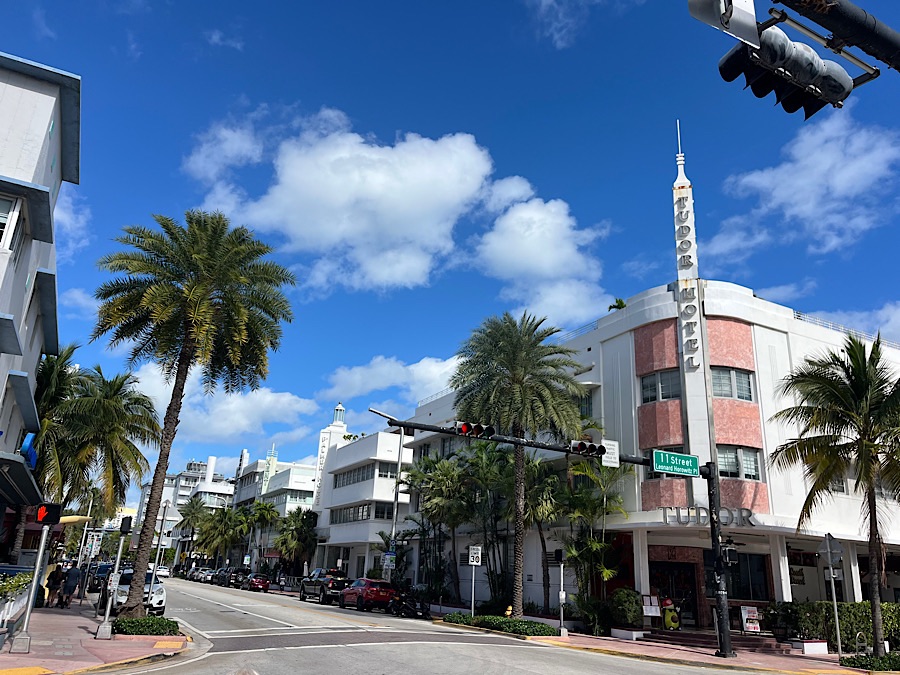
We started with a day in Miami to take in the art, architecture, and food. The weather was great, and we enjoyed our art-deco tour of Miami Beach led by volunteers from the Miami Design Preservation League, followed by lunch at Puerto Sagua. After a last-minute stop at City Bike to pick up emergency supplies, we shared a delicious assortment of hand-rolls and an excellent bottle of Dessai Nigori sake at the bar at Pari Pari. Then, it was time to get organized for our early Lyft ride out to Key Largo to meet the guy who was delivering Chris & Sam’s rental bikes (Cheryl has a folding bike now, whom we’ve tentatively named Dulcinea).
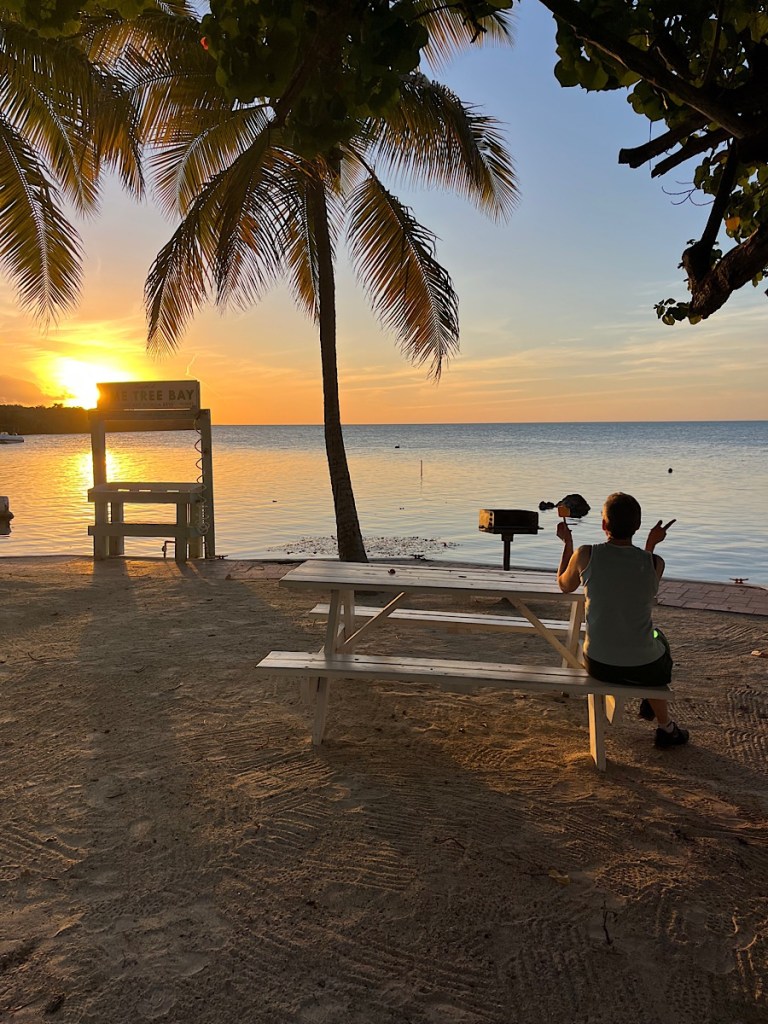
It always takes time to set up the bikes and trailer and get everything adjusted, but we were rolling out of the Publix in Key Largo a little before noon. We enjoyed an active tailwind (first in my life!) and mid-70s temps as we rode largely intact and clean trails to a fabulous mid-afternoon break at Florida Keys Brewing Company on Islamorada: the keys have these tropical beer gardens that are shady and breezy and usually have a taco truck or something that sells fruit juices and non-alcoholic drinks—highly recommend stopping at these. After clocking a total of 35 miles of mostly easy riding, we stopped for the night at Lime Tree Bay Resort (Layton, Long Key), where the manager graciously upgraded us to gorgeous beachside rooms just in time for us to walk out and catch the sun sinking into the calm leeside gulf waters. We got conch fritters for dinner at the on-site restaurant and tried our first key-lime pie of the trip: excellent graham-cracker crust but a little too much sweetened condensed milk in the filling for our tastes.
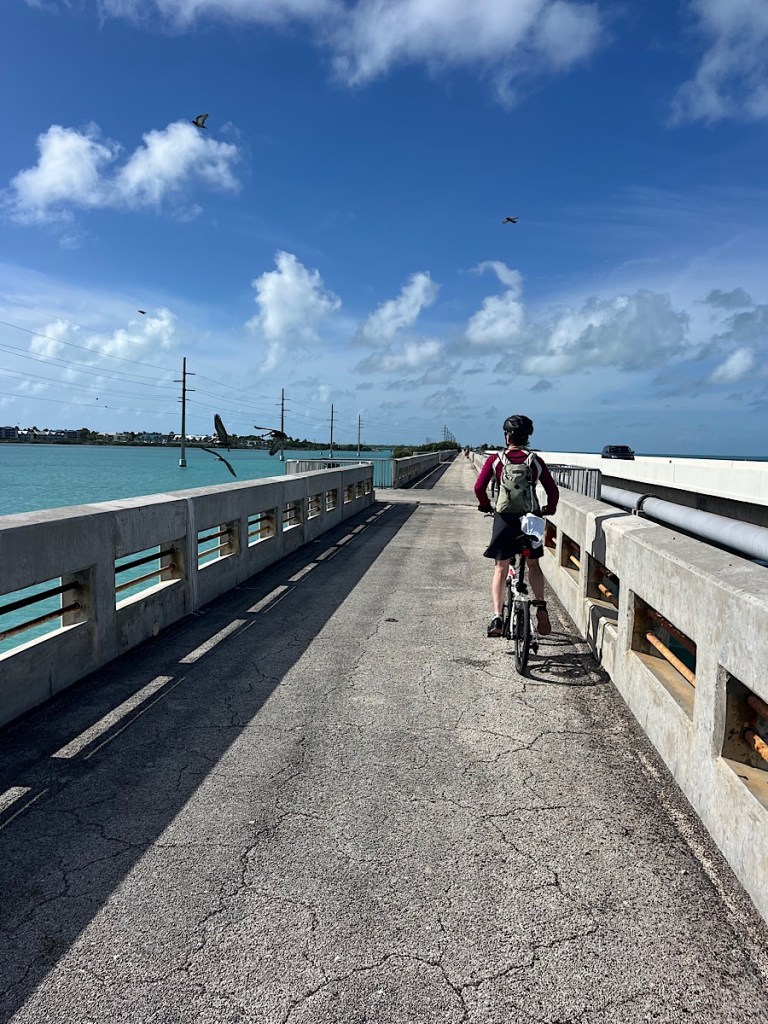
The next morning we hung out on the beach until as late as possible and then got riding—Cheryl and I first as we’re slower on our 20” tires. This is the day when the trail started to show its wear, and we started to get an appreciation for how hard it is to build anything that can withstand the tropical climate. I’m from the desert, born and raised, and there it’s all about fighting death: anything you want to live, you have to water and shelter and protect—it’s a full-time job. As we biked the FOHT, swerving around iguanas and sections where tree-roots were breaking through the asphalt, as we biked across car bridges and looked across at the old iron girders rusting and falling out of the spalling concrete on the old rail bridge we weren’t riding (and had very mixed feelings about that), it occurred to me that in the tropics, it’s all about fighting life. Anything you try to build is going to be overwhelmed by the flora and fauna, the fungi and bacteria; it’s only a matter of time. Cheryl overheard two old guys at a café talking about how to keep the key deer from eating their azaleas. It’s a never ending battle, and that’s probably a good indication that something like the FOHT shouldn’t exist in the first place. At the same time, the sheer moxy of the designers and and the strength and determination of all those workers pouring salt-water concrete all day and then going home to swat mosquitos in their tent camps—you can’t help but be impressed.
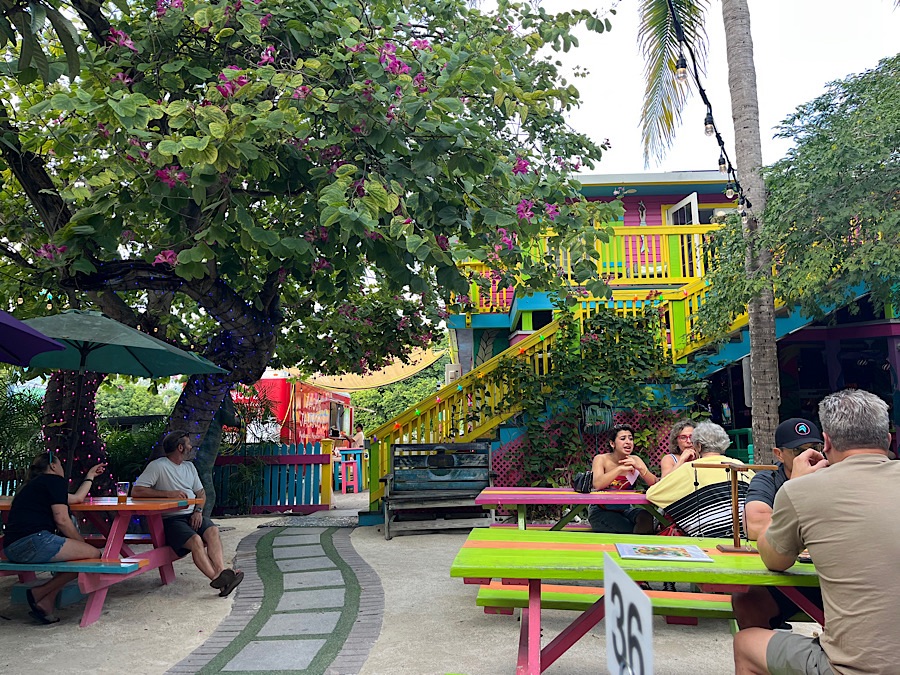
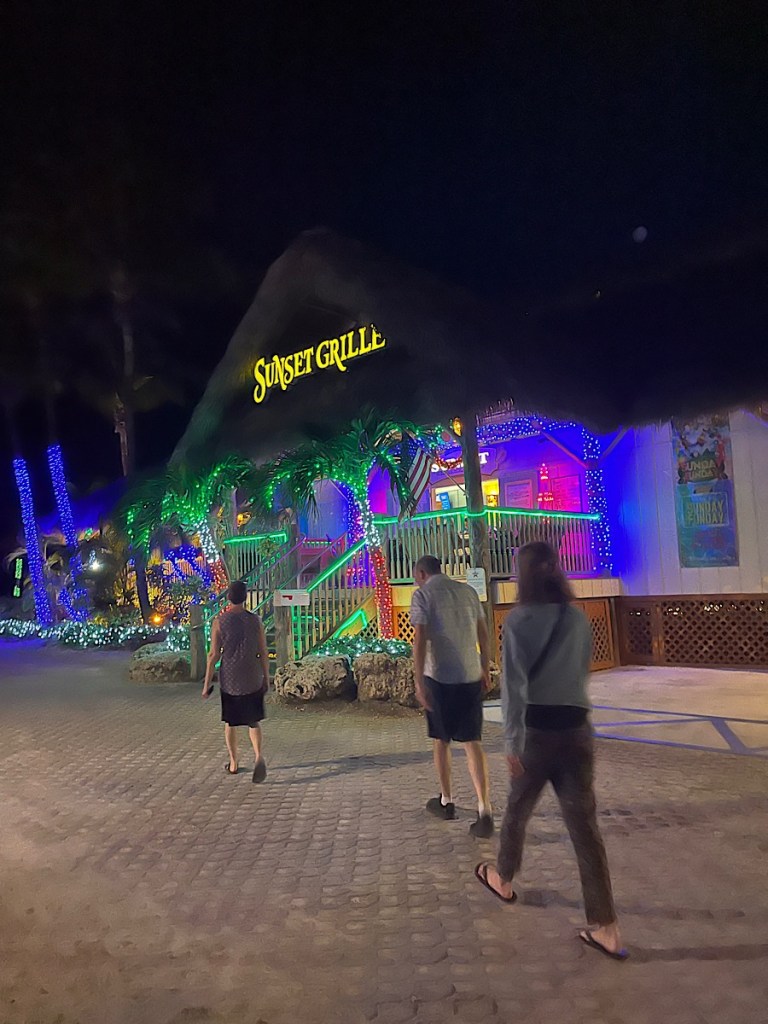
Speaking of infrastructure, day two was the first day we crossed some historic fishing bridges—sections of the rails-to-trails projects that are used by local line fishermen. These were the highlight of the trip for me: uninterrupted ocean views, amazing wildlife viewing—sea hawks and pelicans and terns, barracuda and pipe fish below (Sam even saw a leopard ray!); not to mention all the little grouper and snapper on the hooks of the fishermen who were busy plying their trade along the bulwarks. We met up with Chris and Sam at Bongo’s Botanical Beer Garden and Cafe for excellent tostones (fried plantain patties) and an assortment of Cuban snacks plus a game or two of koi-koi in the shade. Our hanafuda deck got a lot of attention this trip—here from a woman who’d played the Korean version, called Go-Stop or Hwatu. She said she had an all-plastic deck that you could play at the pool. I thought, huh, that doesn’t sound that useful, and I was wrong—stay tuned! We moseyed on to Sombrero Beach State Park where we truly enjoyed a cooling dip on the white-sand beaches before pedaling the last few miles to our accommodations at Knight’s Key Suites—clean and affordable and walking distance from the Sunset Grille, where we chomped down some stone-crab claws, yellow snapper, and mahi-mahi. When I’m near good seafood, I tend to eat it for every meal, and the Keys are definitely the place to do that: they have all kinds of reef fish that don’t freeze well and are best eaten fresh off the boat, like grouper and small snappers as well as crab and spiny lobster. Key-lime-pie #2 happened here: nice, tangy filling but forgettable crust.
Cheryl and I got a dawn-ish start the next morning because we had to cross what online commenters agreed was the most tense part of the ride: Seven-Mile Bridge, whose bypass bridge was gapped in 2 sections by Irma. We actually got going a little too early and caught all the trucks on their way to 8 am starts at job sites in Key West—would recommend crossing just a tad later (see advice below). And truly I could have built my own car, or at least an air conditioner, with all of the bits and bobs I had to swerve around in the shoulder. But there was room to do that, and the drivers were all really respectful. So, while it wasn’t relaxing, there was never a moment I felt truly in danger. And no flat tires (again, see recommendations)! We rewarded ourselves for our bravery with a delicious breakfast at Coco’s Kitchen on Big Pine Key, including probably the best cafecito I’ve had in my life (2 spoons of sugar, baby!). Key-lime-pie #3 happened here; don’t remember much about it other than it was too much sugar after the coffee; I think it had a very meringue-y filling if I recall correctly, and I think it was Cheryl’s favorite.
Despite getting detoured off the main road and trying *very* hard to spot key deer as we biked, our count remained stubbornly at zero and would for the rest of the trip. If you talk to locals, they’re like, “Oh, they’re everywhere; they’re in my front yard.” But they all vanished the moment we showed up. It was like pukeko both times I visited New Zealand—adorable national icons that were everywhere apparently until I started looking for them, then nowhere.
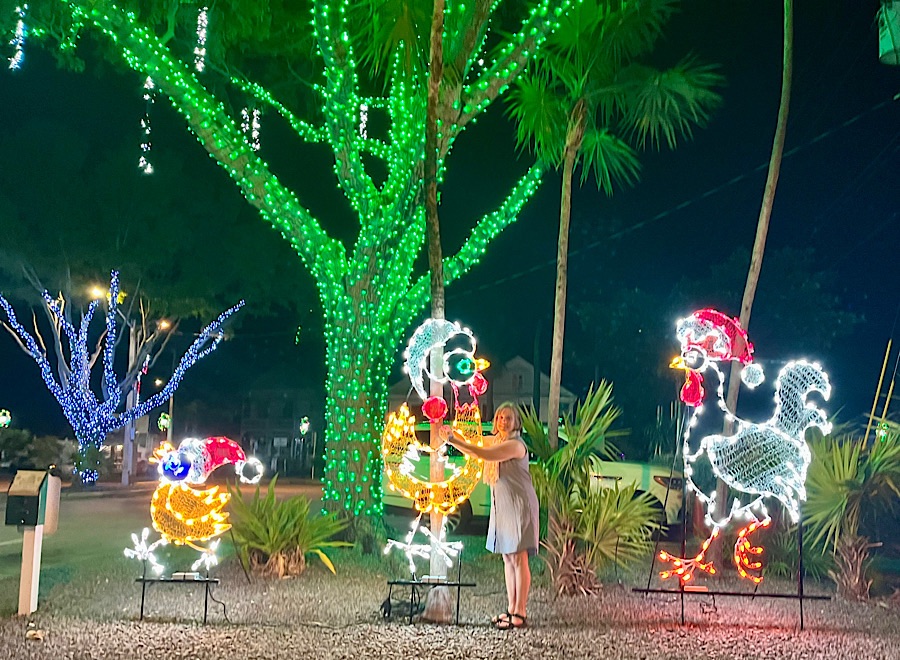
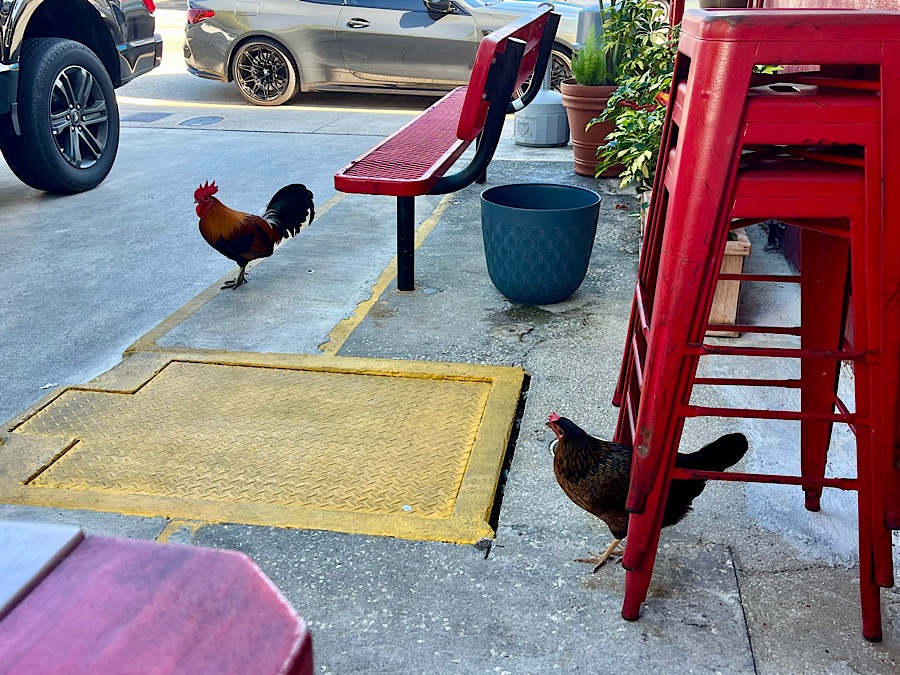
This was a really long day, but it wasn’t miserable because we stopped a lot. We hit up Bahia Honda State Beach just after crossing Seven-Mile Bridge for a cool-off dip in the early morning with no one around, then Coco’s, then we hung out for quite a while at Morita’s in Cudjoe key waiting for Chris and Sam, who had been held up a bit with a minor mechanical. The food was fantastic: we started with coffees and juices and then went back for the best “Cuban Mix” sandwich I’ve ever had. The shade and breeze were awesome, and there’s a little ice cream stand there. After that we just took our time and frequent breaks; it was the toughest riding of the trip with many on-road segments on narrow shoulders. For the last 15 miles of the trail however (technically the first 15), the trail was intact and well-maintained, so this was a big relief. We rolled into Ocean’s Edge Resort and Marina on Stock Island (just east of Key West) around 5 pm with 46 miles under our belts for the day. We were tired but not wrecked and rallied for a shuttle into the old town center of Key West for dinner. We weren’t prepared for how touristy it was: I guess when you read about the Keys, you read about how “relaxed” they are, but Old Town Key West definitely had a Bourbon Street-meets-Carmel vibe with the usual run of tourist-trappy Key Lime Cigar shops, boutiques with chicken paraphernalia (feral chickens are doing very well for themselves on the Keys), and drunk-art galleries (you’ve seen them: they have terrible paintings of dolphins jumping in front of the sunset and wine glasses with jazz pianists reflected in them that people only buy when they’re very unsober). There were also lovely streets with their unique gingerbread plantation houses decorated for Christmas, and cozy little cafes and fine-dining nooks. I’m sure in the off season (whenever that is), the town is delightful. The rest of the time, it’s pretty WOOOOOOOOH!!
That all being said, we had excellent seafood at the delightfully scrappy B.O.’s Fish Wagon and a great time listening to live music at the Green Parrot (hilarious story: I ordered a sazerac at the bar, and the bartender leaned on the bar and said wearily, “Look, this is a dive bar, lady.” So, I got him to make me a brandy old-fashioned, but the refrain, “Look, this is a dive bar, lady,” became a standard for the rest of the weekend, so it was worth the humiliation).
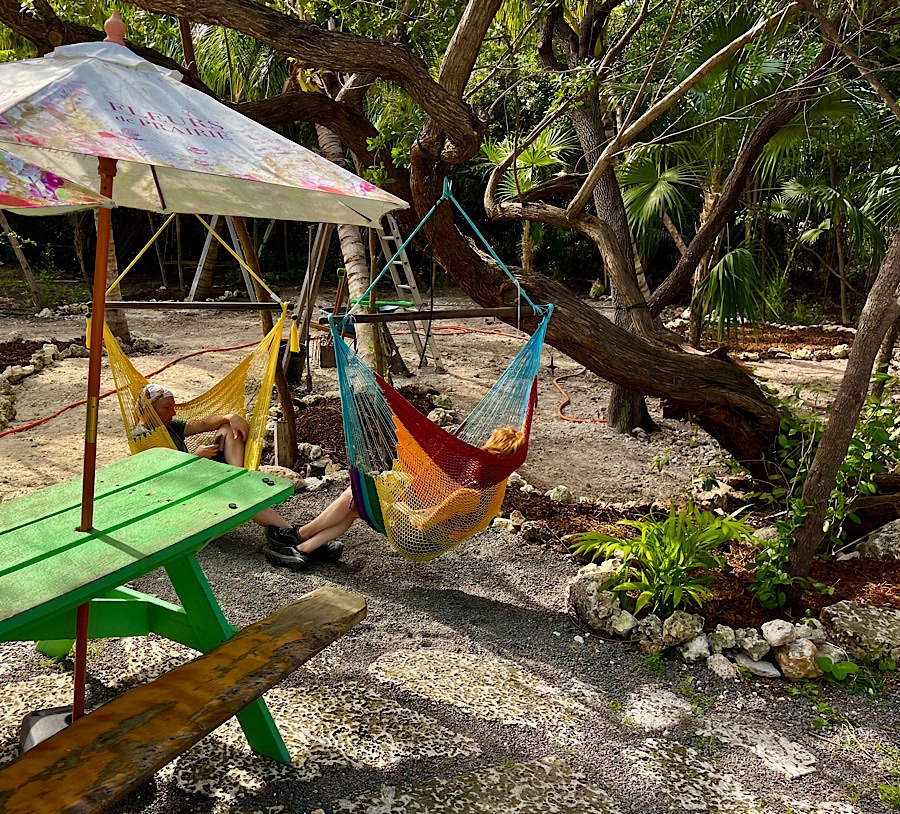
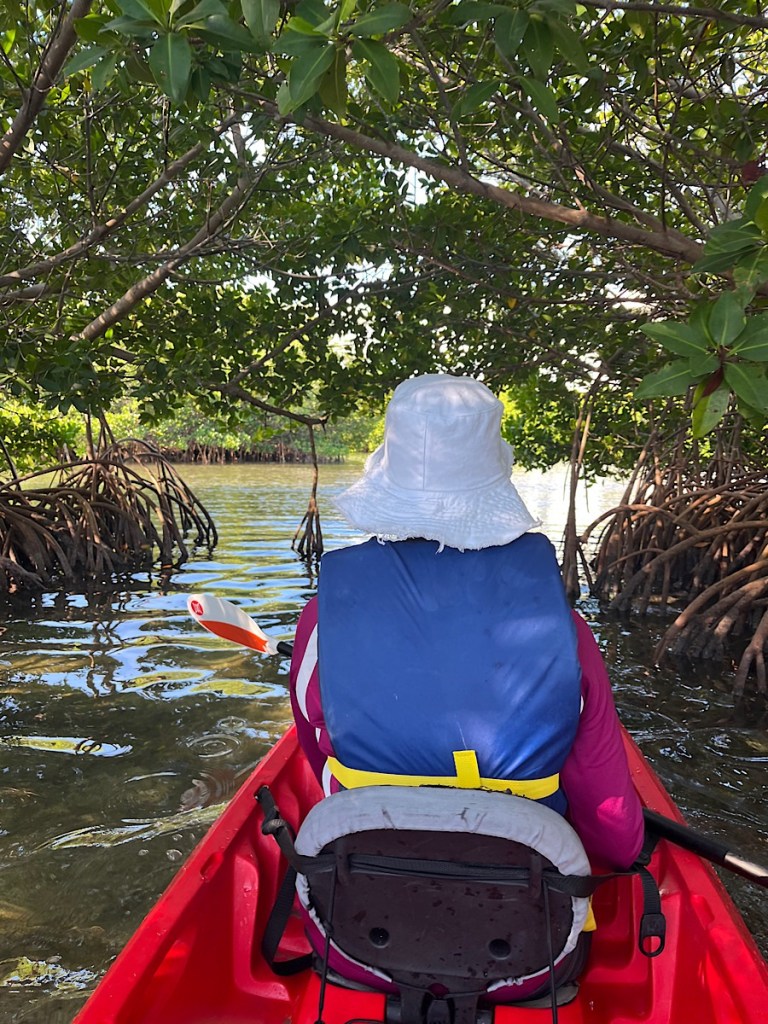
We had all kinds of grandiose plans for the next day, but we were tired, and the pools were looking reeeeeally good, so after a token paddle around the lagoon in some kayaks to look for manatees, we posted up in a couple of cabana chairs for some Serious Relaxing. The hanafuda deck caught some more attention, this time from folks who didn’t know what it was, but it was right then that it dawned on me how genius it would be to have a waterproof deck like the woman at Bongo’s did so you could play on the edge of the pool while you were *in* the pool enjoying your cocktail. I gotta get one.
We rallied for another ride back into town (because there’s not much on Stock Island) because I was going to get my frozen key-lime pie on a stick, dammit. And I did, at Kermit’s on Stephen’s Street, and it was everything I had hoped for (I think Kermit’s might be my favorite version of regular key-lime pie—it’s very tangy, and the crust is great). We went for dinner at Moondog Café so Sam, who’s dairy intolerant, could try their vegan key-lime pie. She wasn’t too excited about it, but their regular pie was very good—fluffy filling but perhaps too much meringue on top. I’d say it was #2 for me behind Kermit’s.
On our way to the café, Sam had buttonholed two guys wearing Bears jerseys to ask them where they were watching the game. They were tourists like us, though, so they didn’t have an answer, but while they were talking, a local guy in a Dead Kennedy’s shirt sidebarred with me and told me we should go to the Irish bar down the street, that they’d have the game on. And they did! As well as some excellent cocktails. I didn’t realize that the mix of fresh grapefruit juice and rum with Angostura bitters that my ex learned while working in Trinidad and Tobago was called a Hemingway Daiquiri, but apparently so! It really is my favorite cocktail for sitting on a dock looking at the water, and this bar did a nice version of it.
Cheryl and I left before the game was over because we were fading, but we found out later that we missed some overtime excitement and a Bears win. She caught her plane early in the morning, and I stuck around for a few more hours to bike over to Cow Key Marina to make one last attempt at manatee-watching with Chris and Sam. The girl at the bike kiosk at our resort told us that she used to mix beach sand and water in a bottle when she was little and pour it into the marina, and it attracted manatees every time—she called it her “Manatee Juice.” We tried it to no avail, but later Chris & Sam reported that manatee juice attracts tarpon and sharks! So, it works. After a delicious lunch at Sandy’s Café (Cuban) and another short hang poolside, I headed to the airport and entrusted the sea-grape-leaf postcards we had written to Chris & Sam, who successfully mailed them. And thus the epic quest to bike the FOHT ended in victory.
Notes for cyclists:
- We got this advice from the bike-rental guy: ride on the left side whenever you can. Don’t worry about switching sides of the highway every time the path switches sides. It’s most continuous on the left until you get to the lower keys, and it’s tedious and dangerous to keep crossing. Plus, traffic sees you better when you’re facing them. The trail isn’t so crowded that you’ll get in the way of oncoming cyclists (I think we saw one other through-rider the whole time). Ride on the shoulder for the short distances it takes to rejoin the path—with the following exceptions….
- Immediately when you start in Key Largo, you’re going to want to switch to the median about 2 miles after the Publix and follow that until you can move back to the left side.
- When you cross onto Matecumbe Key, and again later on Marathon, and again later on Big Pine, and again on Cudjoe, you’re going to want to cross to the right because there are long, quiet stretches of the old converted rail bed in the mangroves on that side. Basically, look on the map (either Google or the PDF) for long, uninterrupted lines of dark green on the right and make a note of when to bounce over to them.
- Best timing for crossing Seven-Mile bridge is about 9 am when rush hour is over but folks haven’t checked out of their hotels yet, and it’s not too hot.
- On that note, if I were doing the trip again, I would do 3 nights on the trail, not 2. It really is best to do Seven-Mile bridge in the morning, which creates an awkward stopping point for a 3-day tour. A 4-day tour gives you more time in the lower keys to look for key deer and snorkel at Bahia Honda and Looe Key. Strong cyclists who aren’t carrying much may be able to do the whole thing in 2 50-ish mile days, staying overnight at Knight’s Key or thereabouts, right before the bridge crossing. I would also plan a couple of extra days to accommodate a charter out to the Dry Tortugas.
- Best time of year to ride is December through March to avoid hurricanes and heat. I would plan to get off the road when the sun gets in drivers’ eyes, so around 4:30 pm in the dead of winter and a little later moving into spring.
- There is, as reported, a decent amount of broken glass and debris in the sections where you’re riding on the shoulder—perhaps no more than your average highway. We experienced no flats, so it’s hardly dire. Recommend running beefier gravel tires like we did, or puncture-resistant road tires, or slime tubes.


 The Rookery