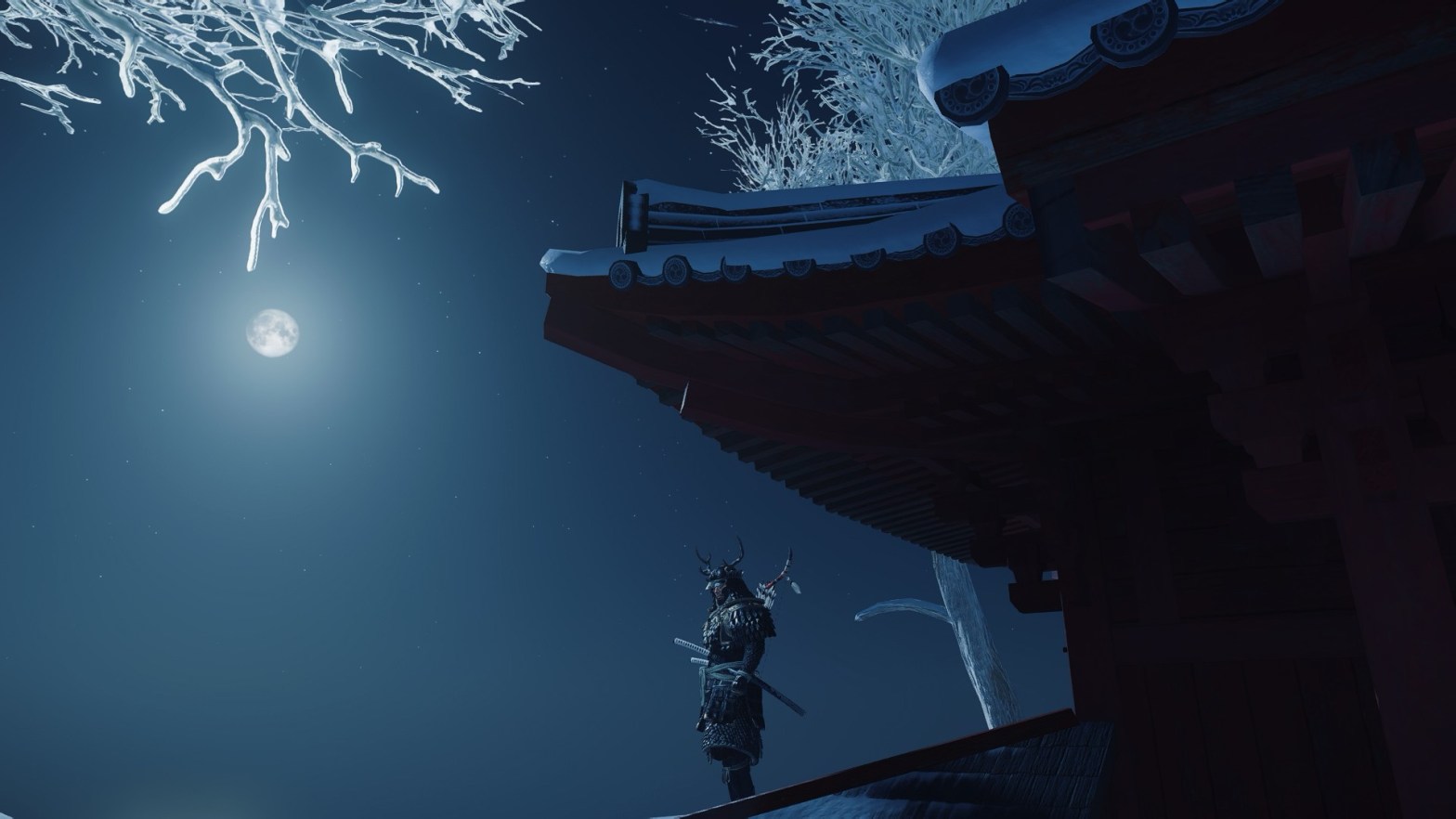
So, I turned myself into a PC gamer this summer. The logic went something like this:
- I wanted to play Ghost of Tsushima (GOT) because I had heard a lot of good things from my gaming friends about it, and the sequel, Ghost of Yõtei, was set to come out in October.
- To buy a Sony PlayStation, the native platform for GOT, plus the physical game was going to cost me around $560.
- However, I could get the Director’s Cut for PC (including the Iki Island expansion and Legends Mode) for about $60, and it looked as though if could just upgrade the graphics card (GPU) in my 2018 Dell Inspiron 3668, I could achieve the *minimum* requirements to play GOT on my PC.
- After scraping various gaming forums for intel, I discovered there was exactly 1 old GPU (NVIDIA GTX 1650) that would fit my low-profile case without requiring an external power supply; it cost $180.
- I bought and installed the new card, downloaded GOT on Steam, and was in business for $300 less than I had originally budgeted.
That’s the cleaned-up version of the story. Of course there were complications, the two biggest of which were (a) optimizing GOT on my still-pretty-marginal GPU so it didn’t crash once per session (which I was able to do with some good advice from my friend Lilly) and (b) learning how to operate a keyboard and mouse for gaming. WASD you say? More like WTAF. It is challenging to learn new fine-motor-control routines over 50, let me assure you. But I soldiered through (samuraied through?) and eventually drove all the Mongol invaders from Tsushima. Get lost, gaijin—and don’t let the torii hit you in the butt on the way out!
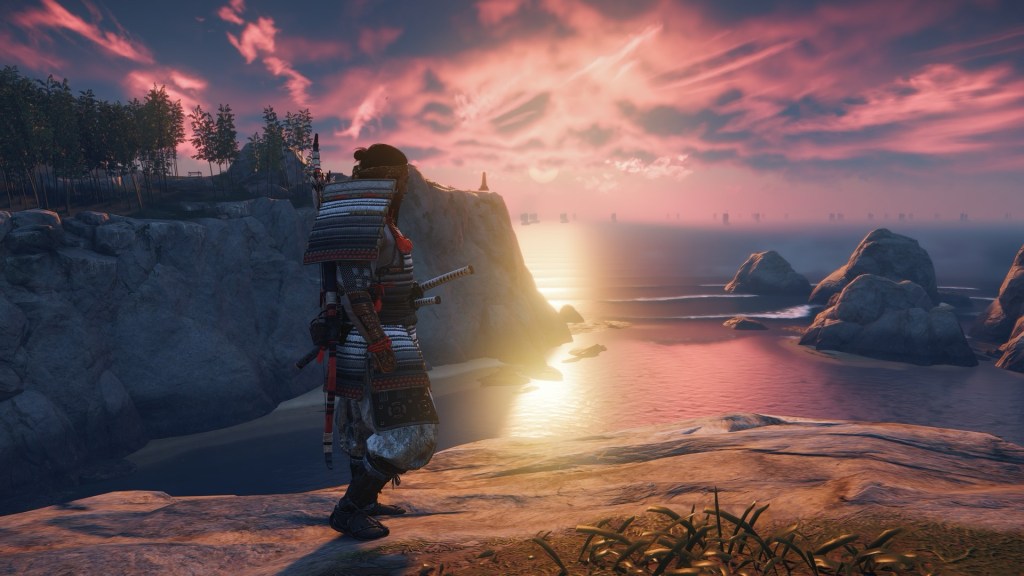
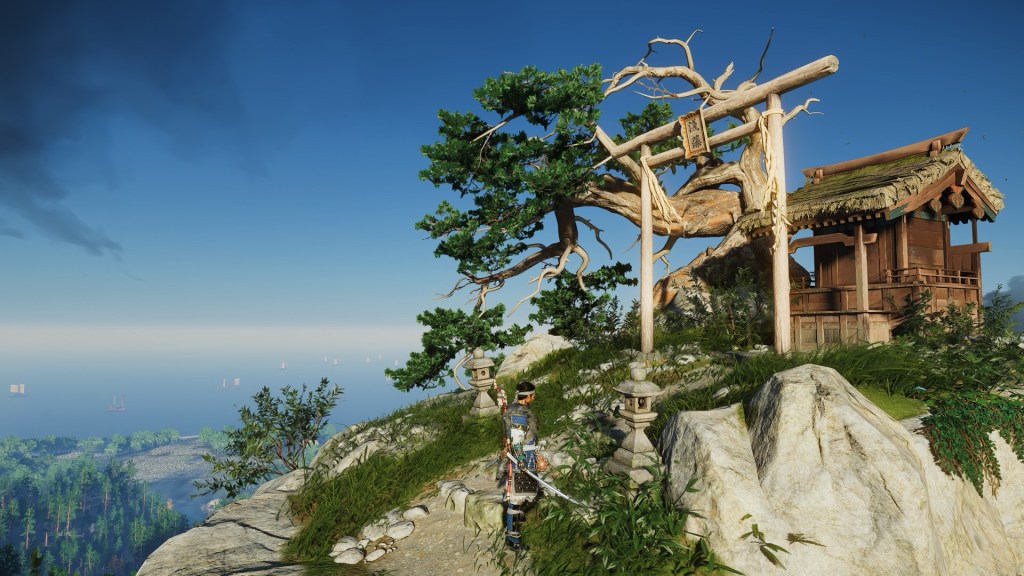
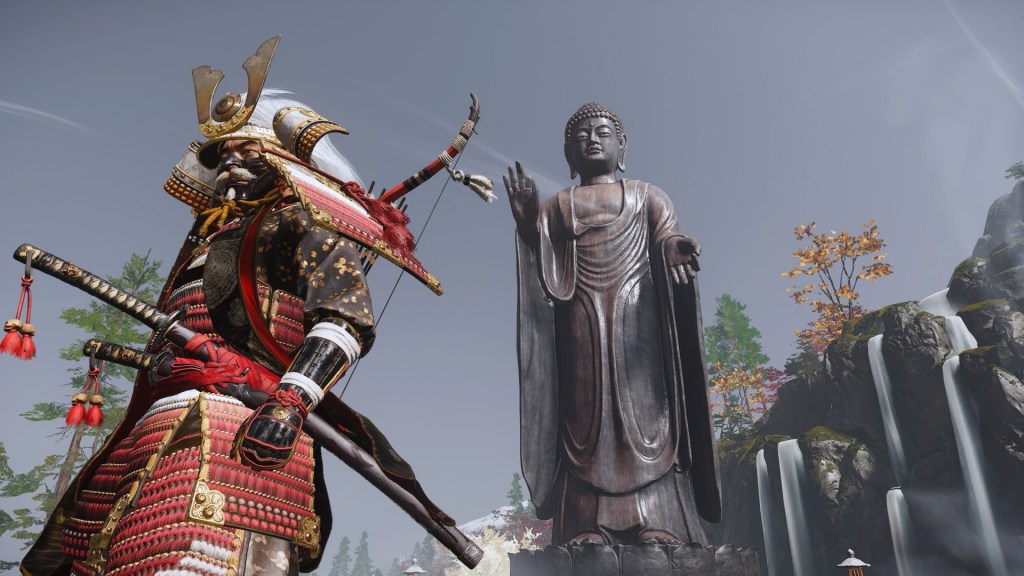
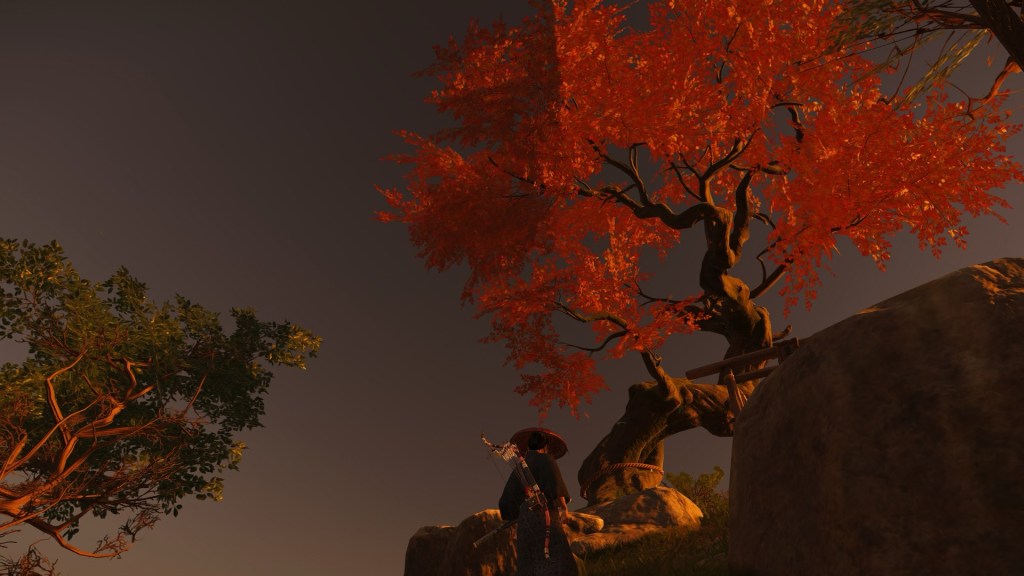
OK, on to the game, which was truly an amazing experience. I think it took me about 150 hours to complete the Director’s Cut, including the Iki Island expansion, but I took my time: I didn’t 100% the game, but I like 90%-ed it because it was JUST SO BEAUTIFUL and I wanted to spend more time riding my horse, taking pictures, and petting foxes. That is pretty much point 1 in any positive review of GOT: the landscape design is jaw-dropping, the graphics are rich and vivid (even if like me you have to dial down the resolution and shading to save your GPU), and the atmospheric physics—the wind and weather—are really special. I mean, just look at this gallery:
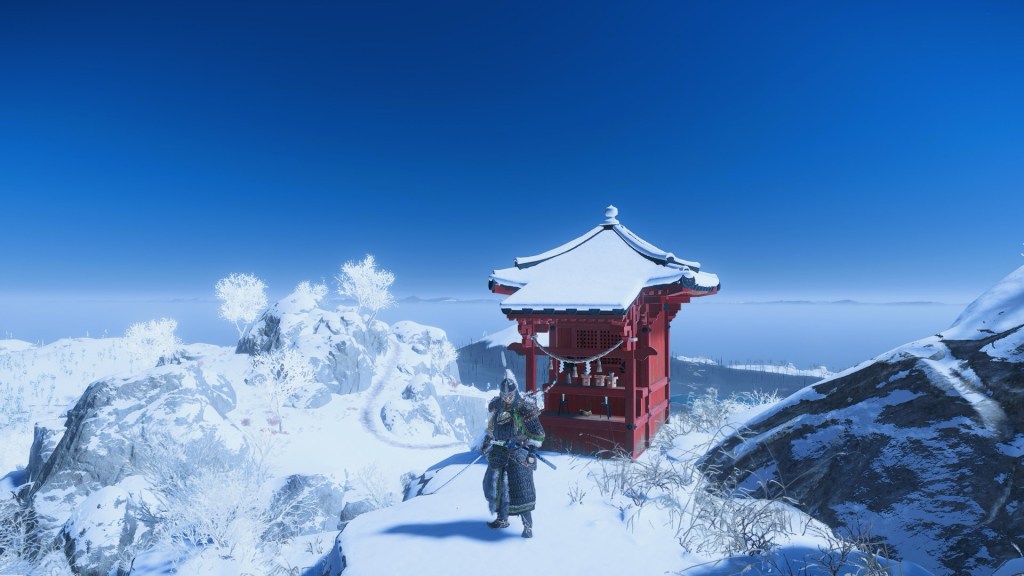
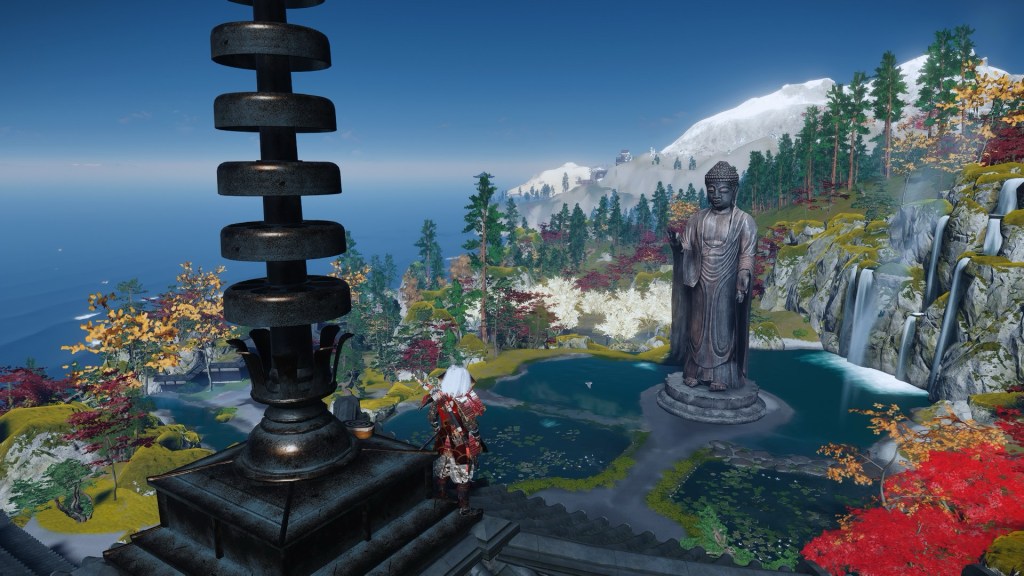
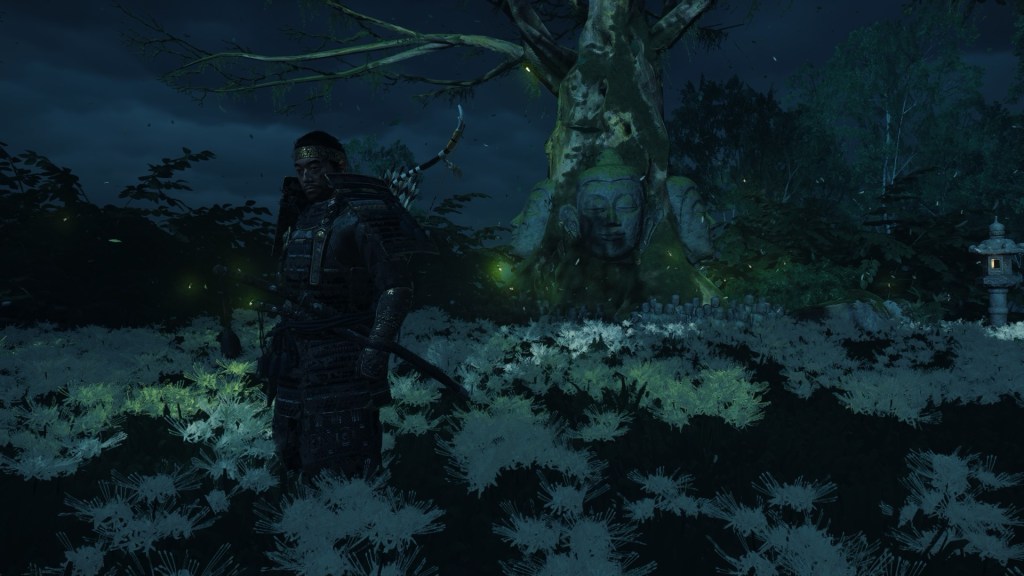
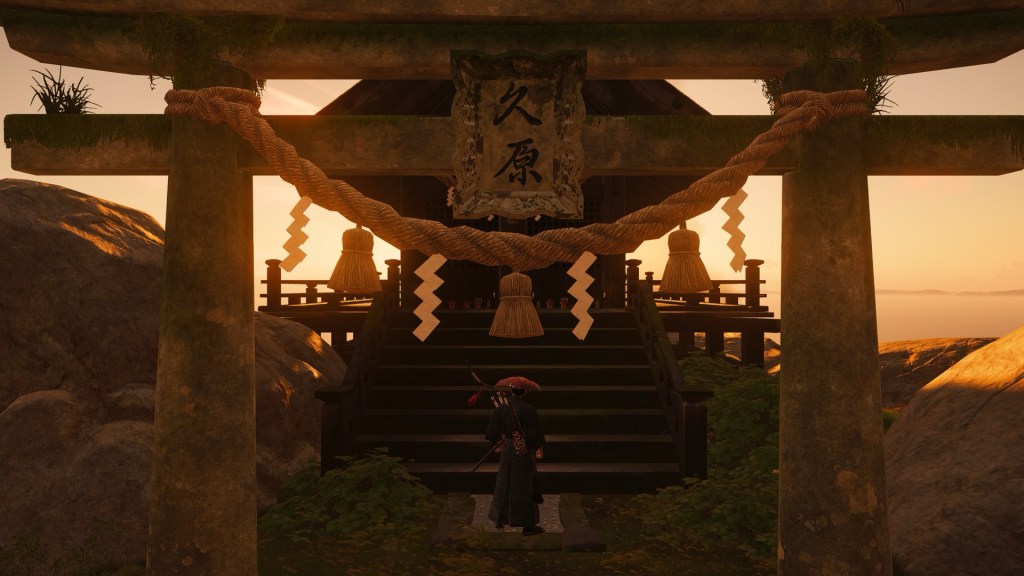
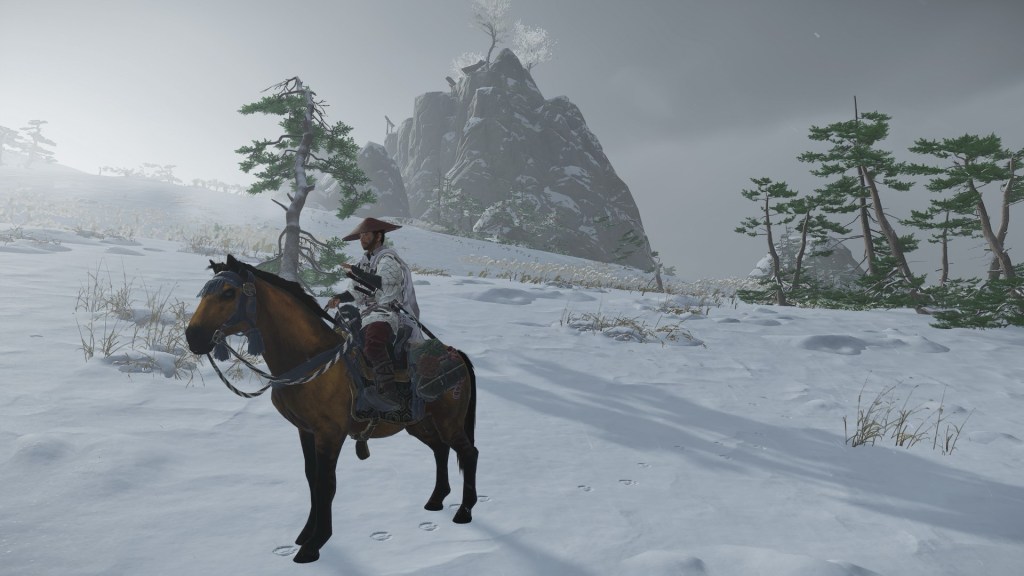
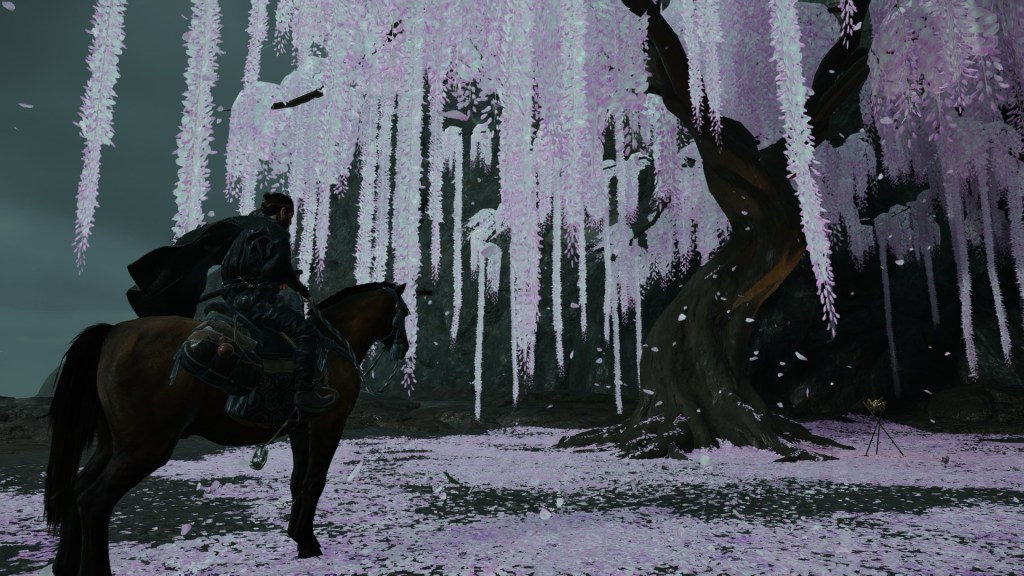
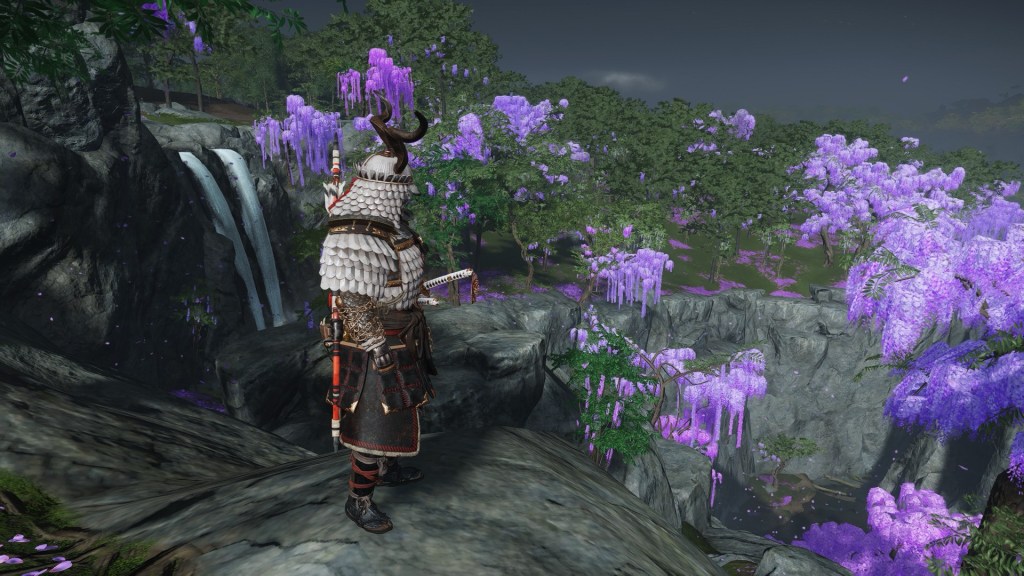
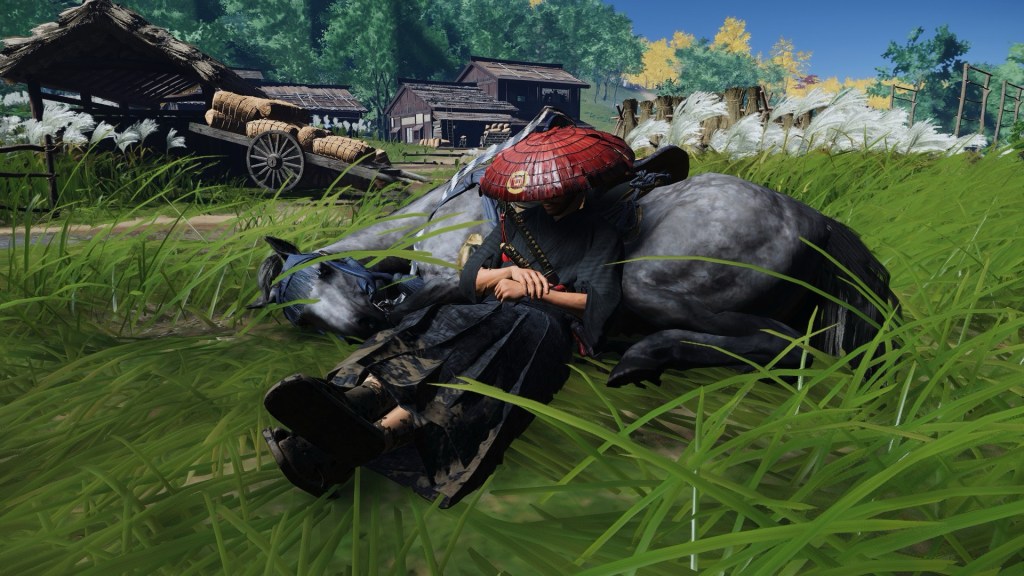
Anyway, if you’re still reading, you probably want to know what the game is about. GOT tracks an actual historical event—the Mongol invasion of the archipelago of Tsushima in 1274 in an attempt to found a forward base to support their planned invasion of mainland Japan. You play out the story in the role of a high-ranking samurai on the island, Jin Sakai, the nephew of the jito or governor of Tsushima. From the get-go, things are going very, very badly for you. After losing functionally all your fellow samurai at the Battle of Komoda Bay (an actual event) and being gravely wounded and left for dead, the Mongol general, Khotun Khan (fictional but based on the historical leader of the invasion), takes your uncle, Lord Shimura, hostage. You wake up bandaged and woozy without your armor or weapons in the hut of Yuna, a thief who rescued you from the bloody beach at Komoda in hopes you would help her save her blacksmith brother, Taka, who’s been captured by the Mongols and forced to make Japanese-steel swords for them. But you have your own mission to accomplish—freeing your uncle so he can rally troops to help drive the Mongols off the island. At the same time, you realize you’re going to need allies to free your uncle from Khotun Khan, and Yuna is connected and resourceful. So begins a series of wrenching choices: help this needy person or that potential ally? Run headlong into patrols of Mongols while you’re still weak and under-armed, like the samurai your uncle raised you to be, or employ stealth and assassination to even the odds?
This is the real appeal of GOT in my opinion, even over the gorgeous vistas. The game forces you into real moral dilemmas—to the point that when Lord Shimura shook his head at Jin’s ninja tactics in Act 2 and said, “I didn’t raise you that way,” I felt a genuine pang of shame. The game has been critiqued for its linear storyline (save the uncle, kill the Khan, in 3 acts), and that’s fair as far as it goes. But it misses the moral complexity of the allies and enemies you meet along the way: the archery expert who first lets his paternal instincts blind him to the ambitions of his apprentice and then, when she betrays him, lets his rage blind him to the bigger picture; the ronin who, lacking the wealth and status of a samurai, has to sacrifice more than he planned to feed the men who depend on him; the wife of the clan head who is so obsessed with avenging the massacre of her clan, she’s literally letting the island burn around her. Not to mention there are some genuinely surprising, and emotionally affecting, twists and turns in the storyline.
Another critique I’ve seen is that while the world of Tsushima is wide-open, there’s not actually that much to discover gameplay-wise. I agree to some extent: there’s a relatively limited roster of types of side quests and activities you can engage in as you run and ride around Tsushima. And while some are useful (e.g., cutting practice stands of bamboo with increasingly intricate keystroke sequences to ramp up the “resolve” that lets you heal and perform powerful attacks), others fun (e.g., platforming to hidden shrines to level up “charms” that buff your abilities and defense), and a few flat-out delightful (e.g., soaking in hot springs to increase your health, writing haiku at stunning spots to earn fancy headbands), many side quests and encounters feel repetitive. After dispatching the 50th Mongol patrol and rescuing the 30th hostage, I must admit I started veering off into the woods and sending thoughts and prayers. Even the major camps and forts you liberate start to feel a bit cut-and-pasty, partly because the NPCs hew to the same 4 types throughout the game (brute, archer, swordsman, shieldsman); they just get quicker and beefier as it progresses, and their weapons start to catch you on fire or poison you. While that stability allows the combat system to operate around a nifty mechanic where you match your stance to NPC type for better return on your attacks, it limits progression in gameplay (the Iki island expansion presents an exception, which I’ll get to in a bit).
If the world doesn’t change much as the game progresses, however, Jin’s abilities do, opening up possibilities and variations within the relatively short menu of challenges. And the story kept me motivated enough to keep grinding. On that note, I’ll admit I did more grinding that most players probably have to because I was SO TERRIBLE at the combat at the beginning. This was largely due to my lack of facility with the keyboard/mouse controls. But also, I found it hard to keep track of Jin’s burgeoning inventory of weapons and abilities, much less put them to good use. I must have attempted the “Blood-Soaked Grass” tale (“tales” are the various progression and side quests) like 30 times before I finally quit and resigned myself to grinding to get better at group combat. Next thing I knew, I was a solid hour into a supposedly “moderate” archery-based tale that ate my lunch to the tune of another 30 runs. At this point, I gave up and set combat mode to “easy” until I could figure out the keyboard/mouse set-up. I mean, it was REALLY bad for a while there. I don’t think I turned the difficulty back up to medium until the end of Act 1. Even then, the duels were still killing me both literally and figuratively; I struggled with the parry and dodge mechanics so hard….
That’s when the next phase of being a PC gamer kicked in: going on Reddit for advice. Sigh.
Here’s what happened: there’s a cool combat mechanic called a standoff via which, if enemies don’t notice you immediately, you can challenge them to a duel; if you strike them within a certain window as they’re lunging at you, everything goes into slow motion, and you kill them with one blow. As you level up your skills, you can kill up to 5 opponents this way without taking any damage. It’s incredibly useful as the groups you have to contend with get bigger. But something happened between Act 1 and Act 2 for me: in Act 1 I was winning the standoff pretty much 100% of the time; Act 2, that stat went down to roughly 1%. I tried everything. I rode around the countryside picking fights to practice, 20, 30 of them; died every time. I looked on YouTube and uncovered a sneaky trick where you jump backwards right before the standoff to give yourself more space to react. Nope. That’s when I bit the bullet and went on Reddit. Most of the comments were spectacularly unhelpful, variations of “git gud, bro.” But one angelic poster suggested that my monitor (aka my crappy Costco TV) might not be set on “game mode” and thus might be imposing a display latency that was canceling out the .4-second reaction window for the standoff in Act 2. Sure enough, I checked and fixed the settings on my TV, and my success rate *instantly* went back up to 100%. Not only that, but I was suddenly able to get perfect parries and perfect dodges, which I had never been able to before (they have a similarly short reaction window). Bless that Reddit poster. Also make sure to check your monitor settings if you’re playing GOT on PC.
On that note, check the settings in Game Options for “Armor Load-out.” I have no earthly idea why this comes turned off because it’s completely crucial: it’s the only way you can check to see which charms you have assigned to which armor set, swap charms out, or copy your load-out to another armor set. BTW you can put one charm on multiple armor sets, and charms stack, so if you have 2 copies of a charm that gives you a “moderate boost to health” and you equip both to the same armor set, you’ll get 2x the buff (the game doesn’t quantify buffs other than saying they’re “minor,” “moderate,” “major,” or “massive”).
Other tips…hmmm. You can probably find most of these in YouTube videos, but I’ve collected a few here for easy reference:
- Early on you want the Charm of Inari (Arrow Peak Shrine); put it on the Traveler’s Attire and wear that whenever you’re out of combat as that charm boosts returns on resources like iron and yew wood that you’ll need for upgrading your katana and bow.
- Do a bunch of fox shrines to get the Charm of Inari’s Might (a minor charm, different than the one above), and level it up ASAP. It’s an excellent multi-purpose charm that buffs both attack and defense; you’ll want to load it on pretty much every armor set. Also, don’t forget to pet the foxes (when you’re allowed)!
- Customize your armor along the lines of its built-in strengths and swap sets out frequently to get their buffs when you need them. Also, don’t be afraid to hot-swap charms, say as you survey a camp layout and see an opportunity to use some poison wind chimes or think you’ll need a couple extra kunai (throwing knives).
- You can just tap 1,2,3,4 in combat to swap stances (1-stone, 2-water, 3-wind, 4-moon) as opponents of those types (1-sword, 2-shield, 3-spear, 4-brute) come at you. Swapping stances is clutch; you’ll do SO much more damage in the correct stance, thus dispatching opponents quickly and not getting caught in a scrum.
- I recommend upgrading the Sakai armor all the way as quickly as you can to get to the 5-standoff limit; it makes melee life so much easier.
- If you’re playing the Director’s Cut, there are some advantages to playing Iki Island before you finish the main game—mostly armor-related. It will, however, spoil a couple developments in the main story for you. I recommend playing Iki after the main game ends but before you finish liberating Tsushima, which is what I did, so you can enjoy the upgrades without the spoilers. You may also find Iki pretty dang hard if you jump over there at the start of Act 2 and haven’t spent enough time grinding in Act 1; the enemies and battle mechanics take a noticeable step up in difficulty.
I think that’s all I want to say about the main game. I didn’t play Legends Mode, even though it looks like fun and gets good reviews, because I just didn’t think my machine could handle the multiplayer online scenario. But the Iki Island expansion was fantastic. Highlights:
- The horse mechanics and armor you get are SO COOL.
- The Sarugami armor you can get through the Black Hand Riku mythic tale is totally OP: great attack and defense, and gives you expanded windows and follow-ups for perfect parry and perfect dodge. It’s the best dueling armor in the game, hands down. And it looks amazing.
- The villain/final boss (the Eagle) is genuinely creepy and cool in a way that pervades the whole expansion.
- The island adds a couple new combat mechanics and scenarios (like shamans who whip groups of opponents into a frenzy) that refresh gameplay after it’s sort of plateaued in the main game.
- The wind shrines are fun puzzles (really the only ones in GOT) and give you totally boss armor dyes referencing other PlayStation games that influenced Sucker Punch (the GOT designers): Shadow of the Colossus, Bloodborne, God of War, and Horizon: Zero Dawn
- Similarly, the animal sanctuaries with the flute mini-games are fun and relaxing: a welcome respite in a game whose main vibe is pretty grim.
- You learn a lot about Jin’s relationship with his father, which puts the main game in perspective and also brings Jin some closure that the main story arc doesn’t necessarily afford.
- The old conflict between the raiders and the samurai on Iki is compelling and pretty realistic in the way it offers no easy outs. Working together to drive the Mongols off the island feels even more satisfying than fighting them in the main game, and this is the main reason why.
- It’s just so darn pretty. Sanjo Gorge, man: amazeballs.
 The Rookery
2 thoughts on “Loading…Ghost of Tsushima”