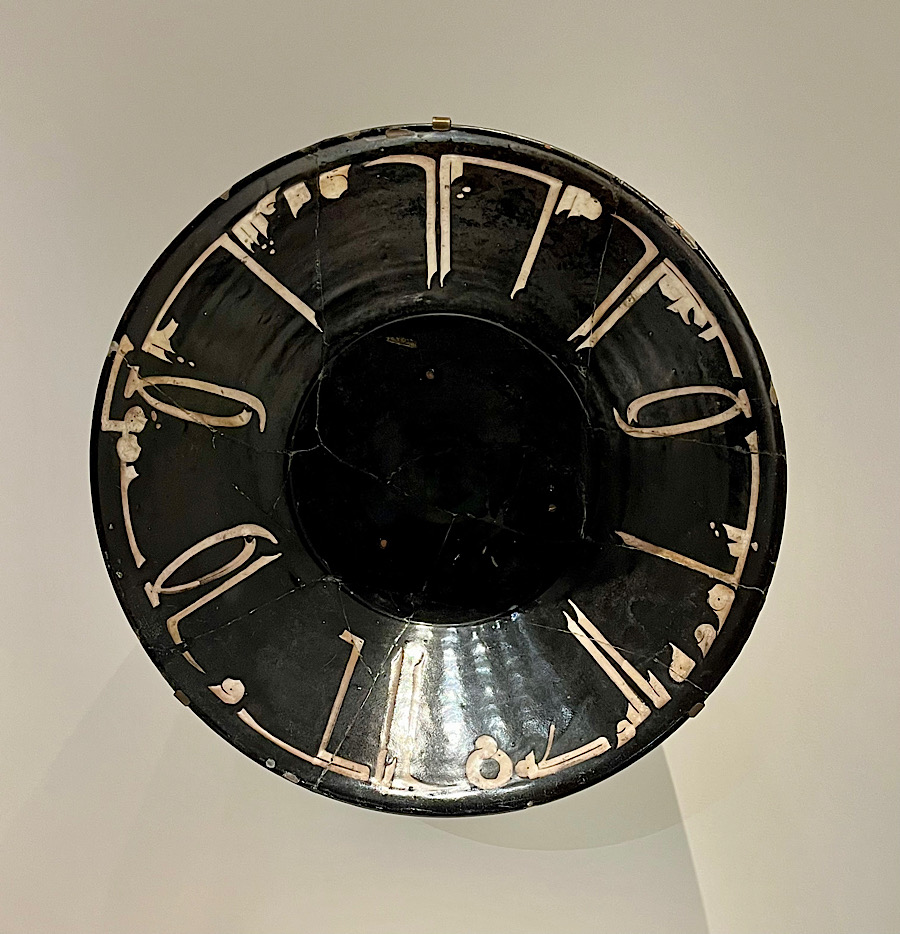
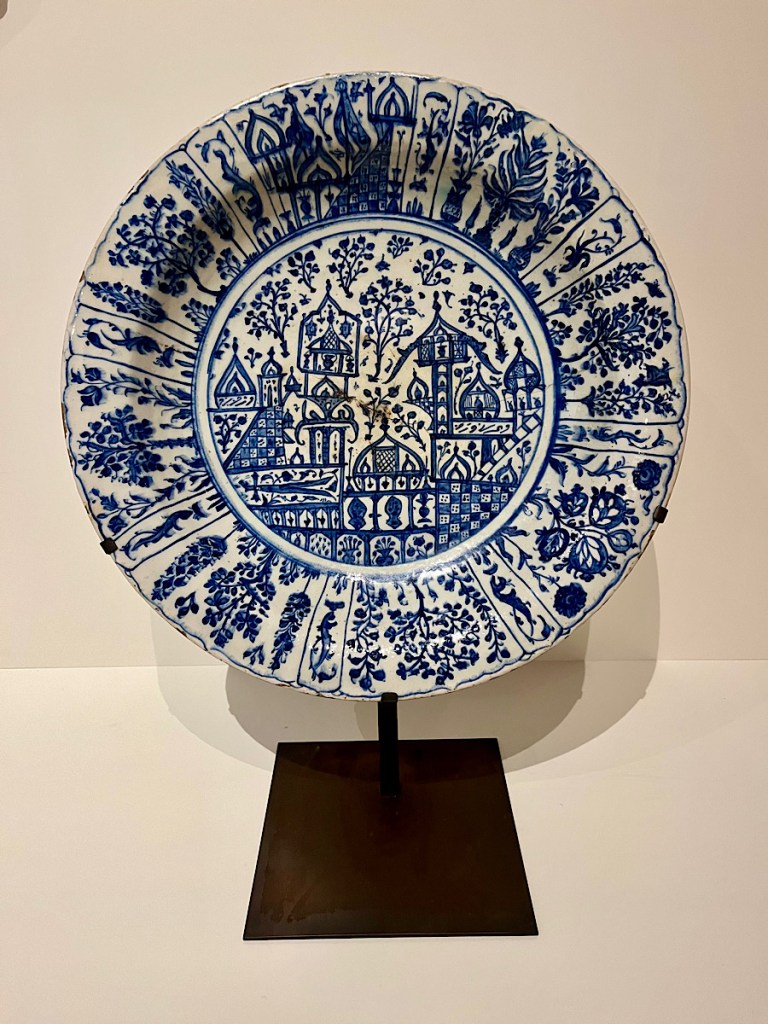
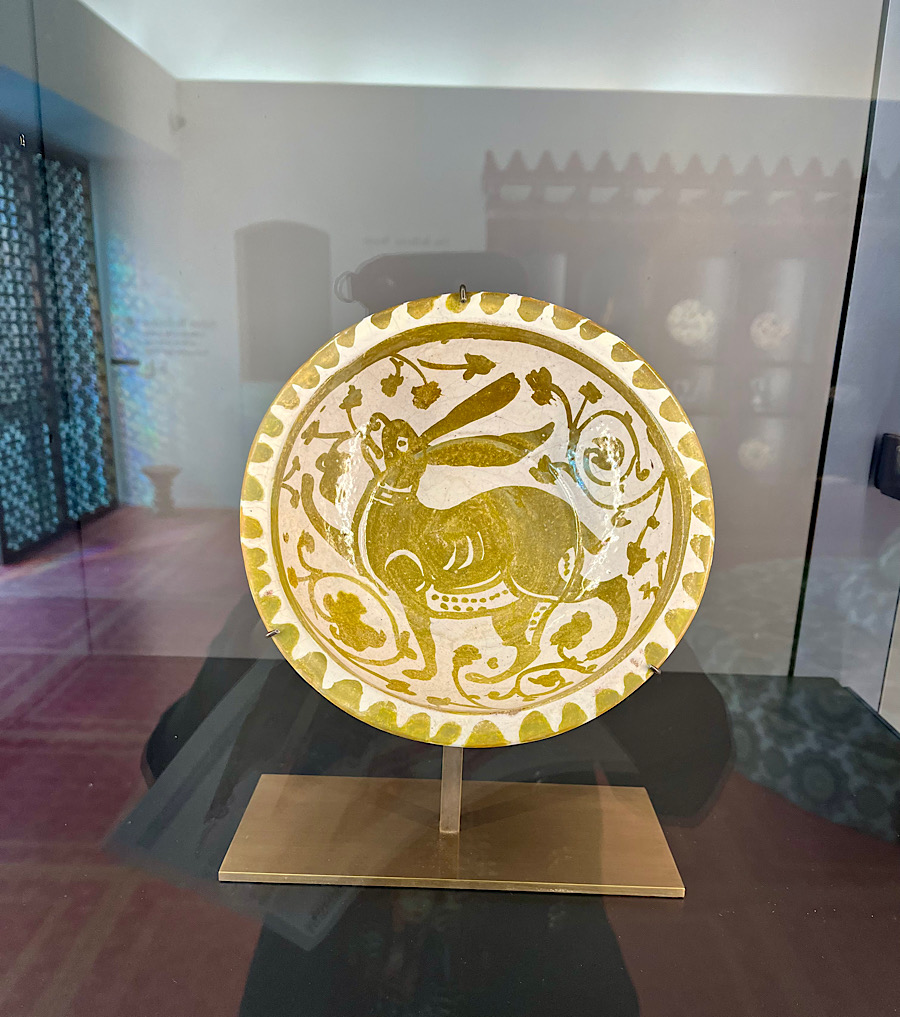
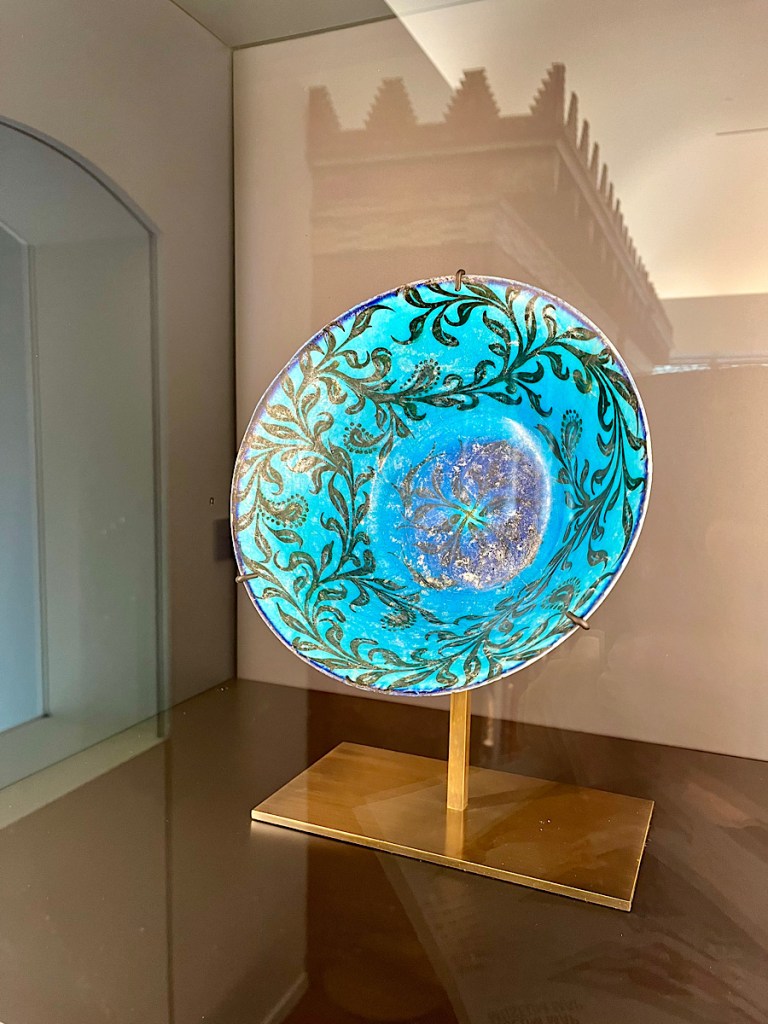
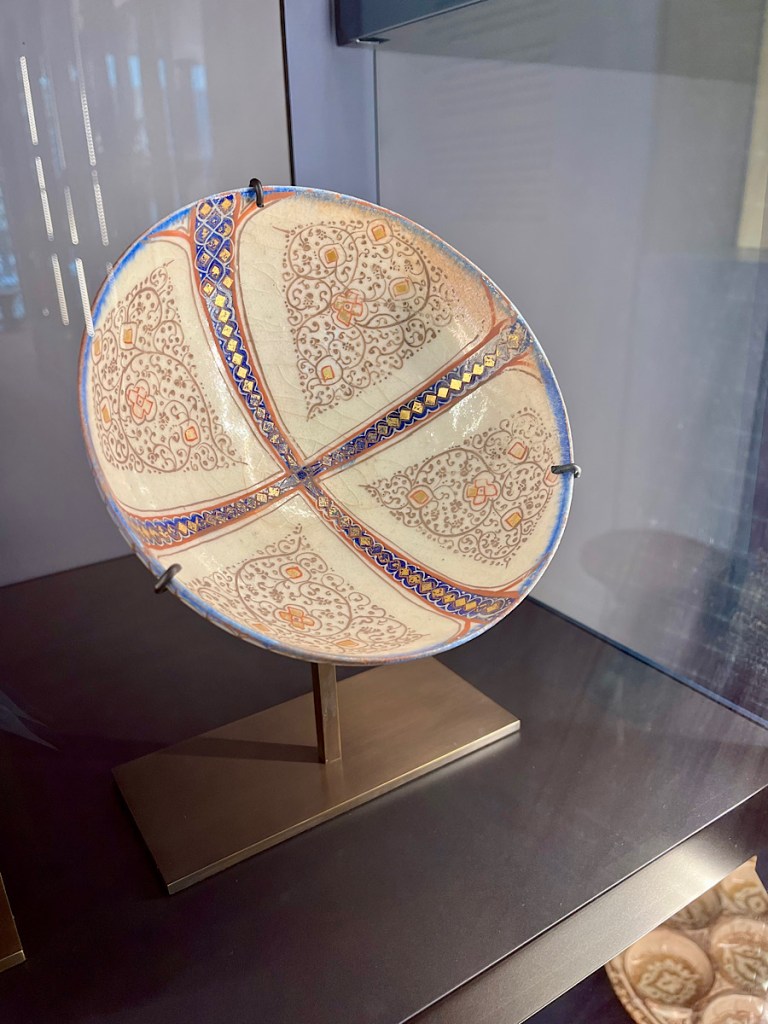
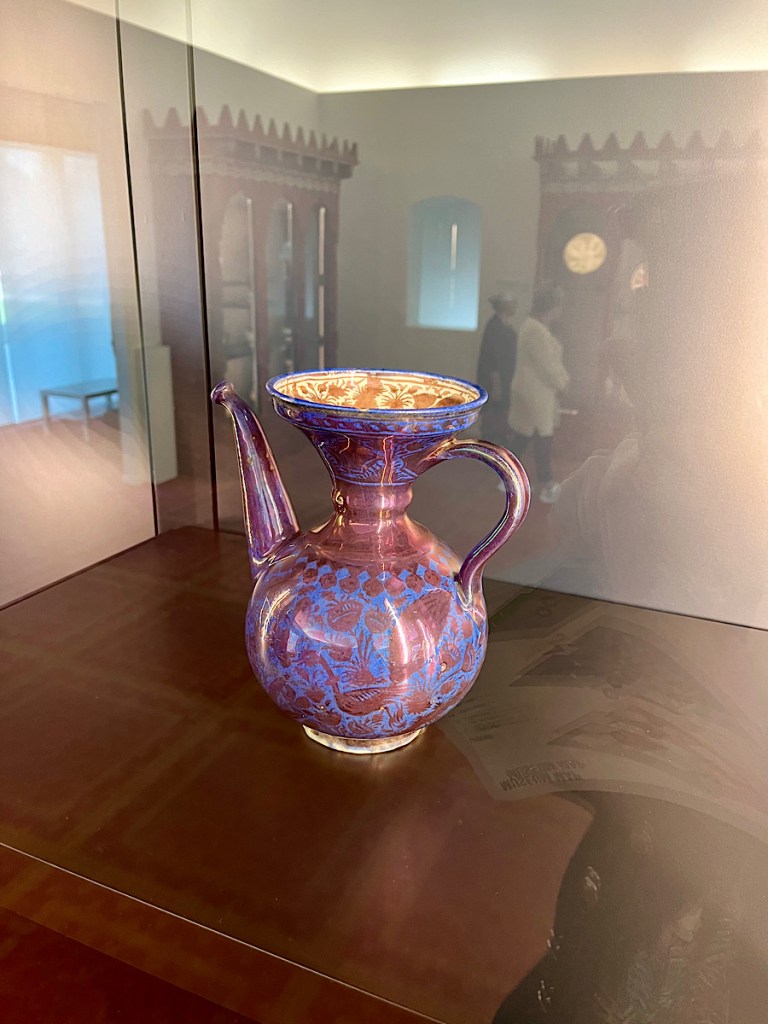
I knew next to nothing about Islamic ceramics when I walked into the Aga Khan Museum of Islamic Art in Toronto last month. I knew they had beautiful faïence wares, often intricately decorated, but that was about it. The collection at Aga Khan blew my mind–in particular the Bellerive Room, which showcases Prince Sadruddin’s personal collection. Islamic ceramics centered around Persia/Iran, where they developed fritware–stoneware with ground glass mixed in–to compete with Chinese trade porcelains; the ground glass acted as glue, creating a stronger and thinner vessel at lower temperatures and also durably adhering to silicate glazes for longer-lived wares. The high-silica glazes in turn fostered the development of gorgeous, iridescent lusterwares, and cobalt deposits in Iran and Afghanistan generated vivid blue and white decorations that reciprocally influenced the development of Chinese Ming wares.
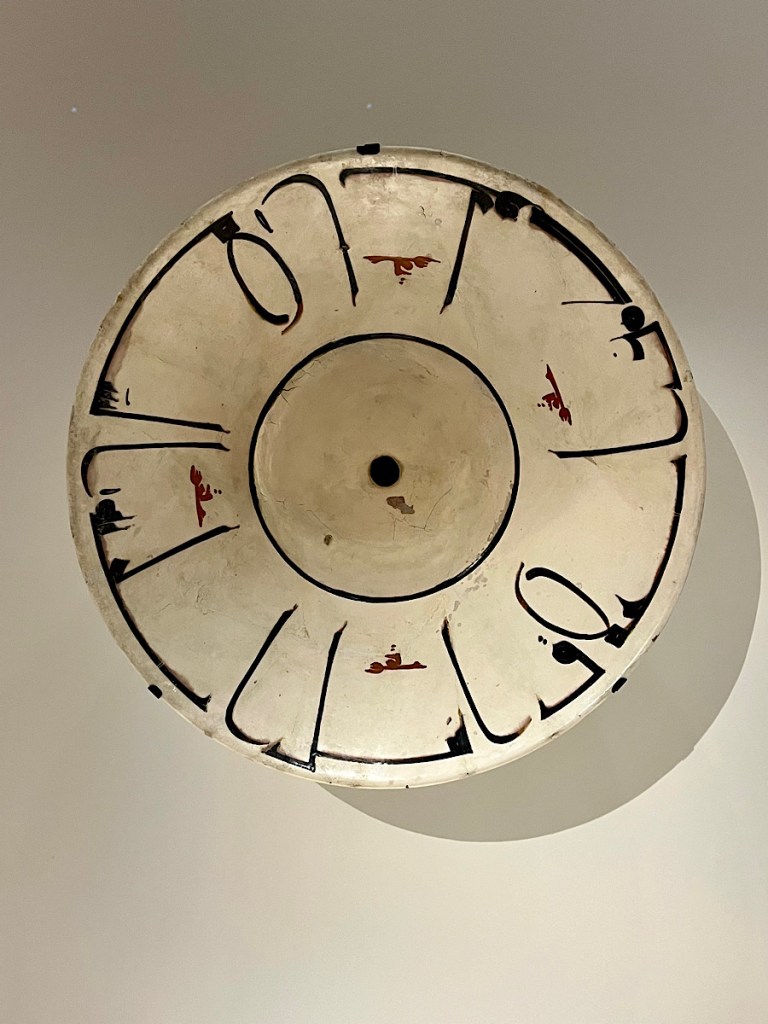
A particularly spectacular and unique type of Islamic ware is the calligraphic bowl (pictured above), on which passages of the Koran and poetry in Arabic script were stretched to the limits of legibility in order to create elegant basins designed perhaps to purify the hands washed or food served in them, or to serve as prompts to prayer and meditation.
Most of the wares in the gallery below were created in and around Nishapur, Iran, from the 10th to the 16th century; the website linked above contains additional details.



 The Rookery