
This is the most beautiful game I’ve ever played, and I’ve played a lot of beautiful games. In fact, art style is a major factor for me in choosing a game in the first place and in my ultimate rating of it. For example, Final Fantasy 7 makes pretty much every list of best games ever; couldn’t stick with it, and that was largely because the world was so ugly I just wasn’t motivated to hang out there (don’t @ me, please: I understand that it was 1997 and also that I’m terrible at JRPGs).
Beautiful games I’ve played: all the Amanita games (Machinarium and Samorost especially), Okami, Death’s Door, Tunic, Two Dots. Stunning games: Breath of the Wild (obviously); Gorogoa. Believe me when I say that Gris is in another league altogether, not just for the art style but for the sound design and the emotional depth.
The gameplay itself is relatively straightforward; it’s a platforming puzzle game where pretty much all you do is jump (with a couple of other cool skills you pick up that I don’t want to spoil). There are no real time constraints and no fail states, though you do have to re-climb a lot of things if you fall or miss as often as I do; I’m literally the worst at platformers and usually avoid them for that reason. But the platforming is totally organic to Gris, which means “gray” in Spanish (the game was designed by Nomada Studios out of Barcelona), because it’s a game about recovery, about climbing the long, winding path out of grief.
You play a girl who has lost someone dear to her—who that is isn’t revealed until the very end of the game, and only if you find and unlock all of its sparkling bullseye-shaped “mementos.” The grief steals her voice—along with all the color in her world and her ability to do anything except stumble forward into the wasteland her emotional life has become. But our little heroine is resilient, and soon she’s running and jumping forward, bent on finding a way back to, and maybe beyond, herself.
As you progress through the game’s five chapters, you bring colors back, one at a time, and start to find joy in the quirkier aspects of the landscapes and creatures you encounter—all of which help you on your way in some way, even the ones who seem dead-set against you at first. If you poke around diligently enough (hint: this game seriously rewards poking and messing around), you unlock the meaning behind the five chapters, some other fun achievements, and a secret cut-scene that reveals the identity of the mysterious woman who only appears in broken stone statues throughout the game. I almost never go back and replay games, and I totally did with this one, in part to get that cut-scene and in part just to spend more time in Gris’s gorgeous world.
Like I said, it’s not just the art style that makes this game so superlative: the music, by the Berlinist collective, is really special (the full soundtrack is available on YouTube here); the background sounds of water, creatures, rocks, and wind complement it perfectly and add emotional depth, as if the game needed more depth…. Because while Gris is a game about grieving, it also makes the best argument I’ve seen for sticking with the tough process of recovery: because at the end you climb into a world, and a self, that you couldn’t have even imagined back when you thought you had everything.
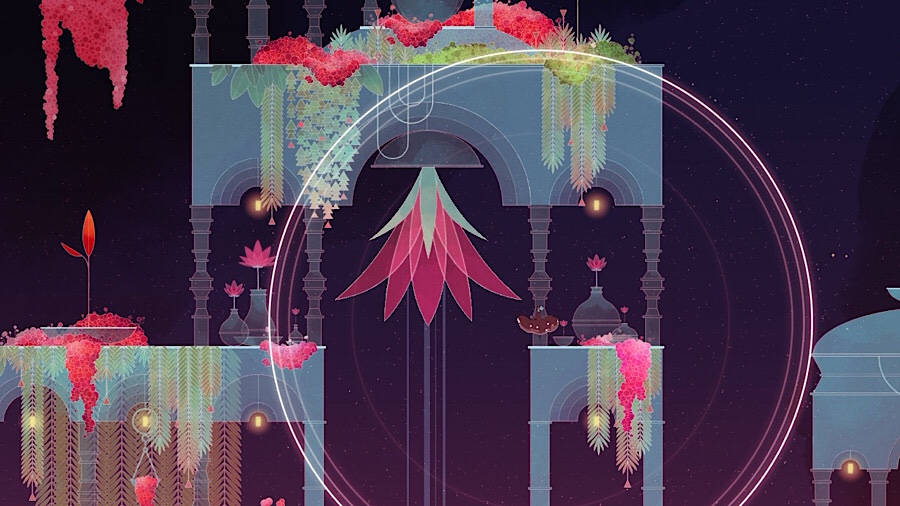
 The Rookery