These two shows have a lot in common: they’re both based on light novels written by Japanese women authors; they both follow quirky harem residents in an alternate/fantasy version of Imperial China; they both have an episodic mystery structure where the heroine plays detective; they both build romantic tension between the heroine and the Emperor (or his close surrogate). Of the two, Apothecary Diaries is more science-based and more sharply focused on gender dynamics. Raven of the Inner Palace is more magical and supernatural, and it’s the prettier of the two (though both are nicely animated); also, if you end up wanting to bide your time waiting for the second seasons to drop by reading the light novels, Raven is the better-written (at least in English). The first season of each series is currently watchable on Crunchyroll.
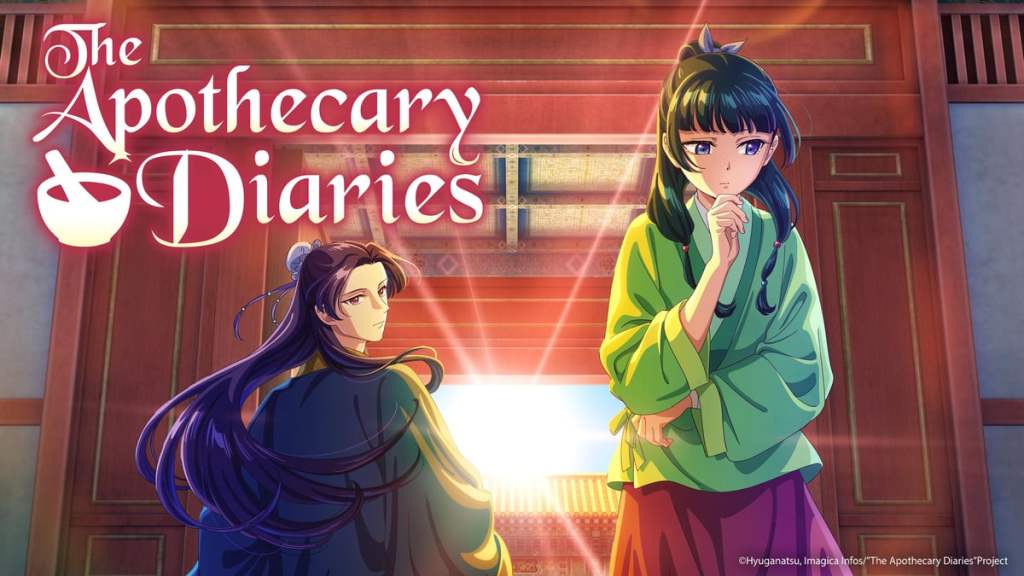
Apothecary Diaries follows the adventures of Mao Mao, an orphan raised by an apothecary in a small Chinese village who’s kidnapped, within minutes in the first episode, by human traffickers and sold to the imperial palace as an indentured servant. From there, the story moves very quickly (there’s a lot more novelistic territory to cover in this series than in Raven) to sweep Mao Mao from the laundries to the Inner Court on the strength of her pharmaceutical knowledge: she correctly diagnoses contact poisoning from lead-based face powder in the infant daughter of the Precious Consort, saving the imperial scion and earning her a position as the Consort’s food taster. Nothing makes Mao Mao happier, as she has a creepy penchant for testing different poisons on herself; however, those peculiarities, and her innate intelligence, draw the unwanted attention of the gorgeous head eunuch of the Inner Court, Jinshi–thus setting up the hate/love relationship that drives the season’s plot. For his part, Jinshi cannot stand that Mao Mao doesn’t worship him as everyone else does, and he practically kills himself trying to win her affection by coming to her with mysteries to solve and gifting her exotic poisons; Mao Mao meanwhile wants nothing more than to be ignored so she can take full advantage of the Inner Court’s incomparable resources to further her medical education and buy herself out of servitude. Though she runs afoul of all kinds of machinations among the consorts, assassination plots, etc., in the process–it’s really her will to power that makes the series interesting. Mao Mao is a woman who wants nothing more than to live as a man in her world, and this isn’t possible; watching her toe the line between living as she wants and living as she must to survive is fascinating–particularly because this struggle takes place on the complex, conflicted stage of the Inner Court, with its hyperfeminine consorts and emasculated eunuchs. On this point, Mao Mao and Jinshi end up having more in common than either of them realize–each of them having to feminize themselves in order not to be viewed as a threat to the powers that be and destroyed accordingly. Additional revelations from both of their childhoods make their entanglement with each other and the politics of the Inner Court that much more interesting and dangerous.
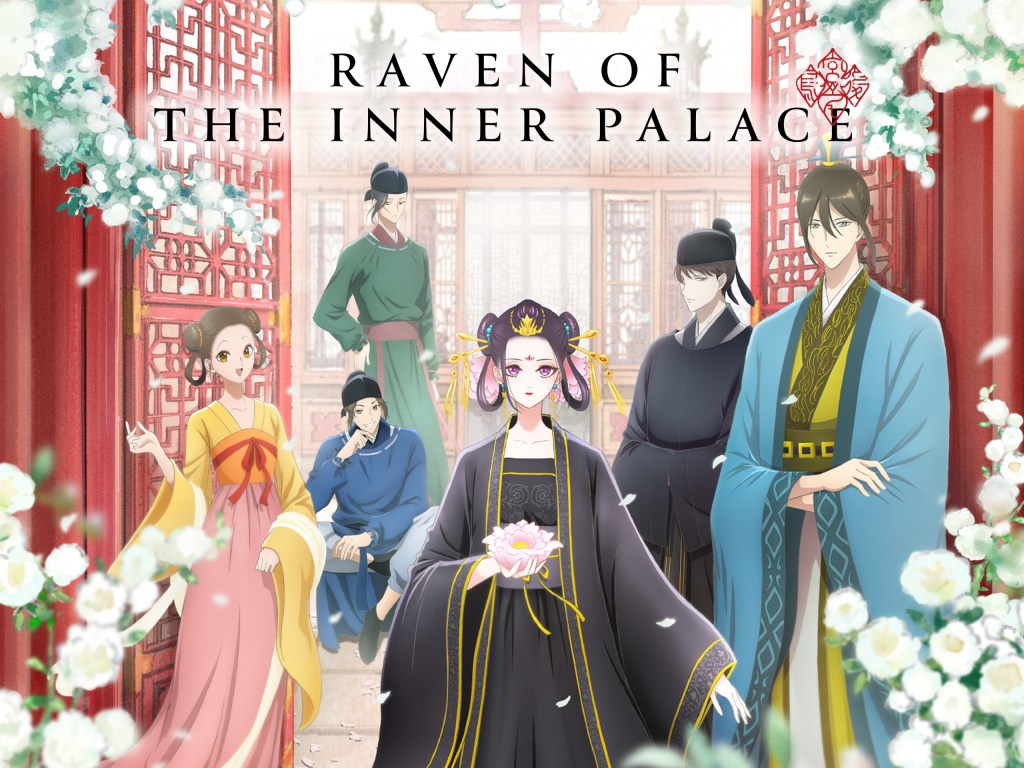
Raven of the Inner Palace takes place in quite a similar setting, but the wrinkle here is that Shouxue (Jusetsu in Japanese), the Raven Consort, is the shrine maiden of an ancient goddess (unsurprisingly, the Raven) and thus imbued with both supernatural powers and a curse that isolates her from the other consorts and the Emperor himself. In the first episode, the new emperor breaks that taboo by coming to ask the Raven Consort for help with a ghost that’s haunting the Inner Palace, and that breach opens up a whole new world for Jusetsu. As more and more people come to her for help, she finds herself more and more entangled in palace intrigues, friendships, and people’s expectations–the whole messy web of humanity. Complicating this scenario is an additional layer of supernatural intrigue; without giving too much away, I can say it has to do with an ancient battle between gods, and a detente in that battle that depends on a love/hate relationship between the Summer King (the emperor) and the Winter King (the Raven Consort). The series raises good questions about the possibility of true equality among genders; these questions get refracted not only through eunuch and consort characters, but also through ghosts and gods, which multiplies their complexity in interesting ways. The anime knocks off right when the action starts to get really good, but the light novels continue the story with a prose quality matching the loveliness of the animation by Bandai Namco; the final novel in the series is set to drop this October.
 The Rookery