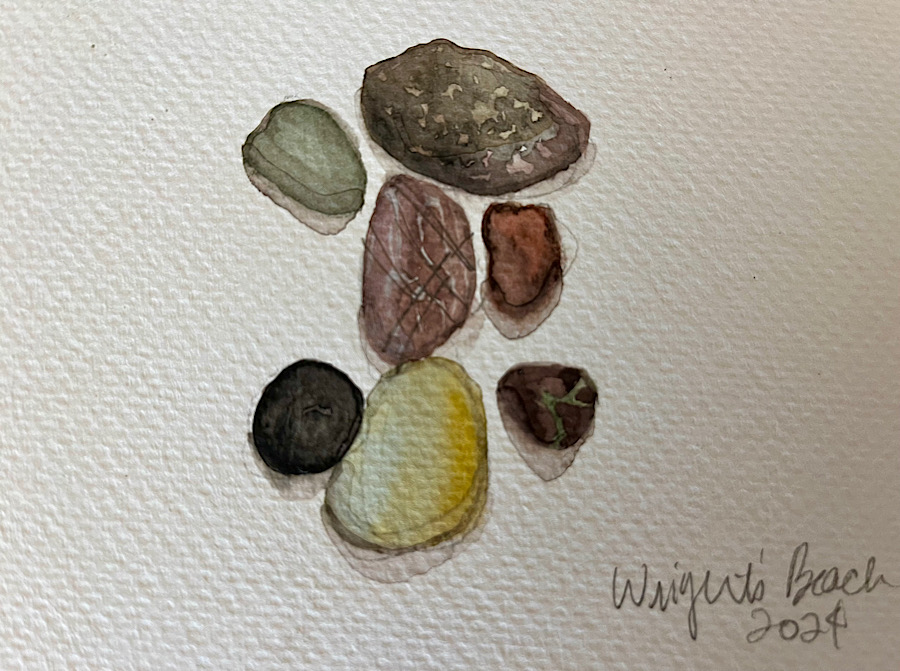
Friday: I camp at Wright’s Beach b/c they have beachfront sites and are dog-friendly, but Bodega Dunes is nearby with its painterly 2-mile-long beach, which is usually empty (no dogs allowed, though they can be in your campsite). If camping’s not your jam, there are also some lovely coastal resorts in the area, like Drakes in Bodega Bay or the River Inn in Jenner. And you can always rent a house in Sea Ranch, which is a special experience.
No matter where you stay, you absolutely must spend your first evening on the beach, so pick up some poke and potato chips and a bottle of wine from the Fishetarian or Tides Market in Bodega Bay and get out there; doesn’t matter where–they’re all gorgeous, and most are amazingly uncrowded. Pro tip–park at Duncan’s Point and take the short path down to Wright’s Beach to avoid the day-use charges and sunset curfew at the state park. But do heed the signs about staying off the rocks and out of the water, and don’t go out on the point if it’s storming: the local nickname for Duncan’s Point is Death Rock; people have been swept to their death from the parking lot in exceptionally high seas. Actually, I should say this in general about the Sonoma Coast: the ocean here is for looking, not touching. There’s an offshore shelf that makes for great fish habitat but terrible swimming, as it generates wicked undertow and a sinister rip tide. But don’t be sad: I have water sports on the menu for you–they’re just going to happen in a river.
Saturday: Drive up the coast to Stewart’s Point and get a morning bun and coffee, or a breakfast burrito, and some picnic supplies at Two Fish bakery. Then continue on a bit to Sea Ranch, read up on its fascinating history at the lodge, and then park there or at the Black Point Beach public parking lot and walk/run/horseback ride along the stunning Coastal Trail to your heart’s content–all 9 miles to Gualala if you like. Stop at one of the many jaw-dropping overlooks and picnic while picking out your favorite 1970s cedar eco-house and marveling at the grass-mowing sheep written into the original land grant (from a distance, please–their corrals are electrified and their canine guardians serious about their jobs). After lunch, I have some seasonal options for you:
- if you’re there January-March, go mushroom foraging with an expert in Salt Point State Park.
- If you’re there March-early June, go whale-watching at Ft Ross, an old Russian otter-fur-trading base that did a brief stint as a U.S. fort before being decommissioned. While you’re there, catch a tour so you can witness the amazing general store they’ve recreated complete with the Chinese trade goods the trappers got for their otter pelts; and, don’t miss the little jewel-box Russian Orthodox chapel as well.
- If you’re there in the summer or early fall, stop in Jenner and rent a kayak at the kiosk in the “C” Store parking lot for a foray on the Russian River, where you’re likely to see some otters whose great-great-grandparents the fur traders missed (phew!) as well as egrets, herons, deer, and coyotes. Pay attention to the tide tables or you might have some tough paddling on the way back in, but the river delta is flat and safe overall, and there are some nice beaches to stop at; put in at Goat Rock state park and hike over the dunes for a lovely view of the Jenner Headland.
No matter what you choose, you’ll have burned off your lunch by the time you’re done, so head across the street to the Jenner Wine Bar or Café Aquatica and refresh yourself on their picturesque riverfront decks.
It’s now time to choose your sunset-watching spot. I recommend either Mammoth Rocks (believed to be rubbing rocks used by Paleolithic mammoths) or nearby Shell Beach (not so many shells anymore, but a nice selection of seaweed you can harvest at low tide; there’s no such thing as poisonous seaweed, so cut whatever tastes good to you off its stem and eat it as a salad, or throw it in a bag in your cooler for drying when you get home; you can forage up to 10 pounds per day by state law!).
For dinner, if you’re not making potato-chip-crusted fried-fish tacos at your campsite with some local rockfish, then I recommend trying Huria’s Pizza or Terrapin Creek in Bodega Bay–or heading back to the Fishetarian for some fish and chips.
Sunday: You’re destined for the farmer’s market in Bodega Bay, but that doesn’t get going until 10 am, so I’d recommend whiling away any intervening time with a short hike along the coastal trail that goes from the Children’s Bell Tower at the Community Center out to Bodega Dunes (if you haven’t been there yet); getting all the way to the beach and back will take you a solid hour. Or, if you’ve had enough hiking at this point, grab a pair of binoculars (you brought them, right?) and watch the surfers at North Salmon Creek beach.
After you’ve toured the market, gotten your mushroom coffee and croissant, listened to a live smooth-jazz rendition of “That’s Amore,” and filled up your coolers with local produce, you’re probably headed home. I don’t know where that is, but odds are good the trip will take you south by the Bodega Bay Oyster Company, where you should try a couple dozen tiny Olympias–once so prevalent that San Francisco is literally built on them (their shells, at least) then extirpated from the bay by pollution and overfishing and recently reintroduced at farms along the Pacific Northwest. I also recommend the French Belons. If you’re still procrastinating the drive home at this point, I highly recommend a brief detour to Freestone to Wild Flour bakery to pick up whatever their daily special is with some coffee and nibble it in their relaxing garden. Or, brunch in Occidental at Hazel or Howard Station. After that, it’s time to leave the Coast, too soon.
Rainy Day Plan: If the coast is fit for man nor beast, as can happen, then Bodega Bay, Guerneville, Sebastopol, and Petaluma are all towns worth poking around. Or, you can head a bit farther north to Healdsburg and do some wine tasting in the Russian River Valley, my absolute favorite wine region. I heartily recommend booking an appointment for a tour and tasting at Ridge’s biodynamic vineyards and winery. I also really like Joseph Swan, Arista, and Dutton Goldfield (check their latest tasting-room hours as things changed dramatically with COVID). The climate in the RRV runs hot and cold, so you’re mostly looking at reds–juicy Pinot Noirs and Petite Syrahs as well as finely structured Zinfandels–but also some nice lightly-oaked Chardonnays and Viogniers.
 The Rookery