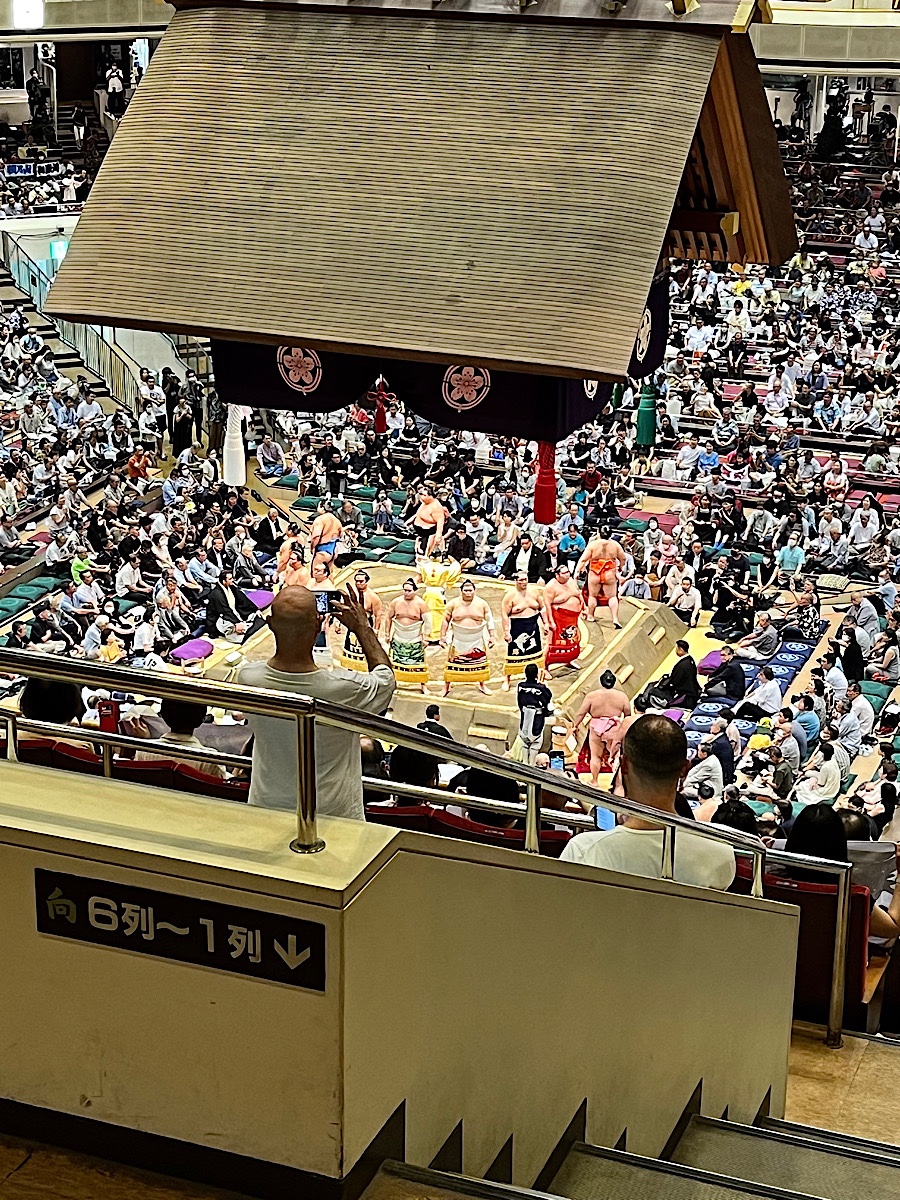
Two words: SUMO and CAPYBARAS. But not yet.
We woke up to a hot, hazy morning in Tōkyō. Just a couple of blocks strolling around Asakusa made it very clear we were going to have to make a plan that involved air conditioning. So, we set off for the Tōkyō National Museum and enjoyed a couple of blissfully climatized hours goggling at the national treasures of Japan. I’ve already posted on some of the ceramics we saw, but the lacquerware and screens and scrolls and swords and kimonos…. I had to dust off a lot of knowledge from my Japanese Art History class in undergrad: tarashi-komi, that’s the splattering of gold across screens to imitate mist in sunlight; Muramachi period, those are the screens with the flowers painted with runny colors…. I kind of bolted through all the rooms with Buddhas, not because I have anything against the man personally but because I still have a bit of PTSD from our final exam in that class—SO many slides of Buddhas sitting, standing, big, small, floating, and we had to ID them based on differences sometimes as minute as how they were holding their hands. It was a bit of a nightmare.
Even though it was outside, we couldn’t resist lunch at the tea pavilion on the National Museum campus. Fortunately, the traditional Japanese cha-do or tea house was well-shaded by hulking ginkgos and pines, and they had a little portable air conditioner inside as well as charming Kyōto-style hand—fans you could use: one thing I’m pretty sure the Japanese have gotten right about summer is that keeping your cool is as much a mental game as a physical one, so they paint cooling images like swimming goldfish on fans and hang beautiful glass windchimes called furin under the eaves that look like jellyfish and tinkle like falling water when the wind moves them.
After lunch we took a detour to Chiyoda city to a card shop. I had been so excited to bring my gorgeous little hanafuda card set on the plane with us and learn to play koi-koi with Cheryl after having seen the game played in the heartwarming anime Summer Wars. Then…I promptly left the cards in the seat pocket on the plane, which means we didn’t have them for all the long evenings in the ryokans on the Nakasendo; I kicked myself so many times for that I probably had bruises. Anyway, it all turned out for the good because I got to visit Okuno Karuta and buy and even prettier set of hanafuda cards as well as a Moomin-themed set for my friend Jason (the Moomin-trolls are SUPER popular in Japan) and see their hanafuda museum. Did you know that Nintendo got its start making hanafuda cards for gambling in Tōkyō’s red-light district in the Edo period? Neither did I!
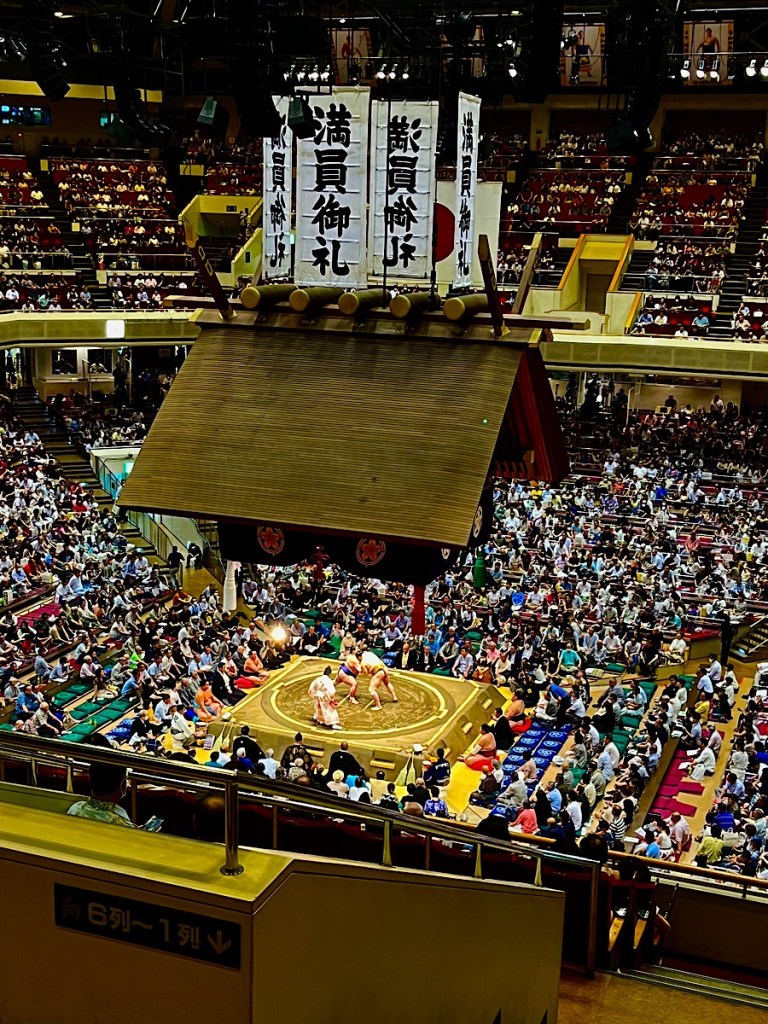
Once we left the card store, we grabbed some taiyaki and matcha ice cream to fortify ourselves for our voyage back across the river to the Ryogoku Kokugikan, the national sumo stadium! I had managed to get us tickets to the first day of the Aki Basho or fall tournament (narrowly missing a chance at a box for us down by the ring with red cushions, brass railings to protect us from getting flattened by errant 400-pound men, and runners in traditional garb to bring us fried chicken and beer—man, I’ve got to learn to click “Buy” first and ask questions later….) We had the BEST time. In fact, Steph, who was politely dubious about the whole enterprise at first, is now completely obsessed, keeping me posted on the wrestler who won the whole 15-day tournament (and whom we actually got to see even though we couldn’t stay the whole evening). It was so thrilling, watching the rikishi eye each other up and use psy-ops to get the best possible starting advantage—because most matches are over in under 15 seconds, so it’s all about timing, position, and technique. Sure, brute strength has something to do with it, but at the higher levels the rikishi are relatively evenly weight-matched, and so you need those other factors if you want to tip the scale in your favor. If you also want to get obsessed like Steph, I recommend this website and the Netflix series Sanctuary.
We were pretty worn out at this point and couldn’t face the thought of another long, hot walk to the metro station and a crowded train ride back to Asakusa—and that’s when we noticed the sign for the ferry up the Sumida river. By the time we figured out how to get tickets we only had to wait 15 minutes for the friendly crew to pull up—and remind us to duck on the observation deck as we passed perilously close under some older wrought-iron bridges. The sun was setting, everyone was out strolling along the river to stay cool—it was such a welcome respite. We swung back into the Sensō-ji neighborhood to pick up some fried chicken and grapefruit seltzers and watch all the revelers start to post up to the izakayas for the evening. Then, we headed out to pick up breakfast items at the 7-11 (don’t knock a Japanese 7-11 until you’ve tried one!), pack, and get a good night’s sleep before our final day in Japan.
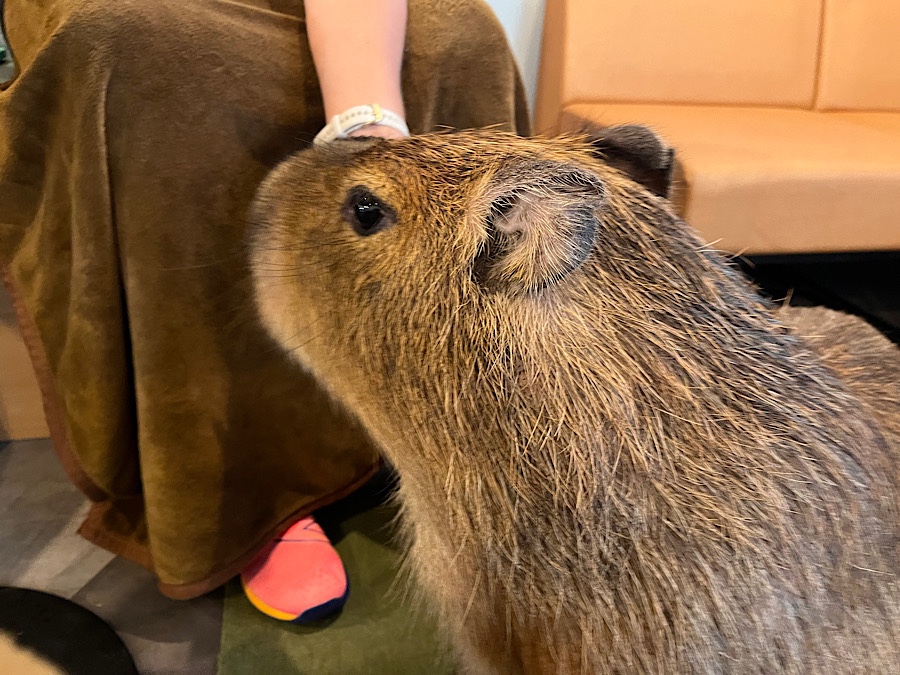
In the morning we ate a quick breakfast (I tried nattō for the first time—and it was fine!), checked out of our Airbnb and headed over to Cafe Capyba. Yep, it’s exactly what it sounds like—a cafe where you can pet capybaras while you drink your coffee. If you’re not up on your capybara lore, they’re the world’s largest rodents, native to South America and distantly related to the nutria we have here in the southern U.S. They’re so extremely chill there are whole videos and memes on the subject. Cheryl had asked for a visit to the cafe as her one must-do birthday activity, so of course we weren’t going to miss it. The two resident capybaras were very welcoming, enthusiastic about carrots, and heavy (I know this because one of them stood on me to get to his carrots). They also liked back scratches and lounging on the cafe benches. And the coffee was surprisingly good as well; an hour well spent.
We hadn’t yet had a true Japanese department store experience. Steph wanted to browse the fashion and I wanted to browse the food hall in the basement. So we hit up Isetan Shinjuku before heading to the airport. Japanese department-store-basement-food-halls should be a UNESCO World Heritage site. They are a sprawling labyrinth of blindingly lit kiosks selling sushi, matcha cookies, unblemished fruit displayed like jewelry (and priced accordingly) to present as gifts, artisan miso, dried fish, Wagyu, boutique tofu, noodles of all kinds, rice-bran pickles, and more sushi. Just as the kids in From the Mixed-Up Files of Mrs. Basil E. Frankweiler moved into the Met, I could move into any Japanese department store food hall and be perfectly happy there.
We didn’t have terribly long before our train however, so we grabbed some so-fresh-it-glowed tuna sushi for the train, gawked at the fall collection of Junichi Suwabe and several other Japanese designers, oohed and aahed over the stationery section, and then hightailed it for Shinjuku station.
The hour ride to Narita seemed to go too fast; I found myself missing Japan already as the last sunset-gilded tile roofs, rice paddies, and bamboo groves were whisked away by the tunnels taking us down to the airport station. All three of us felt the same way, I think: we wished we could stay. And at the same time, we knew that meant it was probably time to go home.
 The Rookery