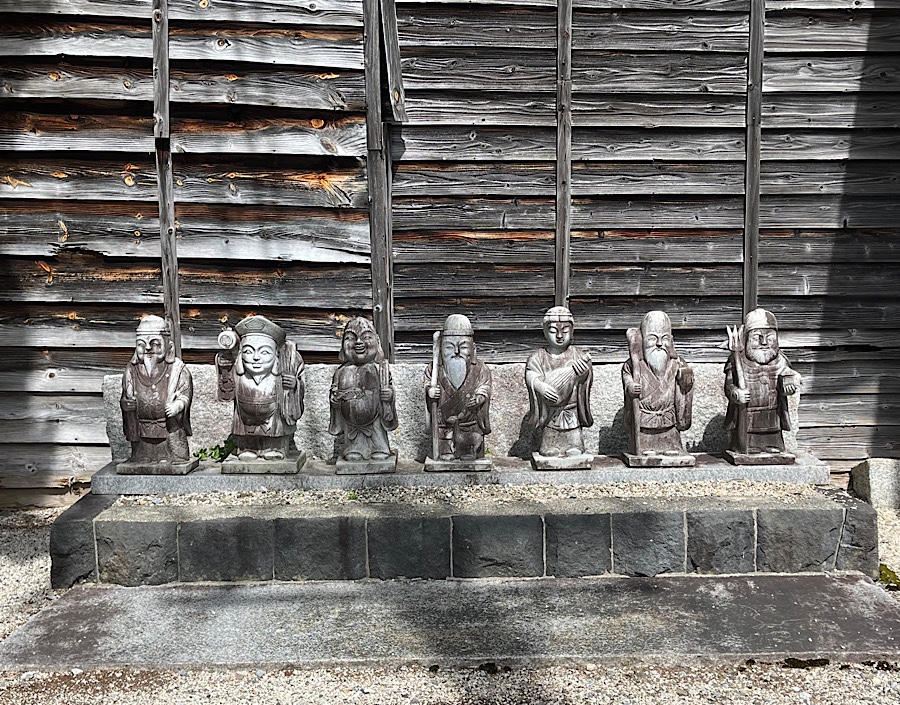
What I learned today was that life in the Japanese Alps during the Sengoku (Warring Provinces) period must have been fairly brutal for all involved–the warlords who were constantly having to raise armies to attack their rivals, or defend against those attacks; the reluctant farmers who were forced to leave the rice paddies they had carved out of the mountains with their own hands to fight in those armies; the porters and merchants who struggled to hump their wares over the higgledy-piggledy network of trails that wouldn’t be called the Nakasendo for another century.
I thought about all of those folks as we hiked the Nakasendo’s steepest pass, from Yabuhara to Narai, and guessed that none of them were having as much fun as I was today, hiking along in blessedly breezy conditions through sun-and-wildflower-splotched beech forests, admiring the stonework in the intermittent cobbles underfoot and the little shrines at the roadside.
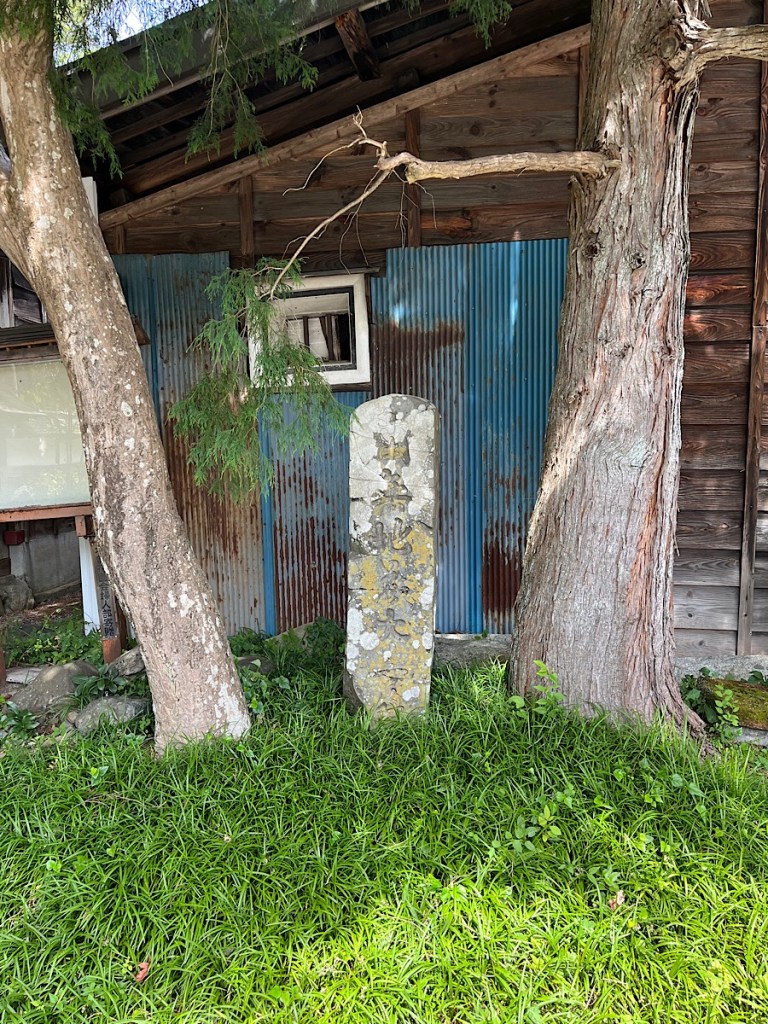
The track led us steadily uphill, and before long we were at the Torii-tōge, the Torii Pass, marked by a hulking ceremonial gate erected by a distant descendant of my BF Kiso Yoshinaka in thanks for a victory in the interminable Sengoku wars against the Matsumoto clan. There was also a pretty shrine that afforded a hazy view of Mt Ontake (second tallest volcano in Japan) in the distance. On the downslope we passed a grove of horse chestnuts that Bashō wrote a haiku about and that hosted a legend about a childless couple who found a baby in a tree hollow. Women used to drink tea made from the bark of these trees if they were trying to conceive. A little farther on we came to a very nice cedar rest house with an informative sign pointing off the trail to another shrine with a pine tree planted by the Meiji emperor as well as, surprise!, a spring whose water my dear Naka-chan used to pen a poem about something romantic, in a pause between battles, one presumes. Sadly, I couldn’t visit as we needed to make our train to Matsumoto.
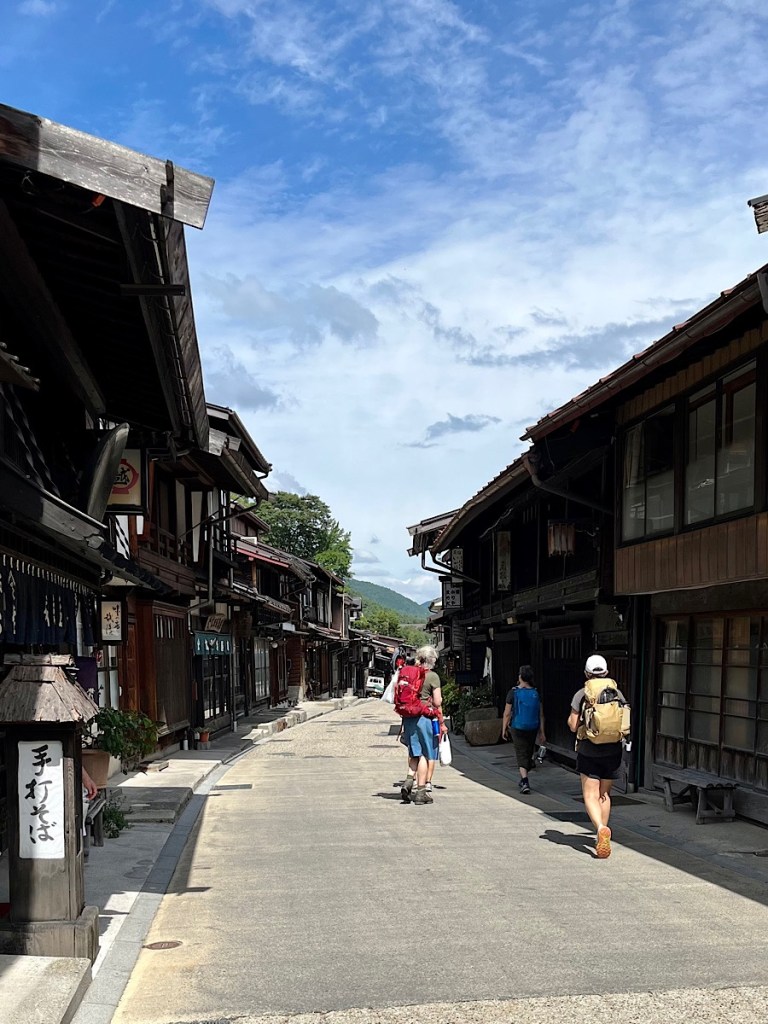
The postcard-perfect village of Narai-juku is the post town marking the center of the Nakasendo. Called the “town of 1,000 inns,” it served as the resting spot for travelers either preparing for or recovering from the journey over the pass. We took a little time to poke through the souvenir shops and to eat a delicious lunch of cold soba at a tiny café at the end of the main street. In the café I was drawn to what looked like a charming woodblock print of local life in Narai and tracked it back to a shop up the street where I learned it was in fact kirie, Japanese papercut art, which if you have spent any time on this blog, you know is near and dear to my heart. Sadly, the shop wasn’t open, but I did eventually hunt down the artist’s, Kyōko Yanagisawa, website if you want to see what I was seeing. And, that hunt led me to another fabulous discovery, which I’ll get to tomorrow….
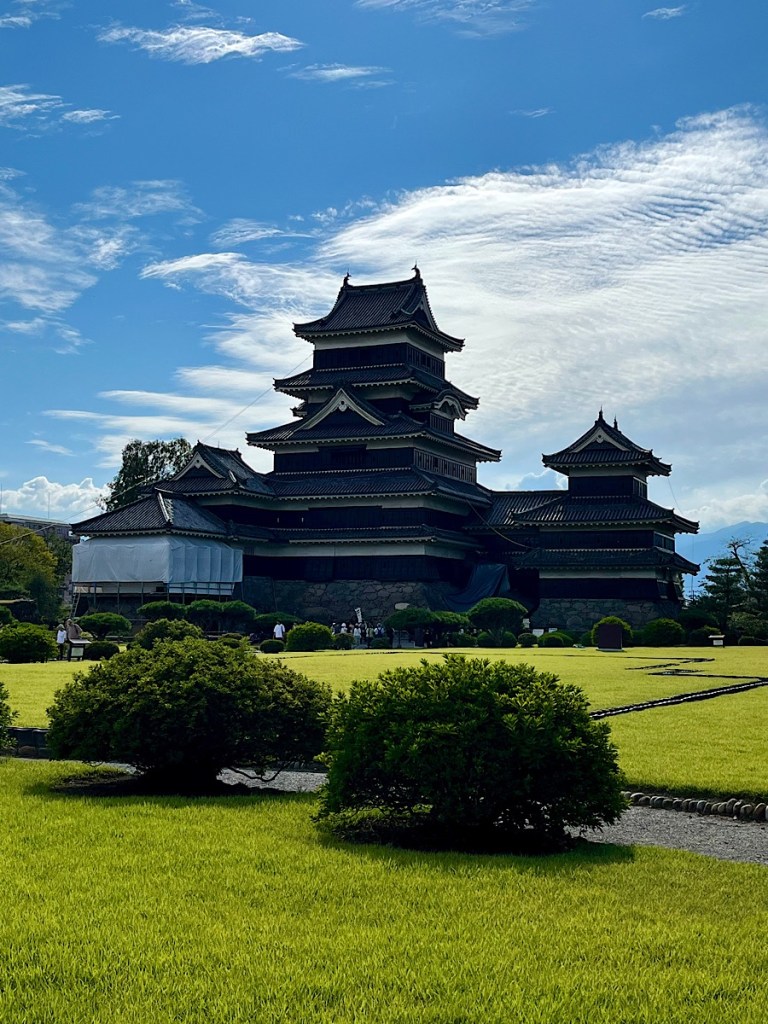
But at any rate, it was time for us to catch our train for Matsumoto and our evening’s accommodation in the suburb of Asama Onsen, famous for its natural hot springs (many ryokan, including some of those we stayed at, heat their water artificially). Enroute we detoured to Matsumoto-jo, the famous “crow castle” so named for its gleaming black-lacquered exterior. An early, small fort was built on the site in the Sengoku period, and then the Matsumoto clan expanded it to its current stature in the early Tokugawa period (1600s). The five-part keep or tenshukaku is original to the period and thus technically the oldest castle in Japan; most of the outer palaces burnt in one war or another and were rebuilt.
We’d been told by some English teachers we met in Kiso-Fukushima that the castle was a do-not miss, and I’m inclined to agree even if we weren’t there during cherry-blossom season to see it floating black in a pink cloud of blossoms, silhouetted against the white snowy peaks of the Alps. We toured the main keep or dai-tenshu, which is where the daimyō (warlord), his family, and his samurai would have holed up in the event of an invasion; during peaceful times they would have lived out in the more-comfortable palaces. The six-storey (one hidden) keep is a maze of offset staircases with enormous and irregular risers to confuse and trip up invaders. Other defensive features include the typical bow slits and open eaves through which rocks and hot oil could be dumped on those foolhardy enough to try to scale the castle from the moat. Interestingly, wives and daughters of samurai were responsible for supplying ammo for the European arquebus guns by melting and molding lead balls in the hidden 3rd storey of the main keep. If that all sounds miserable, I’m sure it was–but apparently a few Matsumoto samurai found the energy during their long night vigils to write poetry about the shifting patterns of moonlight cast into the keep through the latticed windows. Those are displayed alongside the guns.
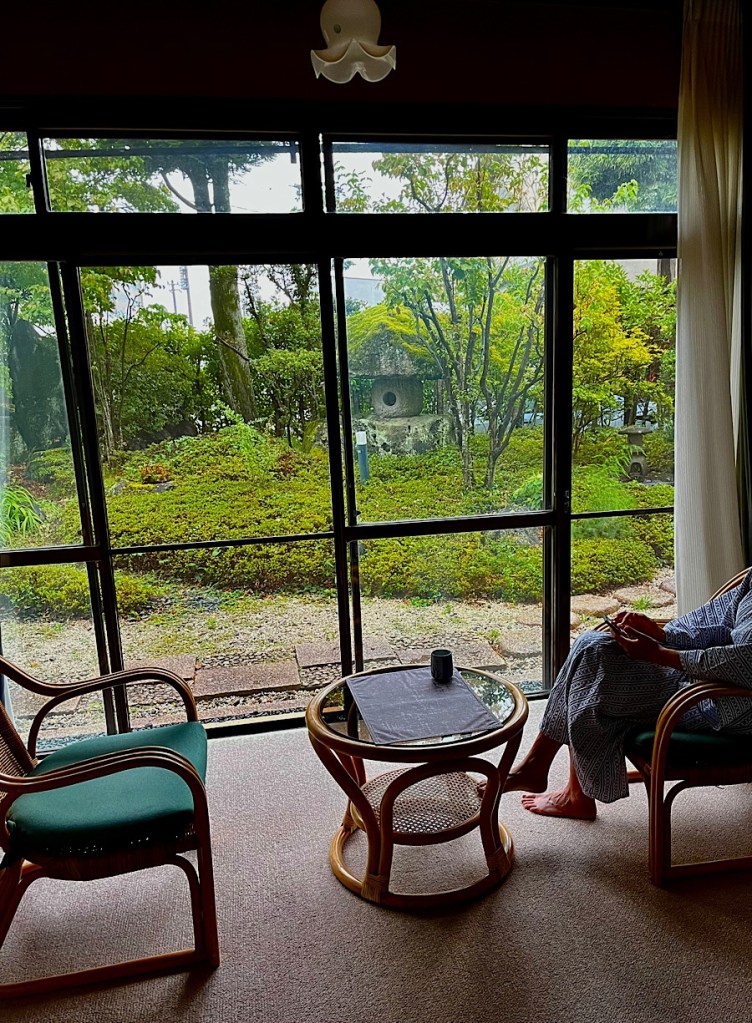
At this point we were ready to call it a day, so we caught our bus to Higashi Ishikawa–with the help of a friendly driver who corrected the directions we’d been given and saved us a 10-minute walk. The ryokan was possibly my favorite of the trip–small, family-run, and very traditional, with a stunning garden and simple, tranquil onsen. Dinner upstairs in the rustic bar area was delicious, featuring more Hida beef and fresh local mountain-vegetable tempura. As we slid open our shoji screens in our room, the promised rain began to fall (we narrowly missed a typhoon that curved away and hammered Tōkyo in our absence), and we fell asleep to the sound of it pattering on stone lanterns, ferns, and moss.
 The Rookery