
Today was my favorite day of the trip even though we just stayed around Kiso-Fukushima, and that was largely because it was my sister’s birthday, so we maximized the fun. The weather had thankfully cooled off a bit, so while the Germans peeled off to go back to a nature preserve on the Kiso River and do some swimming, the three Americans decided for the optional hike that day to Gongen waterfall (Gongendaki) because, naturally, Kiso Yoshinaka had prayed for victory there before raising yet another army to go after the Taira clan; boyfriend had a good feel for drama.
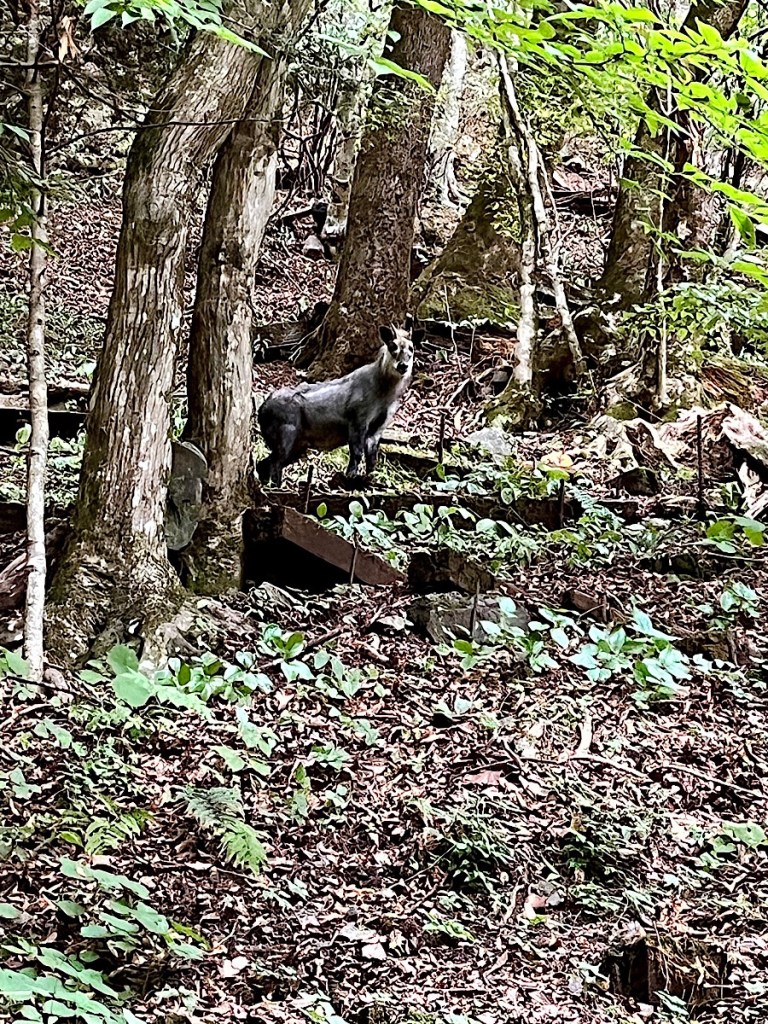
Due to the dry conditions at that point in the summer, the falls themselves weren’t anything to write home about, and the trail was very steep, so it was a good thing we were rested up. But the hike through the moody beeches with the rain pattering on the canopy above us was tranquil and relaxing. Plus, we had a rare (we were told) sighting of a kamoshika, a native Japanese antelope that was hunted to endangered status but has made a big comeback in recent years as conflicts with foresters have abated (apparently they really enjoy the taste of the saplings the foresters try to grow after clear-cutting a plantation). It was more than a sighting; he accompanied us on our hike for a solid 10 minutes or so, taking a few switchbacks and then waiting for us to catch up.
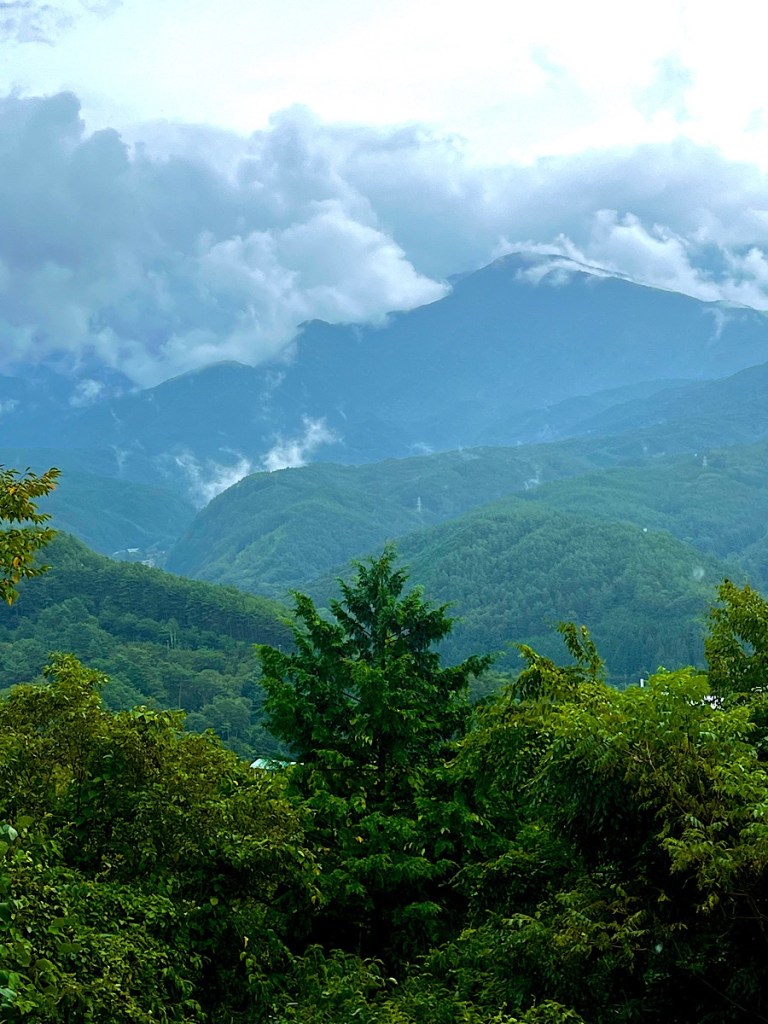
As the rain started to pick up when we got to the falls, we opted not to continue up to the higher viewpoint and head back down before things got too slippery. The trail down was really a road, winding past yet another immaculately maintained rest stop (complete with plastic flowers in vases and a mirror for you to check your hiking ‘fit) and a nice overlook of the valley from the base of the local telecom tower.
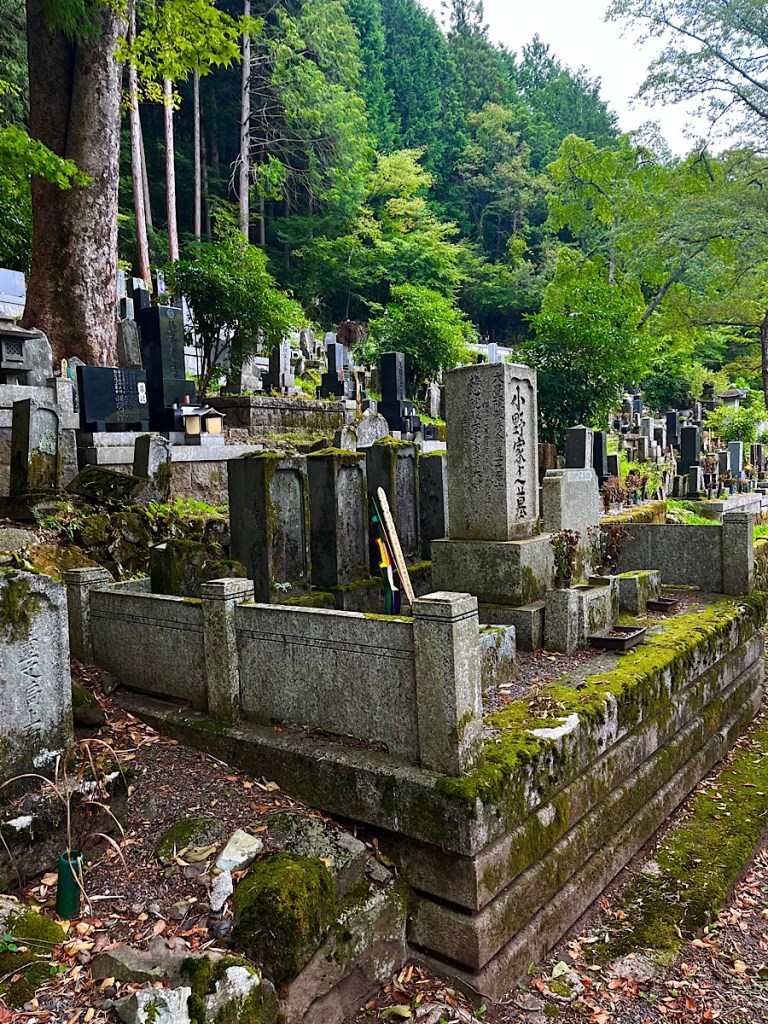
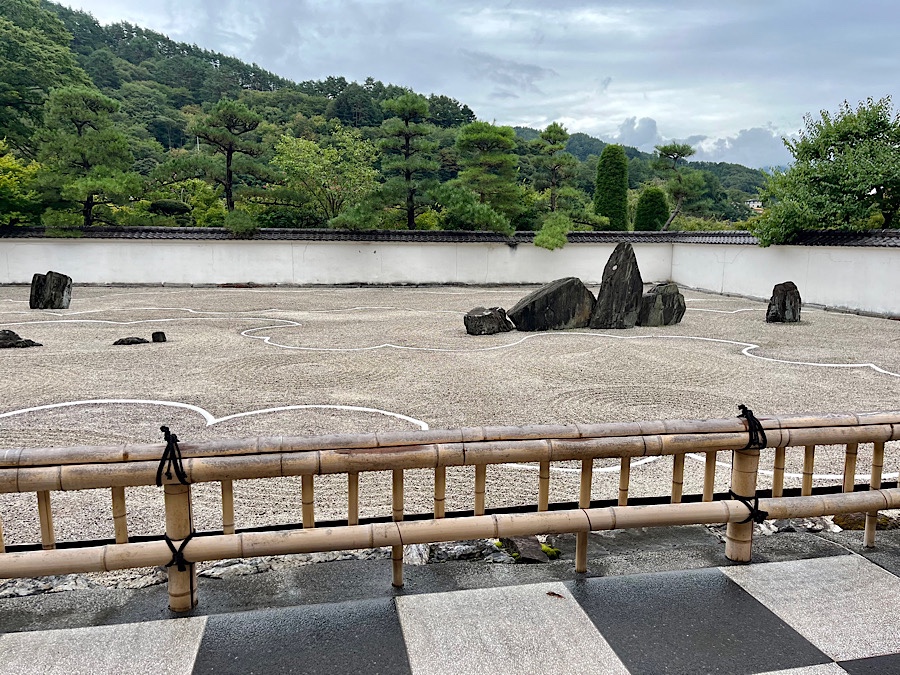
The trail let out at one of the day’s real highlights: Kozen-ji, a small but beautiful temple complex featuring Asia’s largest dry Zen garden, built in the 1960s by Mirei Shigemori, as well as four other gardens (the pond garden is pictured above) and a museum with various temple treasures, including some very nice lacquerware and screens and a paneled ceiling from the 17th century painted with portraits of seasonal flowers. ALSO, a lock of my BF Naka-chan’s hair is buried in the cemetery at Kozenji: in his final battle against not only the remaining Taira retainers but also his traitorous Minamoto cousins, his horse became inextricably mired in river mud as his enemies bore down on him from the hills. Seeing the futility of his situation, he cut off a lock of his hair and tasked his lover, the woman warrior Tomoe Gozen, with carrying it to Kozen-ji. He tried to convince his blood brother Kanehira to flee as well, but Kanehira refused, and the two of them fought to their deaths there in Ōmi, where Yoshinaka is buried–most of him at any rate; his cousins may have made off with his head. I sound unsure about that because we got all this information by Google translating the sign at his gravesite–which further and helpfully informed us that he had died at the age of 2 from a strange illness and then again at age 11 from a fall from a horse. So really you can choose your own adventure where Naka-chan’s concerned, and it’ll be hard to prove you wrong since every landmark in the valley is supposedly the site of some heroic (or perhaps “heretic”–the translations were also unclear on this point) achievement on his part.
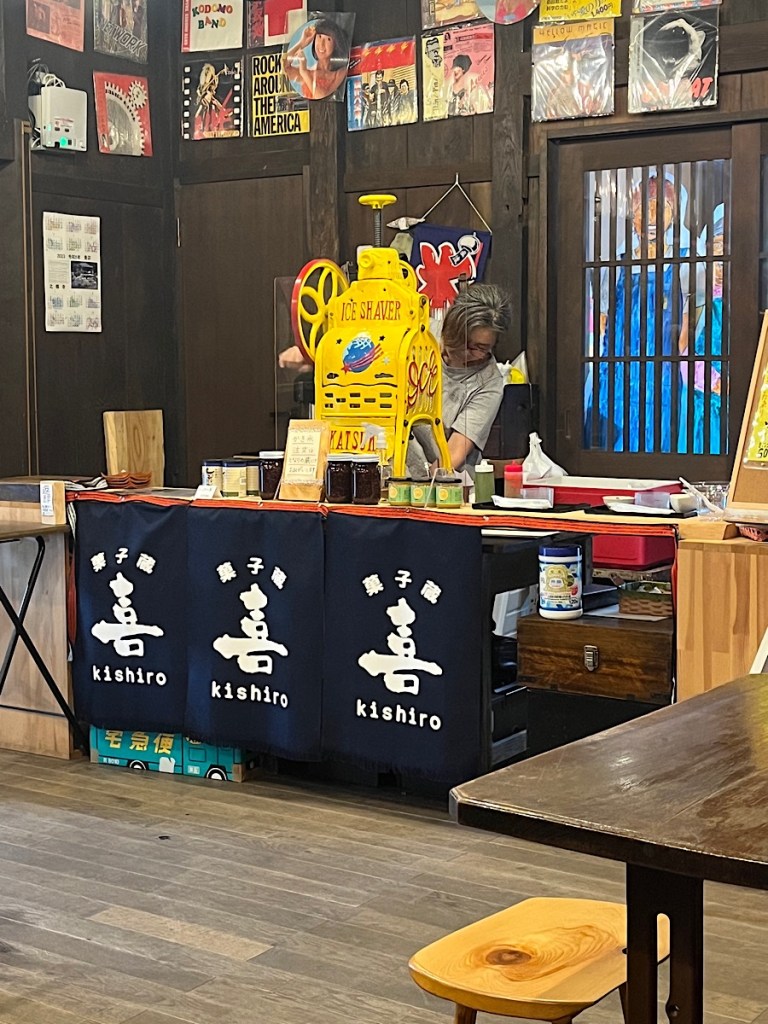
We had promised ourselves gelato and a soak at the public footbath after our hike and so made good on that deal with a couple of nice peach and hazelnut scoops from Taguchi Hyokaten and a pleasant few minutes swishing our feet in the hot water and looking out at the Kiso River. The weather was holding up nicely–cloudy and cool but not rainy–so we hiked uphill to the preserved Fukushima-juku or old town where the Nakasendo originally passed through and looked in the windows of traditional sweets shops, kaiseki restaurants, and inns before heading back downhill to Kishiro Café for some Kakigori (Japanese shaved ice with tea syrup and sweet red beans) and a rest in a low-key hall full of Suzuki guitars–which were made there in Kiso-Fukushima (the valley is famous for the quality of its timber and wood-working–and album covers from 80s Japanese rock bands.
After a quick soak in the onsen back at Onyado Tsutaya and some work email, we headed back out to acquire the sake (or nihonshu as they call it there) for Cheryl’s birthday dinner. The Kiso valley is renowned for the quality of its water, and wherever there is good water in Japan, there are good sake breweries. Our first stop was Nakanorisan, named for the lumberjacks who would ride the enormous cedar logs down the river from where they were cut to the lumber mills. The friendly owner poured us a sampler of some really wonderful brews, including an unpasteurized tokubetsu and a junmai ginjo made from rice she grew in her own paddies up the hill (and weeded with ducks). She showed us some sampler jars of the different polishing levels of the rice, which creates the different distinctions in taste: more polish generally yields a sweeter, stronger brew as more of the grain’s starches are exposed to the koji yeast for conversion into sugar, alcohol, and carbon dioxide. We also enjoyed the snacks served cleanse our palate–crispy dried shrimp, rice-bran pickles, and macadamia nuts we cracked ourselves with a screw-press (Cheryl proved the most adept at getting them open without destroying the nutmeats). We bought a bottle of the junmai ginjo and then headed back down to right across the street from our ryokan at Nana-Warai. We’d had a couple of small bottles of sake from their brewery the night before at dinner and really enjoyed them. The proprietor didn’t speak any English, so we figured out by a mix of broken Japanese and pantomime how to operate the coin-op sake vending machine that dispensed little 2-oz. tastes for $2. We picked up a second bottle of junmai ginjo from there. Later that night our proprietor complimented us on our selections and explained that the sake from the two breweries tastes different because each brewery uses the water that flows down to it from the mountains–and the Kiso river runs between two very different mountain ranges with different geology, flora, etc. He also said that while Nana-warai is more famous nationally, locals tend to prefer Nakanorisan….
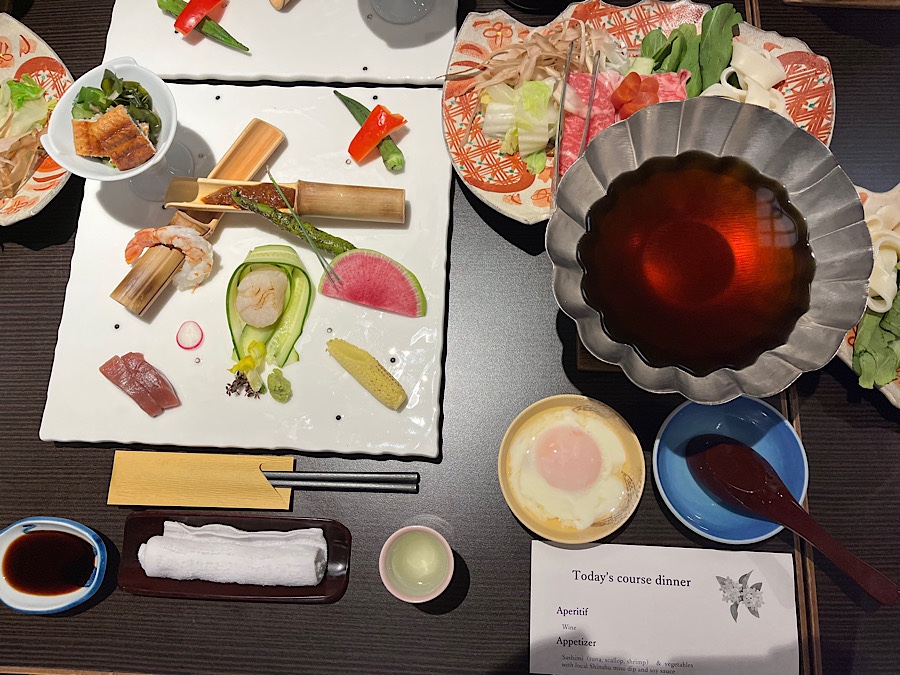
The staff had kindly procured a delicious little strawberry shortcake cake for Cheryl’s birthday, so we capped off a fantastic day with another big, delicious kaiseki dinner and then cake and sake. We finished off the second bottle in the lounge as we flipped through their library of books on art and pop music and planned our next day’s hike out of the valley. There was still a lot to do in Kiso-Fukushima that we missed; I would definitely return to explore more around the Japanese Alps, the lakes, and the highlands where they used to raise native Japanese horses for the Nakasendo trade and for samurai to ride–and still do. Onyado Tsutaya has a sister inn up in the highland that’s more high-end and less homey, but it would be fun to check out!
 The Rookery