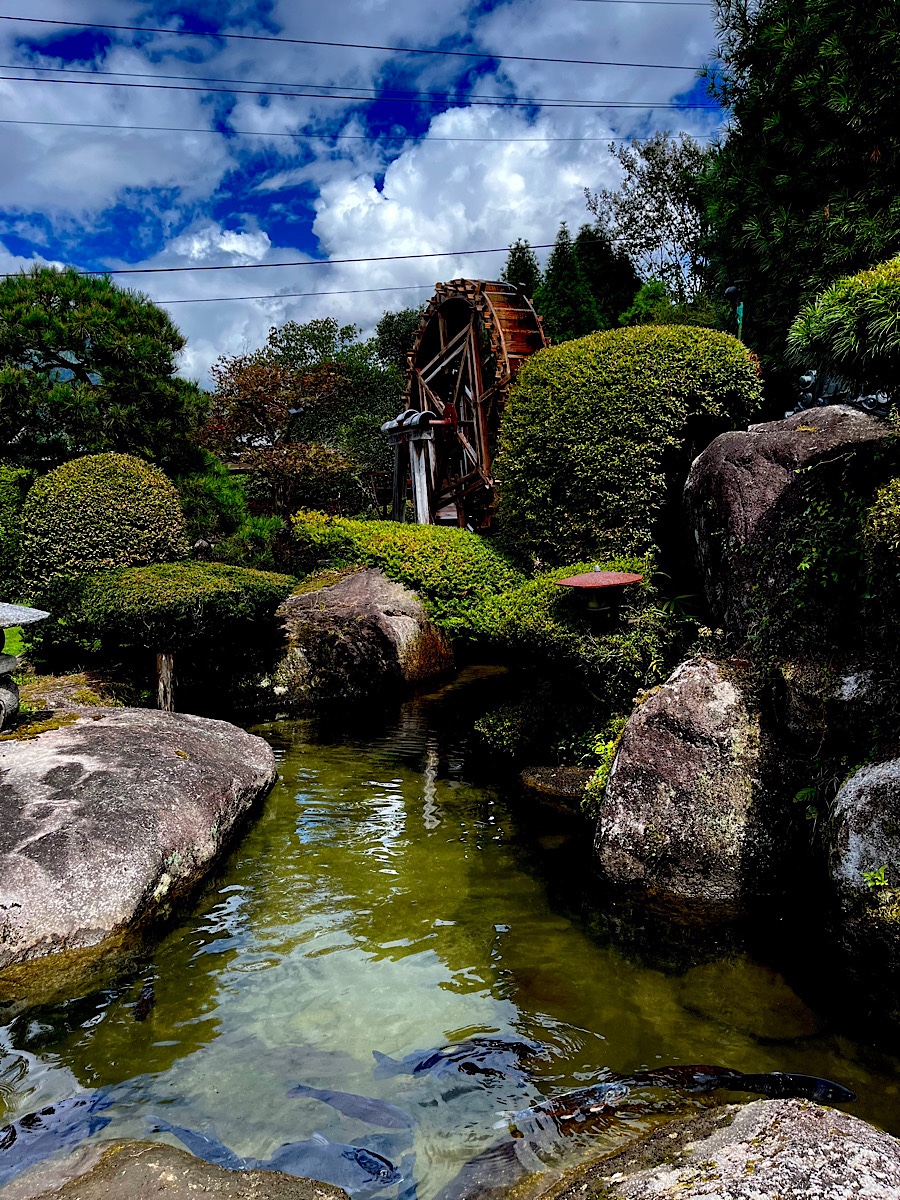
This was the day I met my Japanese boyfriend, Kiso Yoshinaka. Never mind that he’s been dead for 900 years and change; I like unavailable men. But more on Naka-chan in a bit…. Since my sister was recovering from a foot injury, and I had tweaked my knee the previous day, we let the rest of our group handle the longer 9-mile option for the day from Nagiso to Nojiri. The two of us opted, after a lovely big breakfast at Fuki no Mori, to take the shuttle back to Tsumago, poke around the town a bit since we hadn’t gotten to the day before, and then hike the 2 miles over to Nagiso Station and catch the train to Kiso-Fukushima where we would all reconvene that night.
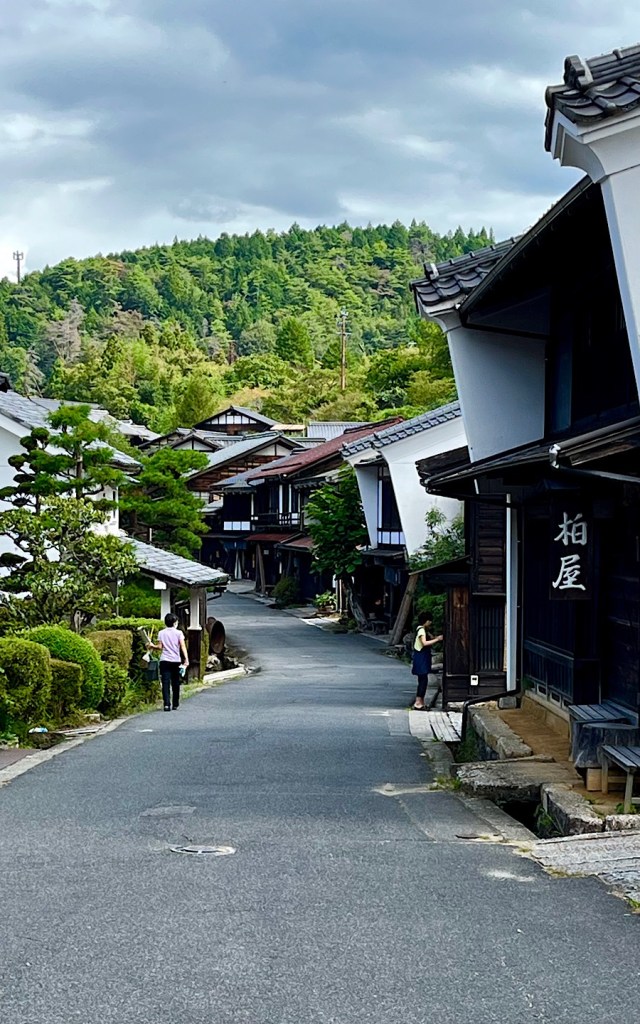
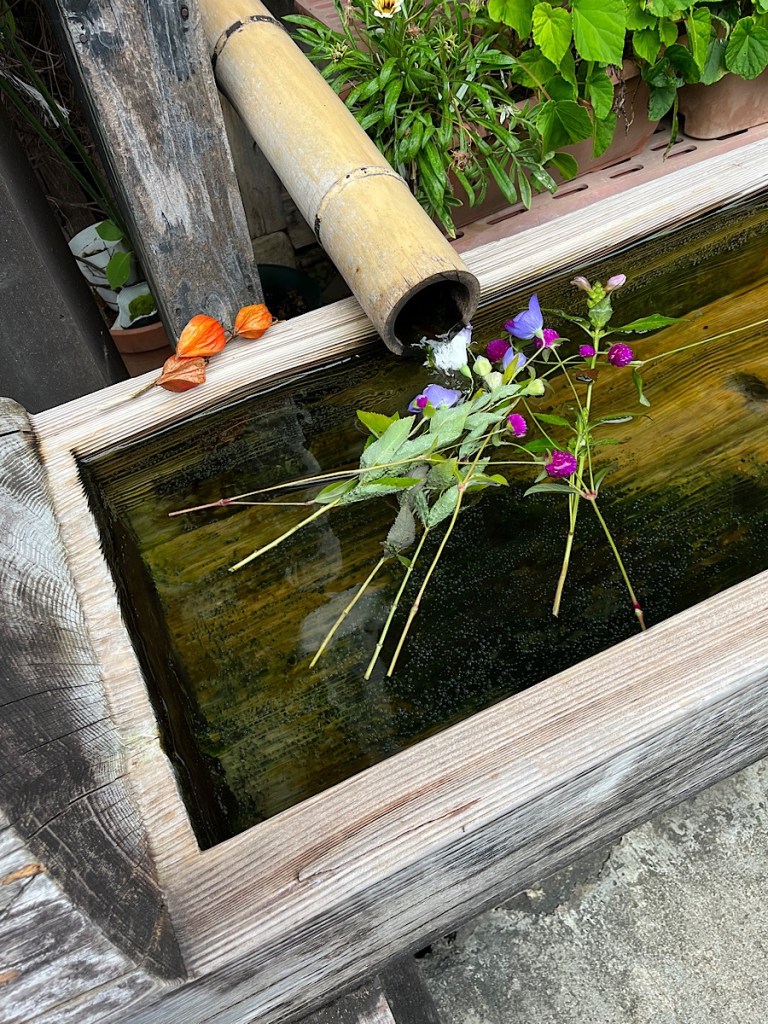
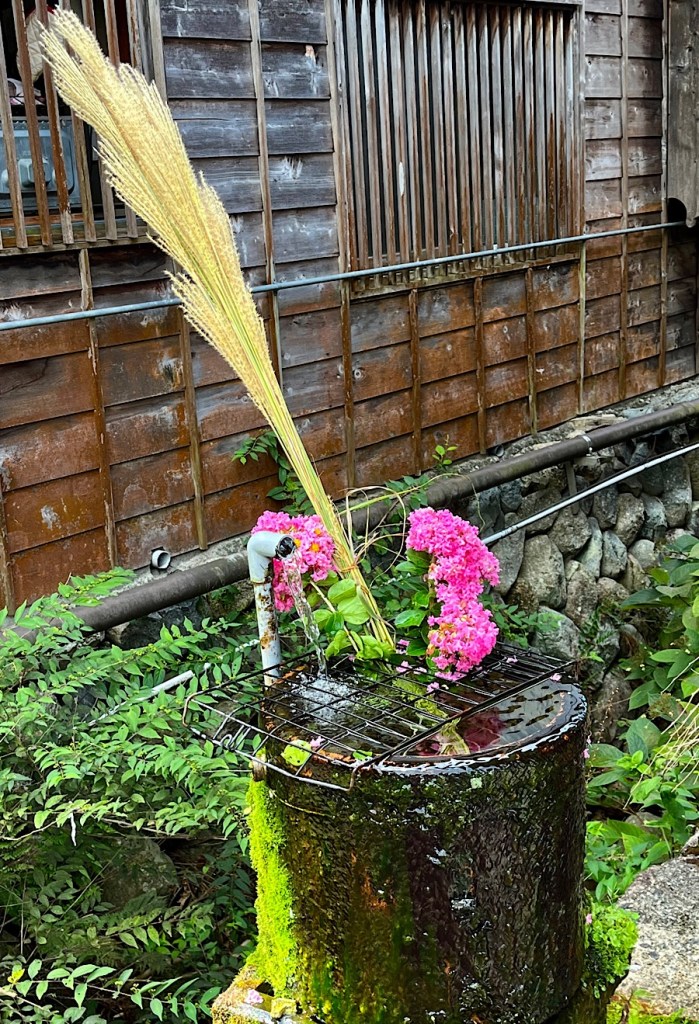
Tsumago was just waking up for the day when we got there, so we weren’t able to do a much shopping. We admired some water-bucket flower arrangements and, through windows, these amazing coats woven from recycled firemen’s coats, and some adorable rice-straw horses. Then, we picked up a couple of buns from a friendly obachan (grandma) who ran a little counter on the main street for our lunch and headed out of town.
This was the only day the Oku Japan directions failed us; for the vast majority of our tour, the detailed maps and itinerary served us well. But due to a missing sentence in the Tsumago portion of the guide, we wound up hiking down a busy road for a half hour and then having to slog back up it and another unnecessary hill in the boiling sun when we realized our error. By the time we regained the Nakasendo proper near the ruins of Tsumago castle, we were soaked, red-faced, and out of sorts (at least I was). But after some water and a nice rest at a shady rest stop, which are plentiful on the Nakasendo–many outfitted with drinking water and very clean restrooms–we were back on the trail. We contemplated visiting the castle ruins, but the path to them was overgrown and barricaded with a bear warning sign, so we opted to keep going. Yep, there are bears in Japan, though the most we saw of them was some fresh scat. That doesn’t stop the parents in the Kiso valley from outfitting their children with bear bells for their walk to and from school, which makes for a very cheerful cacophony in the mornings around 9 and the afternoons around 4 or so.
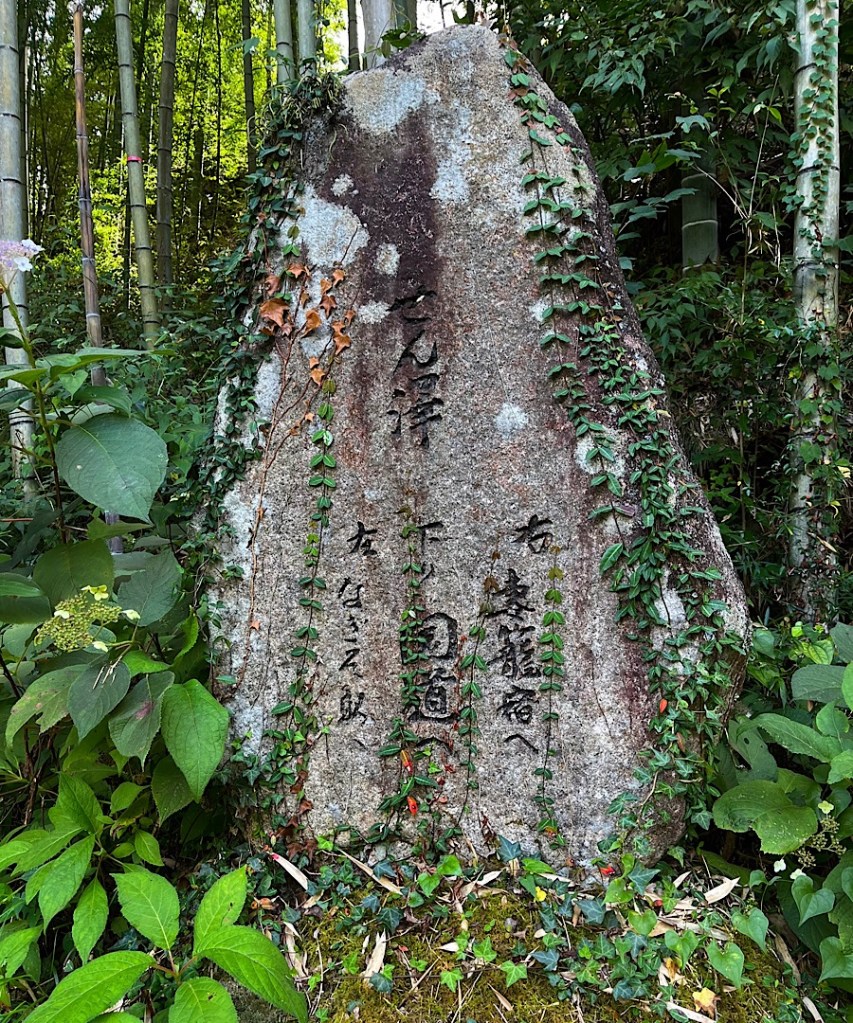
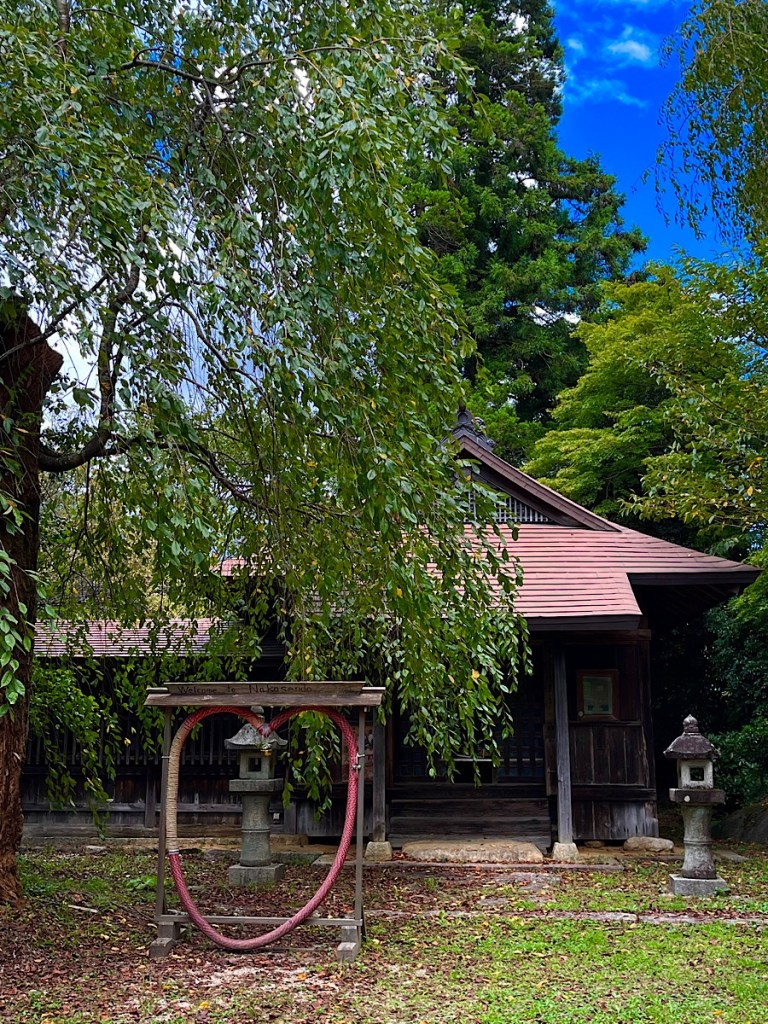
The trail leveled out and rolled up and down over the foothills of the Kiso mountains to Nagiso. Just before we entered the town, we stopped at a beautiful little shrine to eat our buns and drink some water. This is where we first encountered the legend of Kiso Yoshinaka. He’s sort of the Kit Carson of the Kiso Valley; while he did indeed get a lot done in his 31 years of life (or maybe 2, or 10–more on that tomorrow), the range, scale, and quantity of his achievements have…inflated a bit in the intervening 900 years. This shrine was established on the site of a prayer he made to Kannon, goddess of mercy, on the eve of a battle fought in the Genpei Wars (1180-1185); he apparently had a figurehead of her decorating his helmet, and he snapped it off and offered it here at Kabuto Kannon (which means “helmet Kannon”); the current shrine was built in the 1600s, including a stone marker that read “shortcut”–because the Nakasendo did and still does take a turn here, and you can save some steps by cutting through the shrine (and presumably offering a few coins for the privilege).
We bought some cool drinks at the train station and caught our train (air-conditioned!) to Kiso-Fukushima. We were really early, so we ambled our way through town to Onyado Tsutaya, our ryokan for the night, stopping on the way for a homey lunch of yakiniku and fried shrimp at a little house bar run by a delightful grandma, and checking out a couple of shops of local lacquerware. Kiso Valley is famous for lacquerware, a really ancient art that involves waterproofing wooden vessels with urushi or the refined sap of the poison oak tree. You can buy a pair of lacquerware chopsticks for $5 or a box inlaid with silver and gold for $5,000; some of the really fine art pieces take the craftspeople as long as a year to create.
After all that lallygagging we were still early for check-in at Onyado Tsutaya, which has a fantastic, clubby lounge area that looks like it hasn’t been updated since the 70s (in the best possible way). We really enjoyed the lounges at the ryokan we stayed in: they usually had tea and coffee set out, a bar for drinks later, and multiple comfy chairs, tables for playing cards, little libraries for reading, fireplaces for the winter (the Kiso valley is a big ski destination), and even games for kids. But at the moment, we were more interested in a swim, so we headed down the steps near the public hot footpath (yep!) and dunked ourselves in the clear, cold Kiso river, then hung out on the black-rock bank in the shade of the old footbridge to enjoy the cool breeze, admiring the gakeya zukuri, or the “cliff houses,” whose second and sometimes third stories thrust out over the edge of the river embankment, propped up with struts and stilts. They were built out that way back when the road was widened for cars, so they could keep their square footage; obviously vulnerable to earthquakes, these designs aren’t permitted anymore, but the existing houses are designated as heritage sites due to their uniqueness.
We checked in and checked out the onsen–much simpler than the one at the last ryokan, but with a nice outside pool with views of the mountain across the river. Then, we met up with the rest of our party for dinner: their description of the hot, hard climb over the pass to Nojiri with no water, and a delayed train, made us secretly happy we’d made the decision we had that day–but they’d managed to work in a nice river swim and a beer and were sanguine about the whole thing. After another big dinner–this one featuring fabulously marbled Hida beef shabu-shabu–we went back to our room, opened up the big sliding windows, and fell asleep on our futons listening to the rush of the river outside.
 The Rookery