The Nakasendo (literally “central mountain route”) was formalized in the Edo period (17th century), stringing together a series of mountain passes that travelers from the Kyōto area to the Tōsando (the middle and northern mountainous provinces of the Honshu island of Japan) had used since the 7th century. The tour we chose was Nakasendo and Kamikochi walking 6 days, which combined highlights of the Nakasendo with a trek through the Kamikochi natural reserve to the northeast. You can traverse the entire 534 km of the Nakasendo if you want to, but as the original route threaded the easiest path through the Japanese Alps, much of it now runs next to highways and thus isn’t too compelling unless you’re serious completionist through-hikers. Our group was not: we were more of the look-at-pretty-views-go-swimming-in-rivers-and-eat-ice-cream-cones type of hikers. So, the highlight reel sounded perfect to us.
We had our doubts, however, when the bus from Nakatsugawa disgorged us and our backpacks around noon into a sweaty swirl of tourists in 88°F Magome. “It feels like being in someone’s mouth,” my sister, no stranger to humidity, observed dispassionately as we started very slowly up the inclined street through the old town.
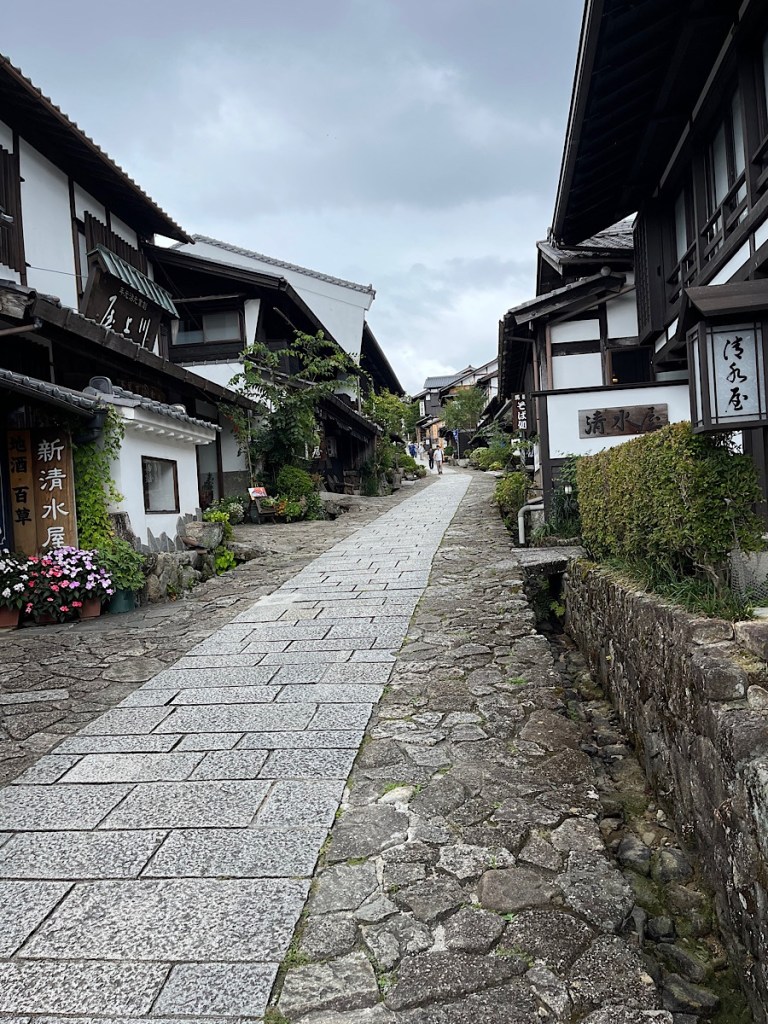
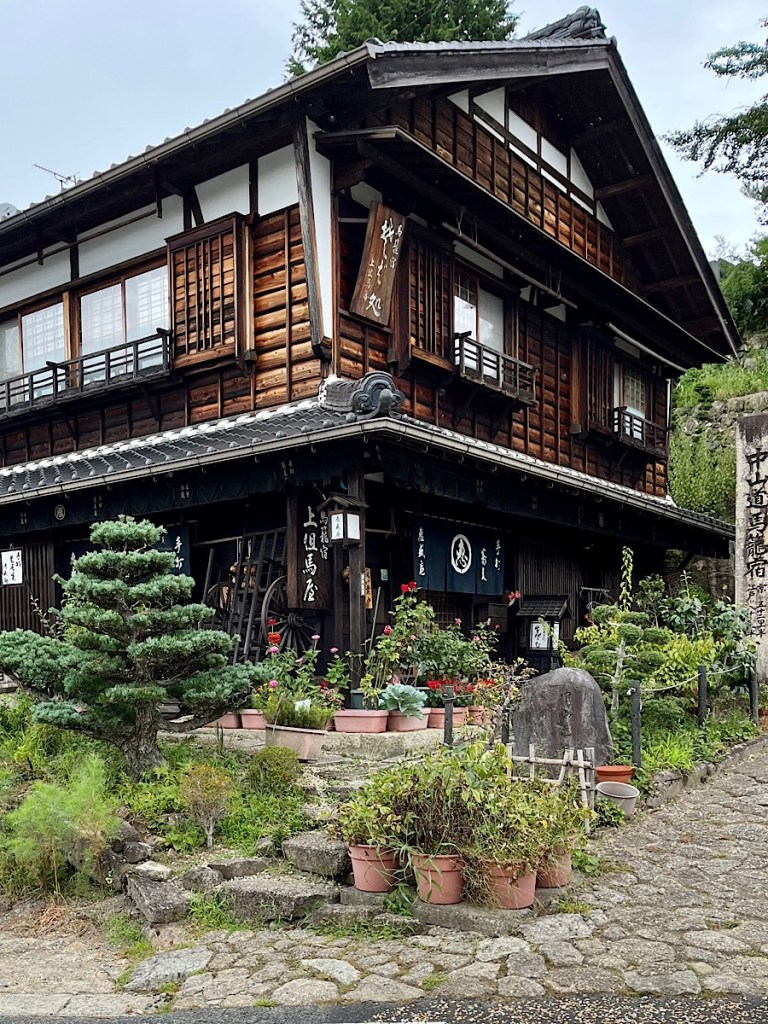
But the village’s sheer charm almost made us forget how much we were sweating. The chestnut soft-serve ice cream didn’t hurt either. While it’s touristy, since it’s one of the more accessible of the Nakasendo preserved post towns, the post town still features a stunning assortment of 18th century homes, working water wheels, pocket gardens, and shops selling traditional treats like gohei mochi, a regional specialty that involves rolling fluffy sausages of steamed mochi in a sweet-savory nut-and-miso paste. Luckily for us, it clouded up and started sprinkling and blowing a bit, which lowered the misery quotient as we trudged straight uphill for a couple of miles (the various euphemisms for road conditions printed in our detailed daily walking guide soon became a running joke; they deemed the 4-6% grade we slogged up for much of the day a “gentle incline”).
Right before cresting Magome Pass, we stopped at the little wayside restaurant recommended in our guide for lunch: Juri restaurant, run by a lovely couple and a grandma dishing out delicious zura soba (cold soba with a soy-based dipping sauce), tempura, gohei mochi, and other local specialties. The jovial owner handed us fans to fend off the sticky heat as we waited for our refreshing noodles and iced tea. (BTW, my hand fan from my friend Hyunsuk was the total MVP of this trip, followed closely by my travel umbrella to block the sun and a bandana that I could variously mop my face with or dip in the river to tie around my neck; you gotta make your own air conditioning in much of Japan).
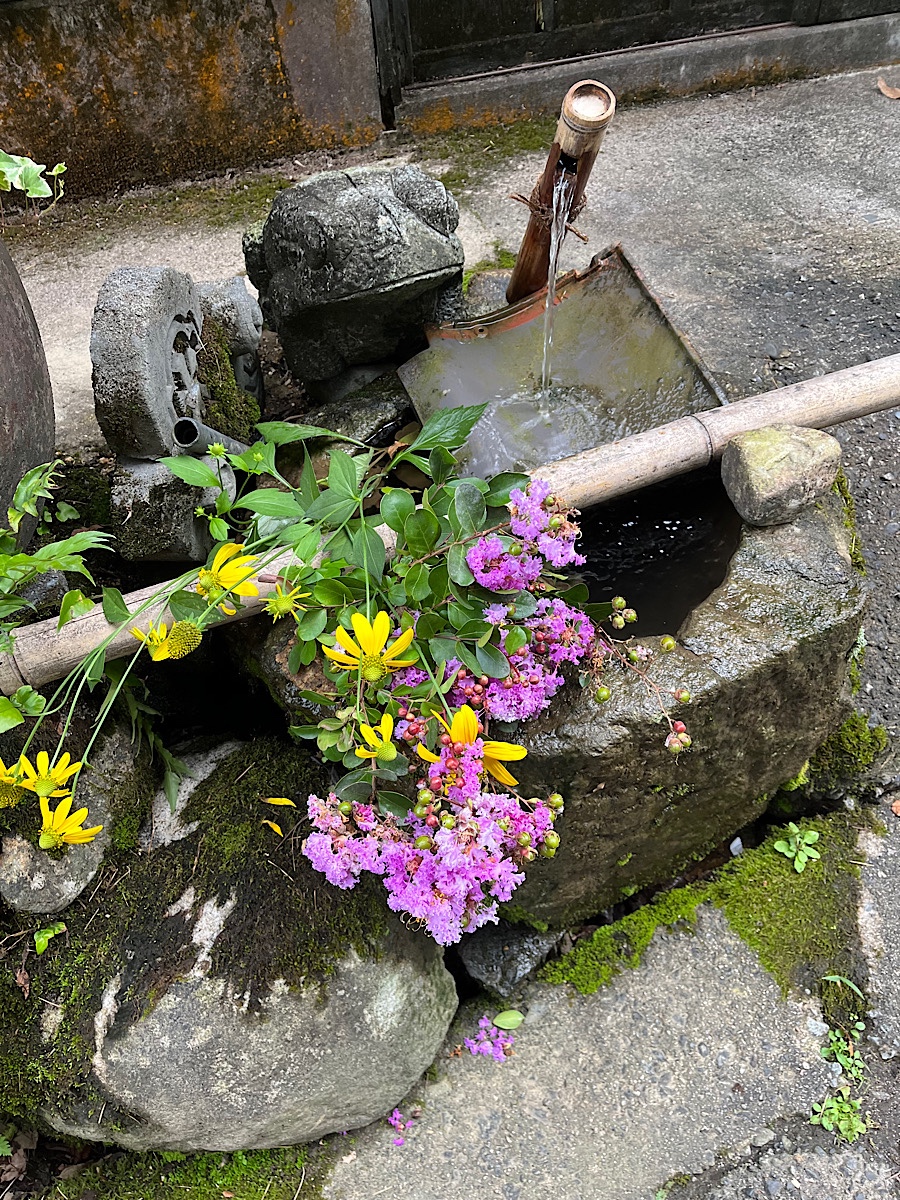
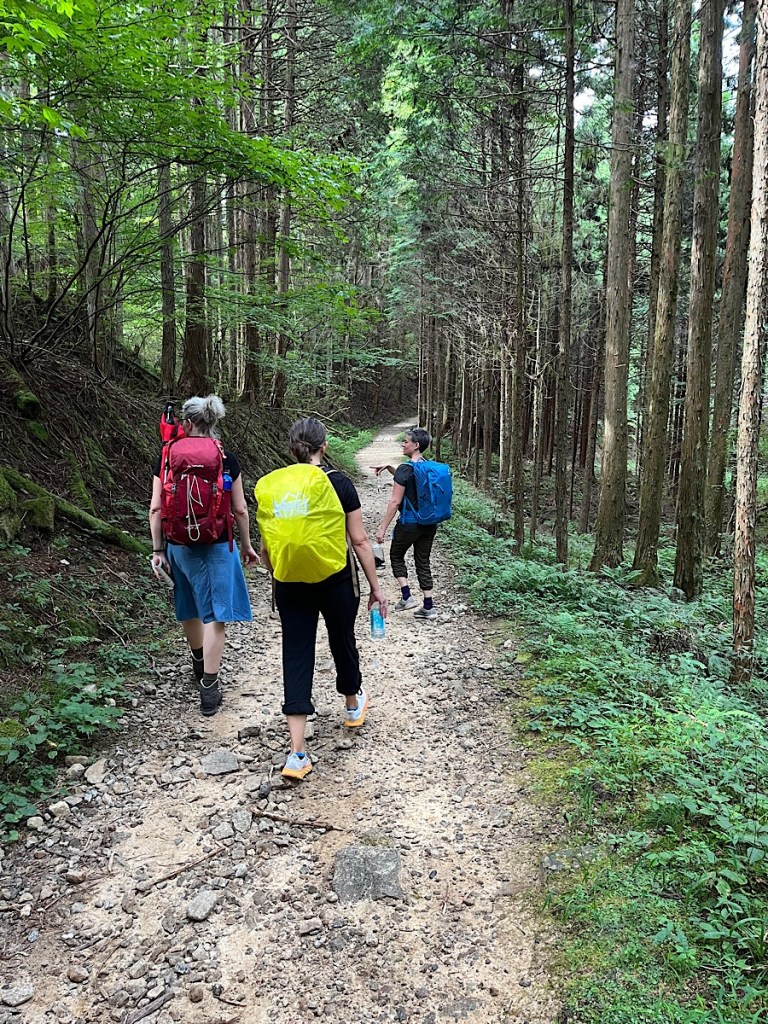
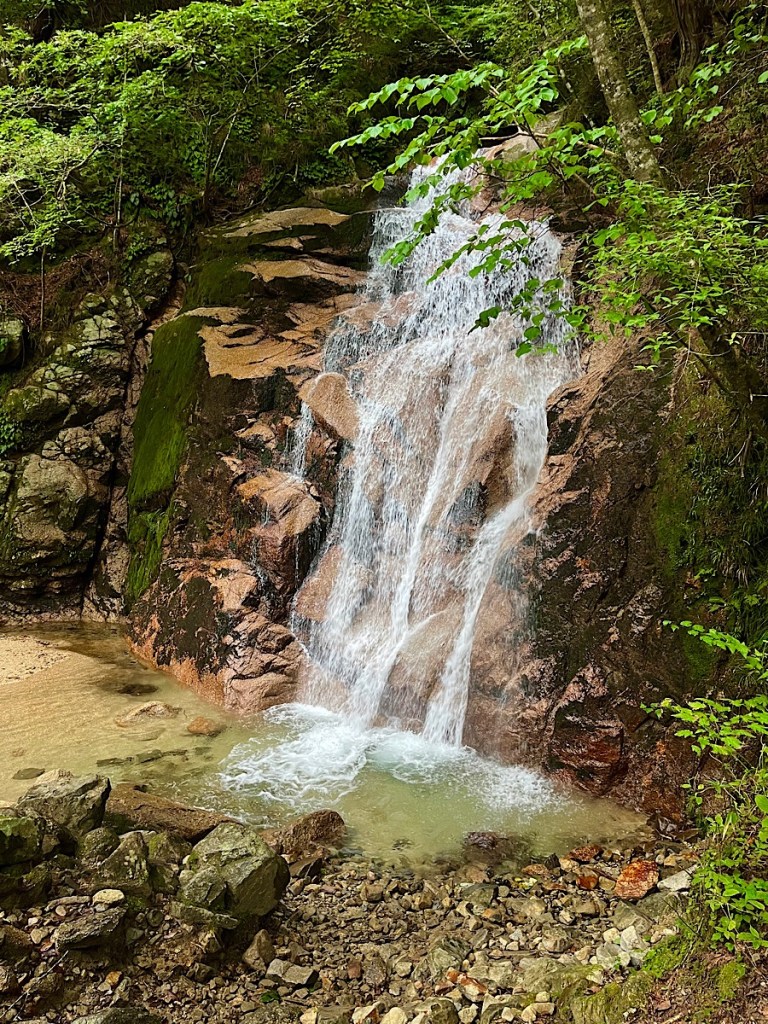
The trail downslope to Tsumago presented much more pleasant hiking–as we wound through cedar and bamboo forests, singing the “Don’t put your stuff in my knapsack” round song and pausing for a refreshing shower in the twin Odaki-Medaki waterfalls. From there the Nakasendo picked its way through tiny hamlets, literally through people’s back gardens at points, where we glimpsed fish ponds and beautiful trellises with hanging cucumbers. Many houses along the route had set a hose or a pipe spilling fresh, cold water from the nearby streams to fill a bucket for hikers to wash their faces or their hands (but not to drink from–drinking stations were clearly marked–and boy, was that mountain water delectable). In some of the buckets they’d also tossed handsful of peaches or cherry tomatoes you could take, or flowers (pictured above: I started a running gallery of these little arrangements).
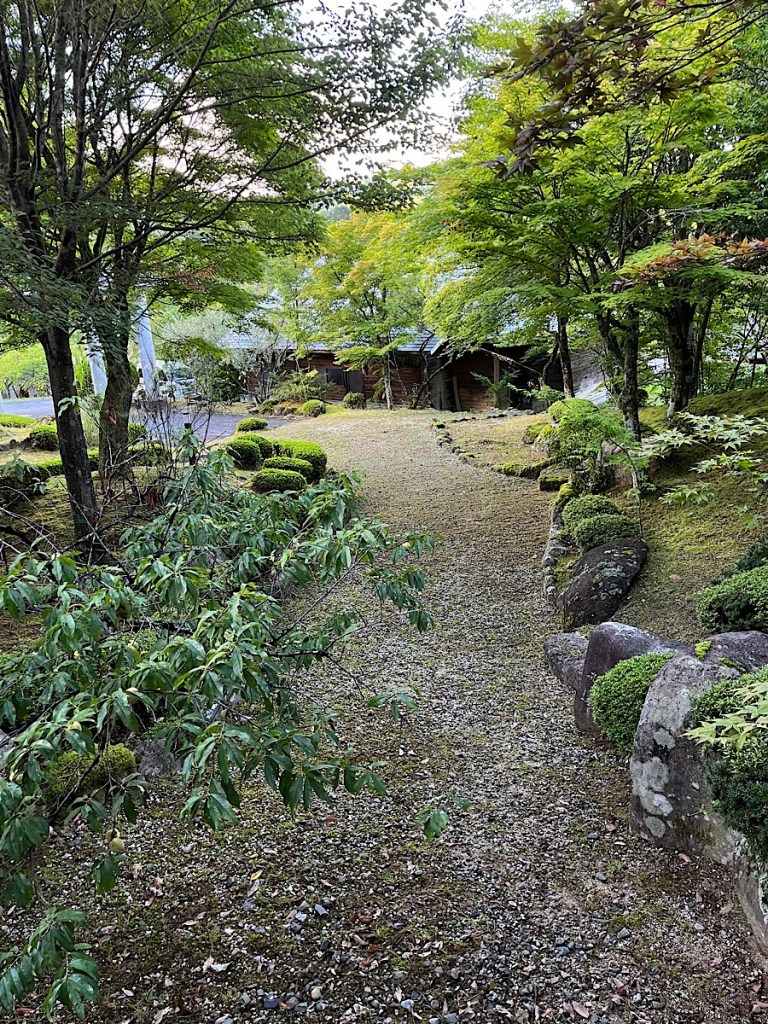
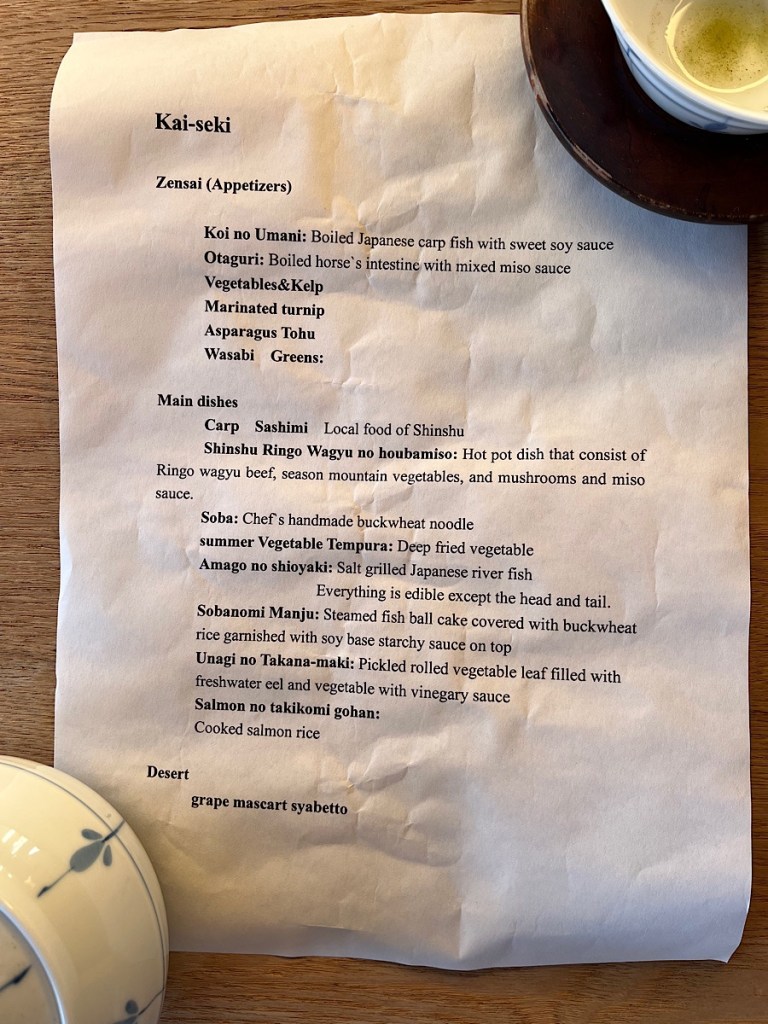
Around 4 pm we rolled into Tsumago, where we were greeted enthusiastically by Namiko and Maiki from Oku Japan. They were pleased to hear we were off to a good start and pointed us in the direction of our shuttle bus to our first night’s accommodation, Fuki no Mori. The ryokan was luxurious, with lovely tatami-mat rooms, light and soft yukata robes for us to wear around the inn, indoor and outdoor hot baths, the latter boasting an incredible view of the maples and night sky, a cold plunge tub, cedar sauna, and a fine terrace strewn with morning glories overlooking a traditional garden. Dinner was an elaborate kaiseki (coursed) meal featuring typical ryokan fare such as salt-roasted fish and hot pot as well as some quirky local specialties like horse tripe and green tofu made from asparagus. Stuffed to the gills, we waddled back to the onsen for one last dip before snuggling into our futons for a well-earned rest.

 The Rookery