
I knew we were in for it the minute we stepped out of the Chiba train station at 8 pm and it felt like someone had thrown a black plastic bag over my whole body. It was the second of September, and yet my weather app avowed it was 88°F with 80% humidity, even with the sun down, and the sweat rivuleting down the small of my back confirmed it. For the next two days I would obsessively keep rubbing that app like a Magic 8-ball, hoping that this time the forecast would have magically and preciptitously plummeted for Magome, the old post town in the mountains 2 hours south of us, where we were supposed to begin our trek. No such luck.
For my sister’s 50th birthday, we got together a group of 6 friends and decided to hike Japan’s Nakasendo Trail, the old “high road” or pony express trail from Kyōto to Tōkyō, from ryokan to ryokan (hot-spring inns). We booked a 6-day self-guided hiking tour with Oku Japan, and when we did, I checked the average daily highs along our proposed route. They were a little on the warm side–low 80s–nothing to freak out about. Climate change had other plans, however, and we landed at Narita to scorching temperatures that made the idea of soaking in *a* hot spring, much less 5 of them, seem distinctly unappealing. Not to mention there was a typhoon heading our way.
Nevertheless, we soldiered on, breakfasting in the shade amid the charming treehouses at Tsubakimori Komuna before strolling (slowly) past the lotus pond in Chiba Koen up to the piney overlook over the lake. We picked up some delightful baked goods at the bakery attached to Records Diner before grabbing our backpacks from our hotel (the reasonably priced and comfortable Daiwa Roynet, another branch of which we also stayed in the following night) and embarked on our train journey into Tōkyō.
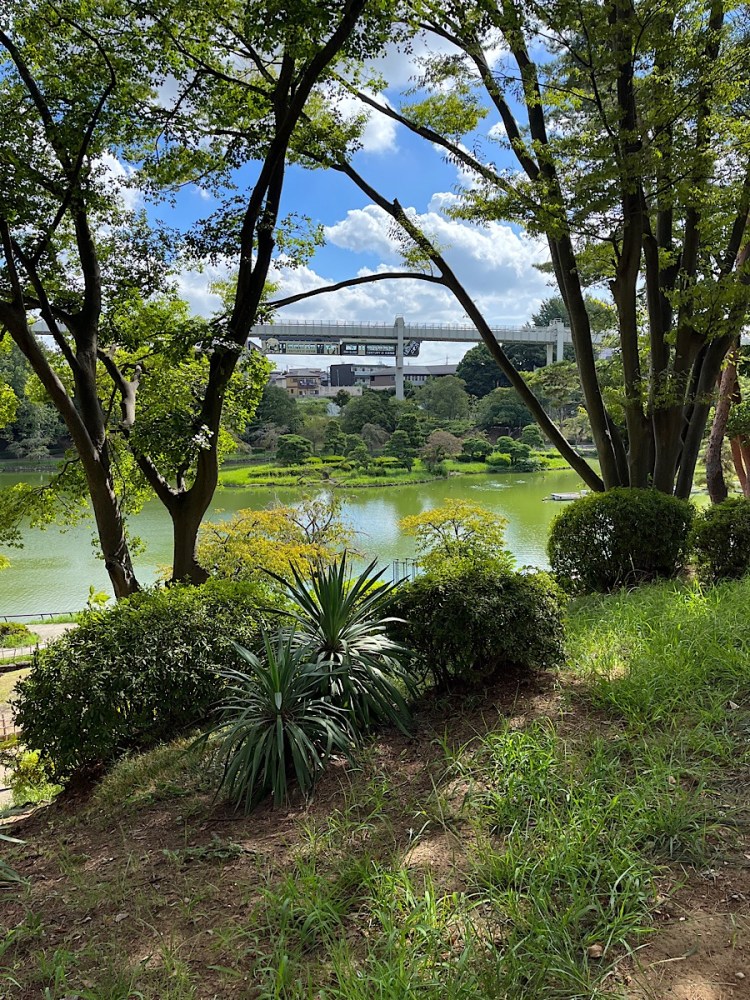
We had decided on Chiba because it was only one stop from the airport on the Narita express and wasn’t touristy: we thought it would be nice to be somewhere quiet and different for our first night off the plane rather than the usual Asakusa or Shinjuku neighborhoods in Tōkyō. It was perhaps a little too different: our conductor tried to stop us from getting off the train at Chiba Station, assuming we were lost.
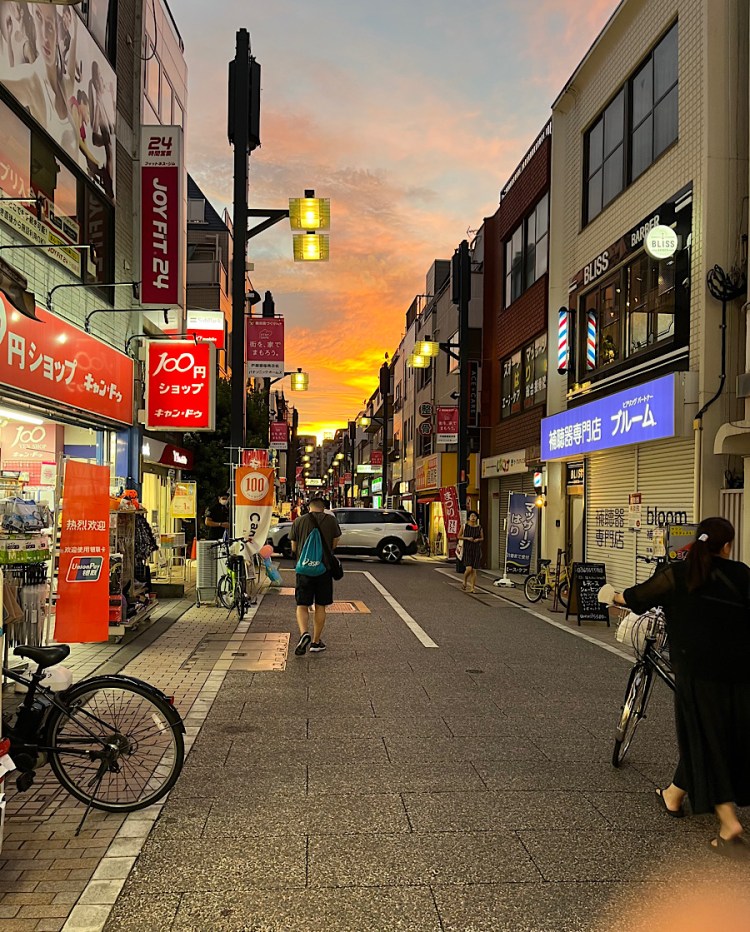
The rain that picked up mid-day cooled things down, from 90°F to 87°F (sigh). So instead of heading out to poke around our new neighborhood in Shinagawa City, we sought the air-conditioned havens of a ramen shop (the excellent Rokurinsha) and a tea cafe with nice views over the eco-modern ThinkPark complex near Ōsaki station. When the sun finally ducked behind buildings and clouds around 4 pm, we headed out to Togoshi-Ginza, the longest shopping street in Tōkyō and one of the older ones, paved with bricks from the original Ginza shōtengai after it was destroyed in the 1923 Kanto earthquake. It’s a workaday affair, crammed with spots to buy brooms and meat croquettes and plastic laundry baskets–alongside an increasing assortment of boutiques like Solco, which specializes in artisan salts from all over Japan, and Mokumoku Ishi with it’s jewel-box collection of handmade textiles, wooden spoons, and ceramics. It was a Sunday, and a lot of places were closed, but the place was still jumping with packs of kids, commuters swerving through on their bikes, and dainty groups of older ladies eating ice cream cones in their summer yukata. We ate delicious okonomiyaki at an eye-wateringly smoky little dive at the end of the street (Okonomiyaki Yu), caught a beer with our friend Birgit and her friend Shoichi at a great little yakitori place by the station (Kushiyaki Shinobu), then dragged ourselves back up the hill to a cold shower and early bed before catching our train to start our hike the next morning.
 The Rookery