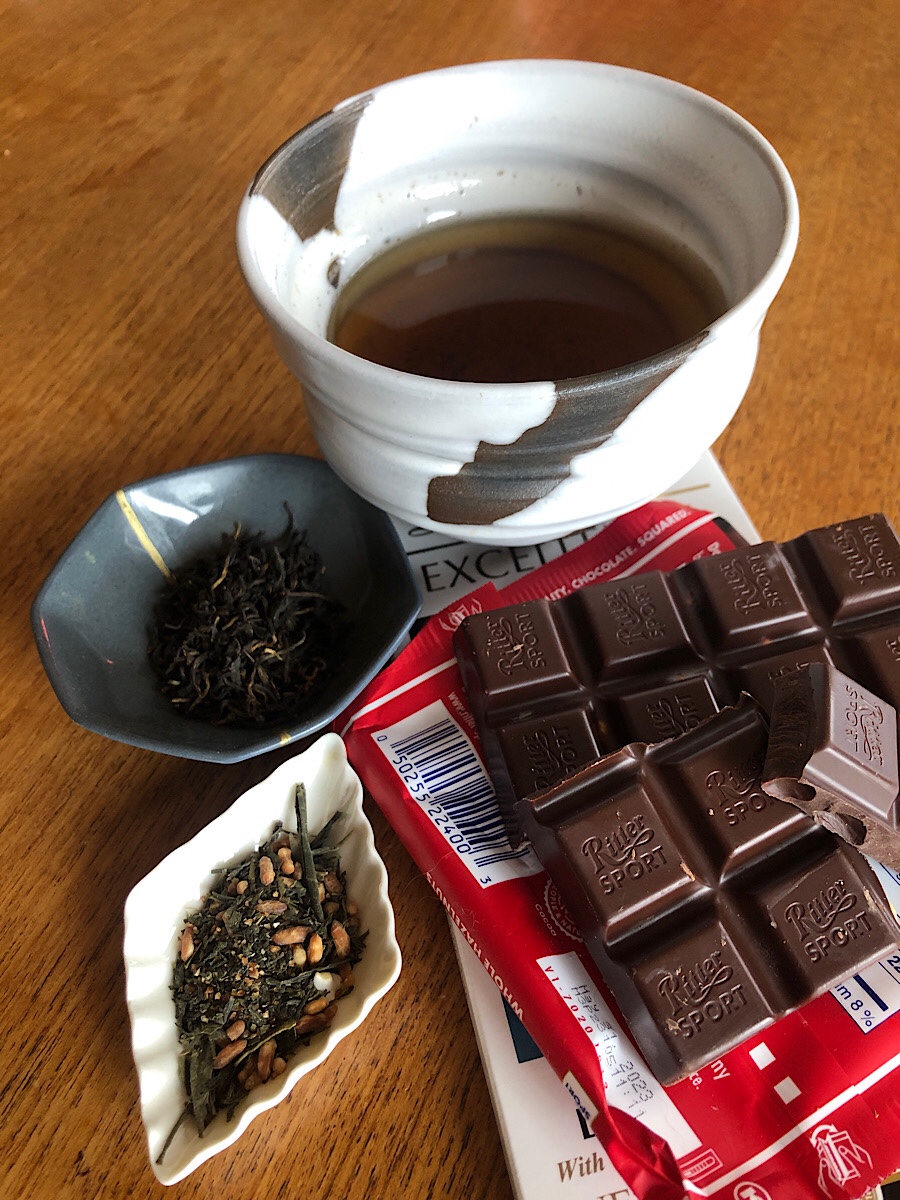
This is an essay I pitched to a food blog I used to follow, but they didn’t take it, so I’m posting it here!
People who love tea often love chocolate, but pairing those indulgences isn’t as straightforward as it might seem. Grown in similar climates on different continents, tea leaves and cacao beans have complex flavor profiles that don’t necessarily play well together. Making matters worse, online merchants offer conflicting opinions: don’t pair black tea with dark chocolate; do pair black tea with dark chocolate. And with a mind-boggling array of options on each side, it’s not realistic (or affordable) for the average foodie to make a comprehensive survey.
To solve these puzzles, I recently assembled a panel of four tasters to run through a basic spectrum of pairings and see if any favorites emerged. We sipped good-quality, whole-leaf teas and sampled higher-end grocery-store chocolate bars. Skip down for the upshot. If you’re interested in the flavor chemistry behind tea and chocolate, and in the received wisdom on combining them, read on.
The flavors of tea and chocolate
Both tea (Camellia sinensis) and cacao (Theobroma cacao) plants flourish in mid-high-altitude tropical or subtropical climates that see significant seasonal variation in temperature and rainfall. The famed tea plantations are mostly Asian and East African, whereas chocolate comes dominantly from Central/West Africa and Latin America.
In part due to their similar climatic profile, tea and cacao shrubs share much of their chemistry, which features aromatic, fruity, and bitter flavonoid compounds, astringent tannins, and stimulants (primarily theobromine and caffeine). The differences between tea leaves and cacao beans stem largely from their different functions within the plant organism (seed vs. leaf) and their processing.
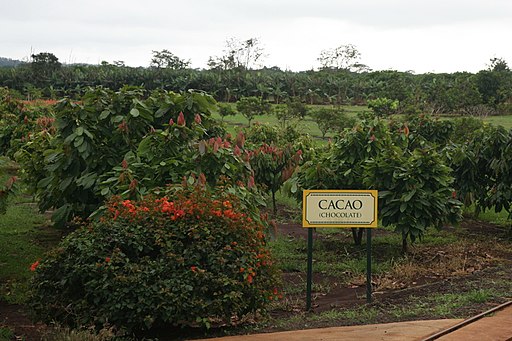
Tea leaves are high in tannins and stimulant compounds but have less sugar and acidity than cacao beans. Processing little alters these features—although oxidation (as in black tea) and fermentation (as in pu-erh) softens the tannins. The extended fermentation and roasting of cacao beans similarly tames their bitterness, but it also caramelizes their sugars, increases their acids, and highlights their anthocyanins, the same polyphenols that infuse berries such as cherries, blueberries, and blackberries with their “dark” flavors. The finished aromatics of tea range from fresh-mown grass to flowers to, yes, chocolate; meanwhile, chocolate’s aromatics tend toward fruit, wood, and even tea.
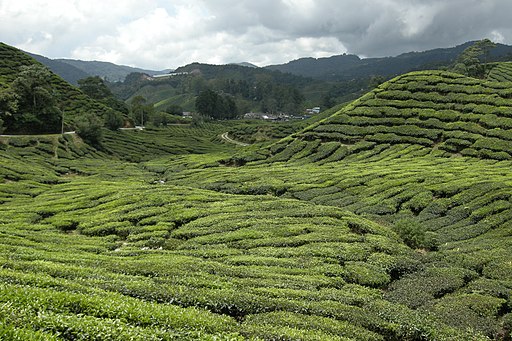
As the above should suggest, there’s a lot of common ground to work with in pairing tea and chocolate, but there are also pitfalls: a tannic tea and chocolate together can be unpalatably bitter, or a particularly pungent one can drown out the aromatics of the other, etc. The myriad possible flavor combinations explain why expert recommendations are all over the place.
Expert Advice on Pairing Tea and Chocolate
I surveyed the top dozen tea/chocolate merchants, food blogs, and food-industry magazines returned by an online search for “tea and chocolate pairing.” Several sources promoted the same three-principle paradigm: enhance a flavor by doubling it, as with a floral tea and a floral chocolate; choose flavors that contrast, as with a bright tea and a dark chocolate; or pick flavors that complement each other, as with a spicy chocolate and a fruity tea.
Easy to say, harder to do. For instance, pairing a smoky tea like lapsang souchong with a smoky West African chocolate might look like an enhancement on paper, but on the palate, it tastes like a drowned campfire. Similar disasters can easily befall experiments with contrasting and complementing flavors. So, the enhance/contrast/complement paradigm actually disguises a lot of expert judgment and information that most of us don’t have to hand when we’re standing in the chocolate aisle at the grocery store.
What about specific recommendations for pairing varieties, then? First off, I learned many experts cheat: They hedge their bets by serving chocolate truffles with tea because the added milk fat in the ganache buffers conflicting tannins and dissolves aromatics, making them persist longer in the mouth and nose.* Or, experts turn to a flavored tea or chocolate to engineer the particular enhance/contrast/complement result they want. These are great strategies—for chefs. I’m not a chef, and on an average winter night, I don’t have matcha truffles in my pantry. I’ve got a random chocolate bar and a spoonful of tea leaves floating around in the bottom of my canister. Could the experts still help me?
Yes and no. While most sources I surveyed used the same five-tea, three-chocolate varietal spectrum (pu-erh, black, oolong, green, and white for tea; dark, milk, and white for chocolate), there was scarce agreement about the best pairings between those lists. Pretty much everything gets recommended with everything, with a few exceptions: nobody suggested pu-erh with white chocolate, and only one site paired white tea with any chocolate, and that was with dark. In the end, two islands of consensus emerged out of the sea of conflicting opinion: green tea with white chocolate, and oolong with dark chocolate. In fact, oolong seemed to be experts’ safest bet for a successful play-date with chocolate.
Three friends and I decided to put these recommendations to the test by conducting our own tasting across the five-tea/three-chocolate spectrum—fifteen pairings in all. Following these guidelines, we brewed loose-leaf, organic teas purchased online from Tea Source and Salty, Savory, Sweet. The chocolate bars all came from the grocery store—Lindt and Green & Black’s. Following the expert recommendations, we tasted from light to dark and followed the same protocol for each pairing: sip a little warm tea, let the chocolate melt on the tongue before tasting, finish with another sip of tea and cleanse the palate with a neutral cracker before moving onto the next pairing.
*Harold McGee, On Food and Cooking, p. 399.
The Results
Of the 15 pairings, only two clear winners emerged: green tea with white chocolate and black tea with milk chocolate got positive marks across the board. These pairings work on a similar logic: the soft milk solids in the chocolates appealingly counterbalance the hallmark astringency of the teas; meanwhile, their aromatics are brought out by the milk fats.
It’s worth mentioning that dark chocolate and white tea did produce an above-average pairing: we thought the chocolate revealed an unexpected, warm woodiness to the tea. The rest of the pairings we judged either unremarkable (like black tea with dark chocolate) or actively bad (like oolong with milk chocolate, which for most of us yielded an unpleasant metallic taste). Notably, our experience with oolong did not bear out expert opinion. Its pairings were some of our least favorite, with the acidity of the chocolate eroding the floral and herbal notes of the oolong (outstanding on its own—Da Hong Pao Supreme). Similarly, pu-erh didn’t pair well with any of our three chocolate varieties, yielding muddy results.
Conclusion
What did I learn from our experiment? The next time desperation makes me reach for the dusty remains of a Scharffenberger white baking bar, I’ll be brewing some genmaicha to wash it down. The black tea/milk chocolate and white tea/dark chocolate pairings were good finds as well. If I have a nice oolong, I’ll just enjoy that on its own.
I think the enhance/contrast/complement paradigm will help me when I have some flavored chocolates and teas around, or when I’m lucky enough to get my hands on single-origin options with good tasting notes that can help me identify aromas to combine in various ways. But the alchemy of tea and chocolate have as much to do with mood as with flavonoid compounds, so what works one day for one person might not the next. For instance, one of us brought a flavored bar to the tasting by mistake—a bar of Green & Black’s Mint 70% Dark. We threw it in the mix at the end and were stunned to find we loved it with the pu-erh, the bright note of the mint like a candle in the dark, earthy tunnel of the tea. But that just might just as well have been the effect of the winter night and the warmth of talking and tasting with good friends….
 The Rookery