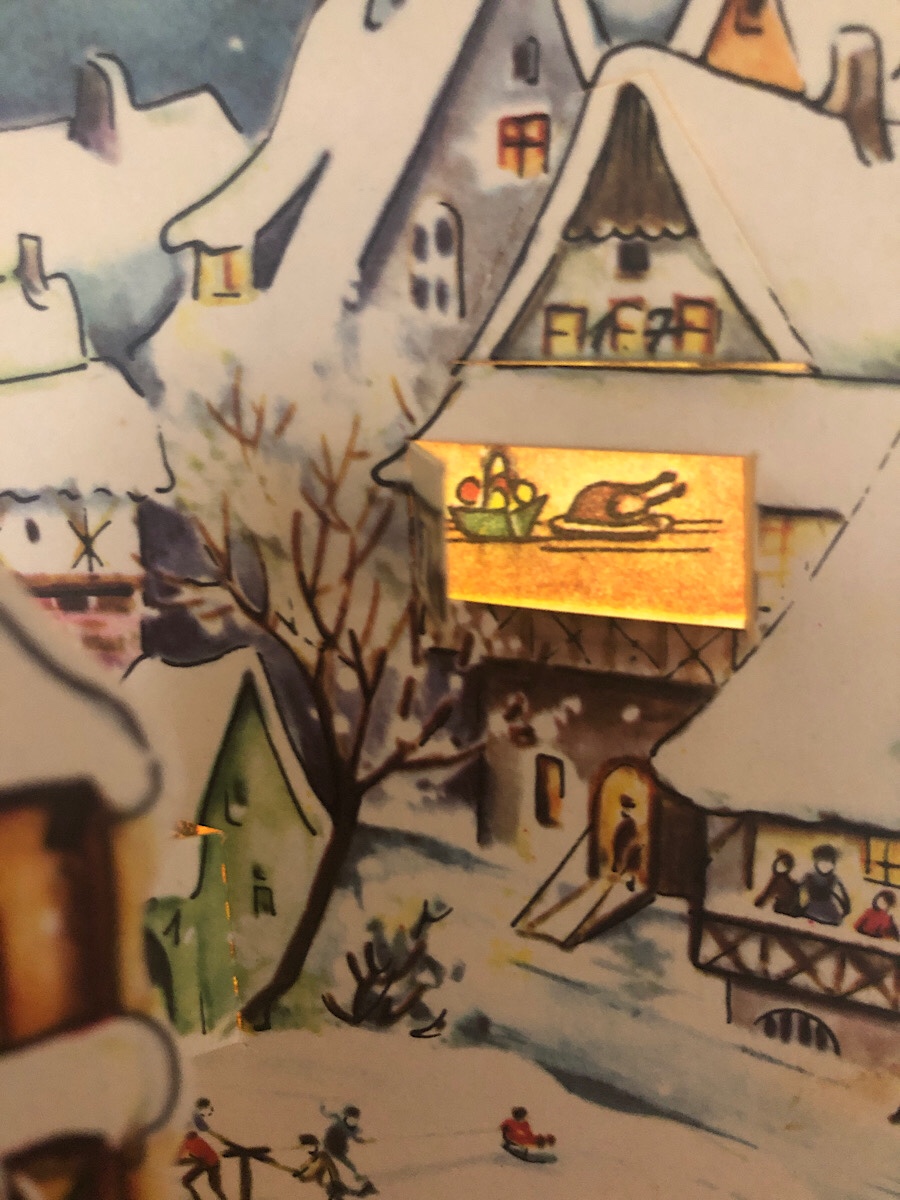
The Roast Goose
“Bernard, close the window and come to dinner. It’s freezing out! And the graf is well and gone up to the castle. You’ve seen him, eh? He’s all in one piece, isn’t he?”
Freiherr Bernard von Ritter harrumphed in his white mustaches, but he obediently closed the window and turned back into the great room where his wife and son were taking their seats at the long table studded with candles and the rich dishes of St. Nicholas’s feast: roast goose, potatoes, brown and white bread, sauerkraut, and a dish of oranges Ulrich had brought with him from Salzburg, where he was serving as a vassal and adviser to the Duke there. Bernard sat down at the table and crossed himself, and for a few minutes, the only sounds were the scrape of knives and forks on pewter and the squeaking of the kitchen door as the servant went in and out bringing more small beer.
“I heard in Salzburg,” said Ulrich around a mouthful of potato, “that Sigismund has gone south to lick his wounds in the Italian sun.”
“May he stay there, God give him grace.” Bernard stabbed a duck wing with his fork.
“I fear the king will not give up his futile quest to take his matrimonial rights in Bohemia under cover of crusading against these Hussites. And that he will drag your graf down with him in the bargain.”
“Now, now,” said Brunnhilde with an admonishing smile at her son. “Let’s pass St. Nicholas’s eve discussing something more pleasant.”
Bernard stroked his beard thoughtfully. “Yet Sigismund’s star seems ever to rise. I’ve never seen a man so fortunate in who dies around him. Between his brother and his wife, God rest their eternal souls, the boy’s come into fair half of the Holy Roman Empire.”
“Bernard!”
“Yes, Mother.” Bernard reached down the table and patted her hand. “You’re right. There will be time enough to speak to the graf of all this at Council. Come.” He raised his beer glass. “To having family around the table on this most blessed of nights.” Glasses clinked, the fire crackled in the hearth, and outside the snow tucked a white quilt around the doors of a burg settling down to rest at long last after the homecoming of its lord.
 The Rookery