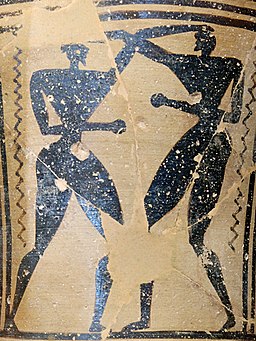
Never fear another challenger, no matter how large; Never despise another challenger, no matter how small.
To injure an opponent is to injure yourself. To control aggression without inflicting injury is the Art of Peace.
Morihei Ueshiba
Wherefore, O judges, be of good cheer about death, and know this of a truth – that no evil can happen to a good man, either in life or after death…. For which reason also, I am not angry with my accusers, or my condemners; they have done me no harm….
The hour of departure has arrived, and we go our ways – I to die, and you to live. Which is better God only knows.
Socrates, Apology
The first step toward violence is dehumanization. We remove from our opponent the dignity of their humanity and with it their rights to be treated as we wish to be treated. Thus stripped, our opponent is fair game for injury, or even death–just as we might treat an animal, or any other non-human thing.
Expressed so baldly, dehumanization seems obviously wrong. But what if we’re the ones being dehumanized? What if our dignity has been stripped from us in our opponent’s mind? Doesn’t that give us the right to dehumanize and injure in return? An eye for an eye, a tooth for a tooth….
Aikido and rhetoric both have an unintuitive and similar answer to these questions: No. Easy to say, hard to do. However, both disciplines offer two possible sources of power that we can draw on in order to preserve the dignity of our opponents in the midst of conflict:
- Connection to a higher power: Both Socrates and O-Sensei, in multiple places, stress that their true self worth exists on a higher plane, from which it is possible to see the essential dignity and worth of all human beings, and to feel that all loss–even death–is merely a transition to a more elevated state of being.
- Self-awareness: Both Socrates and O-Sensei argued that their ultimate opponent was themselves: so, if they truly mastered themselves, they had no opponents.
Whether we believe that everything is going to be OK in the end, or we believe that the only thing we will get out of a conflict is the person we make ourselves into in the process–I would argue we can detect the driving force of one or both of these beliefs in the lives of all those who truly fight for peace.
 The Rookery