
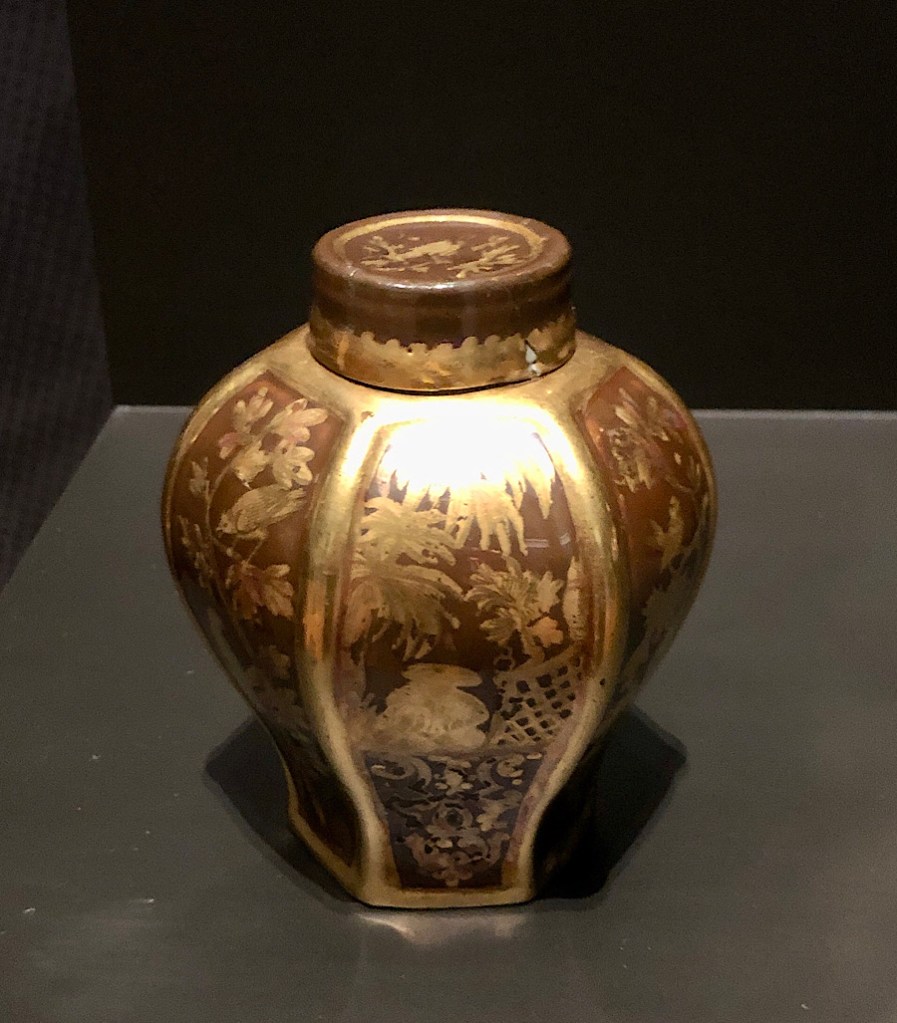
Edmund de Waal includes an extended account of the development of “red porcelain” or Meissen red wares in White Road, but the upshot is that on the way to discovering a formula for a European white porcelain, Böttger and his assistants in Augustus the Strong’s kilns in Meissen first discovered a way to reliably produce a hard and thin porcelain with red clay that could be painted, sculpted, and glazed to suit royal tastes. The forms predominately imitated Chinese and Japanese imports, with the ingenious addition of black glazing in some cases to mimic lacquer. They were heavily collected, but only for about 3 years before being replaced by Meissen white porcelains. The red wares pictured here are from the Rijksmuseum in Holland, from the Oppenheimer collection that comes with its own story of looting and restoration following the Nazi era.
 The Rookery