
I’ve learned a lot about these ceramic traditions on my trip to Athens, and they’re really special. A little historical background: these were the two cultures that preceded and most heavily influenced Classical Athenian culture. The Cyclades are a flock of Aegean islands fenced in by Greece, Turkey, and Crete, the mythical home of the Cyclops. Cycladic culture emerged as a distinct entity around 3,000 BC and by 2,000 BC became assimilated by Minoan culture, which in turn heavily influenced the arts of the Myceneans. The Mycenean stronghold was the Peloponnesian peninsula, but at the height of their civilization–which stretched roughly from 1,600-1,100 BC, they commanded all the Cyclades, Crete, and settlements along the coast of Turkey). These are the Greeks who went to war against Troy in Homer’s epics. But, beginning around 1,250 BC, their culture began to collapse for reasons still not fully understood, ending with their being driven out of most of their lands by the Attic and Thessalonian tribes that went on to found Classical Athens and Sparta.
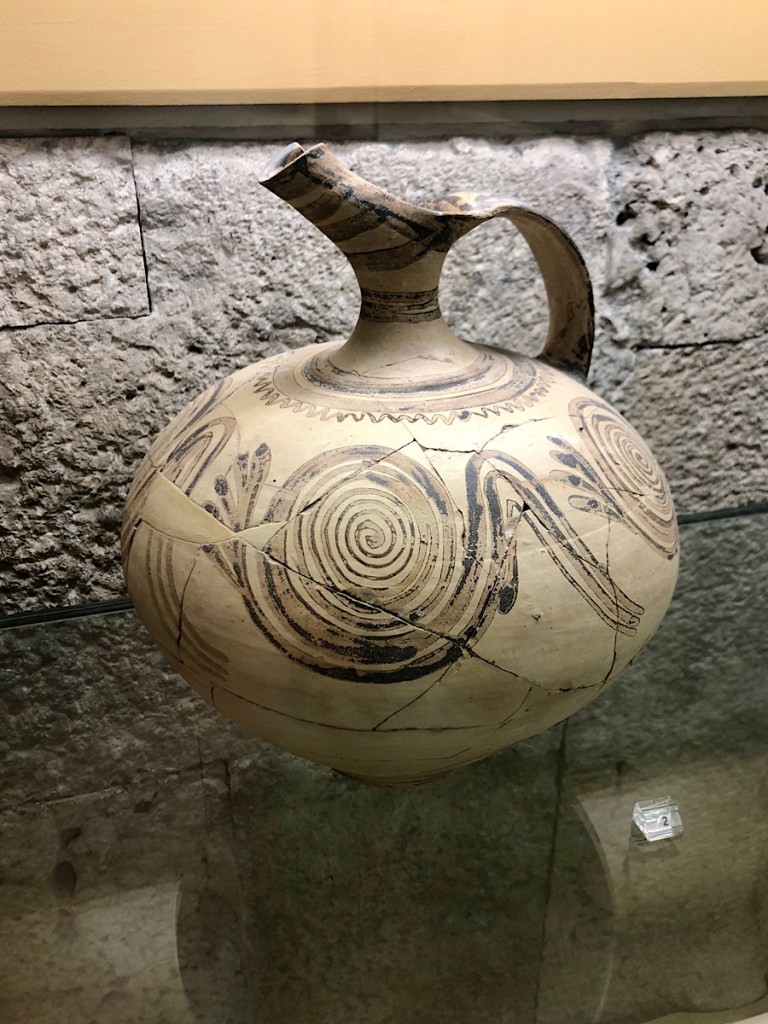
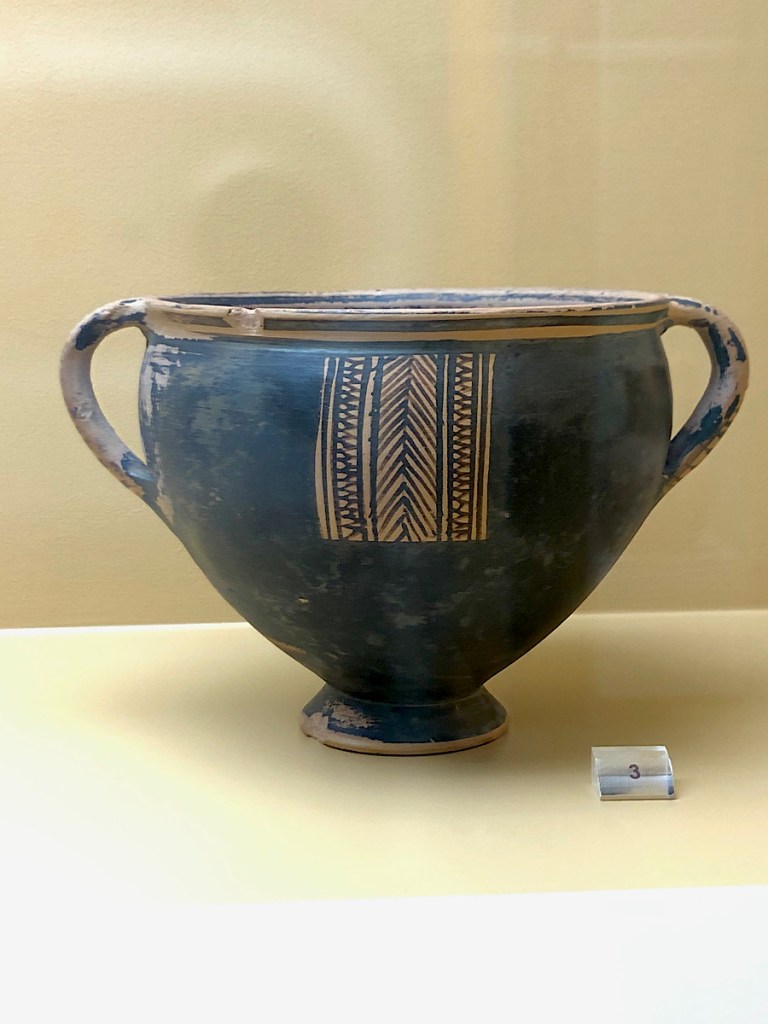
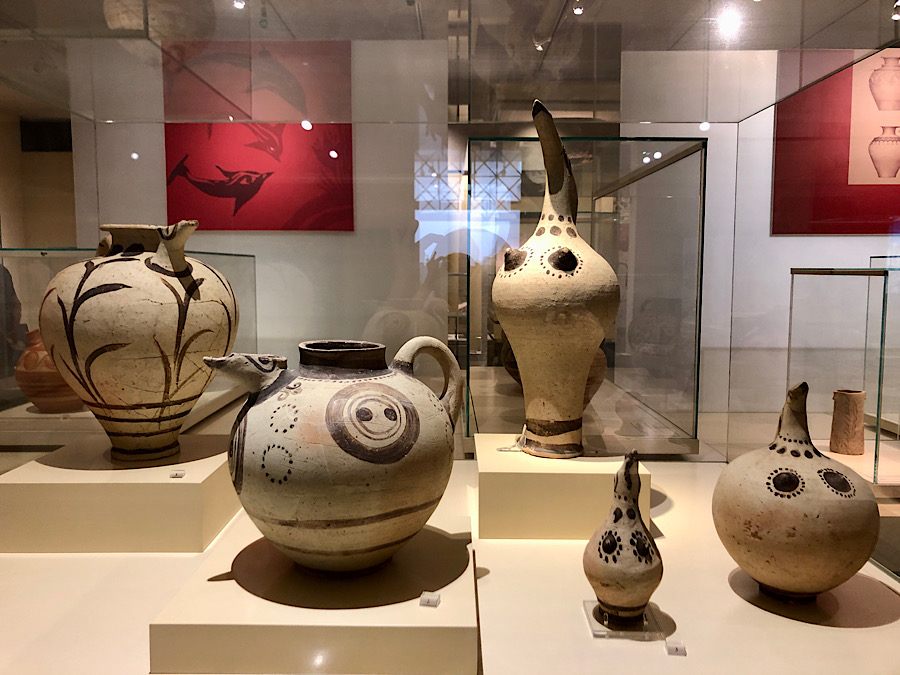
Cycladean pieces tend to be more flowing and natural; Myceanean, more geometric (like the pyxis pictured above; Geometric is actually a technical classification within the tradition). But both traditions share a deep Minoan (Crete) design influence. It’s hard to fully communicate how mind-blowing the Minoan aesthetic is if you haven’t seen it in person. It’s so minimalist, free, and playful that if you showed me some pieces out of context, I’d be hard pressed to say if they were from the year 2,000 BC or 2,000 AD. Some of the vases from the Thera dig, in fact, remind me quite strongly of Picasso’s ceramics.
 The Rookery