Technically this was Day Four of Athens, but we spent Day Three almost entirely at the conference. The presentations were interesting overall: my favorite was by Kent Chan, who works on Euro-American ideas of “The Tropics” and considers stereotypes about heat in his video installation for Weather Engines, “Heat Waves.”
Sightseeing Day Three started off with a tram ride up to the Lyceum (Lykeion), the ancient military mustering ground of Athens which, as time went on, added a gymnasium and then a full-fledged academy run by Aristotle and his students. If the Agora is rhetoricians’ Mecca, then the Lyceum might be our Bethlehem–the literal birthplace of our art (the canonical version of it, anyway). As I’ve discussed elsewhere on this blog, the Greeks envisioned the shaping of the citizen’s ethos or public character as a holistic endeavor that required the simultaneous training of mind, body, and spirit. So, the Lyceum–constructed at the sanctuary of Apollo Lyceus–featured not only an athletic training ground (the palaestra, at the far back center of the open area in the photo), but baths (at far left and right), a lecture hall (the ephebeion, of which you can see the rectangular foundations in the center of the photo in front of the shelter area), a library, a long walking path (the peripatos, from which Aristotle’s Peripatetic school of philosophy takes its name) and more. Aristotle only taught at the school for 8-9 years before he was exiled from Athens in 322 BC after a falling-out with his most famous student, Alexander the Great. However, Theophrastus and successive students continued to operate the academy until Sulla razed it in 86 BC.
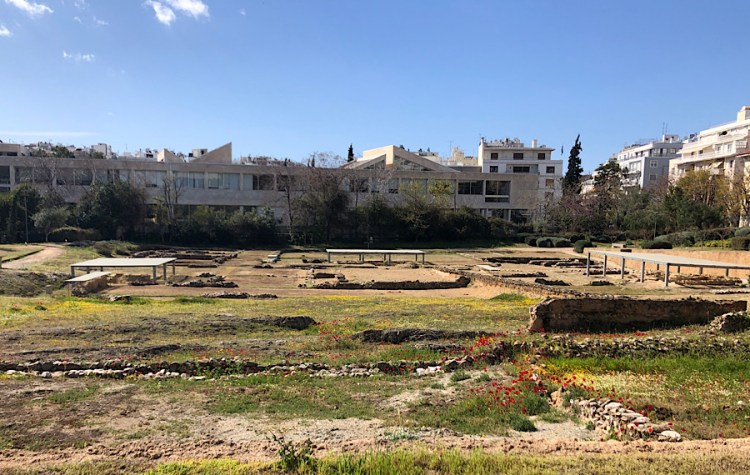
Walking the grounds impressed me all over again with what a situated, integrated, and material art Aristotle’s rhetoric was designed to be. At the Lyceum, Aristotle’s students went straight from trying to throw each other to the sand in the palaestra into trying to throw each other’s arguments off in the ephebeion. The Rhetoric was never meant to be studied abstractly. It was more like a car repair manual–designed to get greasy while being used to solve problems in the moment, under the hood, on the side of the road. In fact, Aristotle never wrote his rhetoric down: his students did, from the notes they took while walking and talking with their teacher. So, really, the Rhetoric was less like a manual and more like a mechanic standing over your shoulder, pointing out the busted alternator belt and helping you get back on the road.
After walking the peripatos at the Lyceum, we ambled on through the National Botanical Garden and over to check out a weekend flea market we had heard about–but it turned out to be a tourist trap, so we swerved over to Lukumades for some of their eponymous doughnuts (or, as translated in their signage, “Greek dough balls.”) Dripping with honey and cinnamon, they were hot, crispy, chewy, light, and delicious, but we gobbled them down so fast I didn’t get any pictures, so you’ll have to check the pics on the website if you want to see what they looked like.
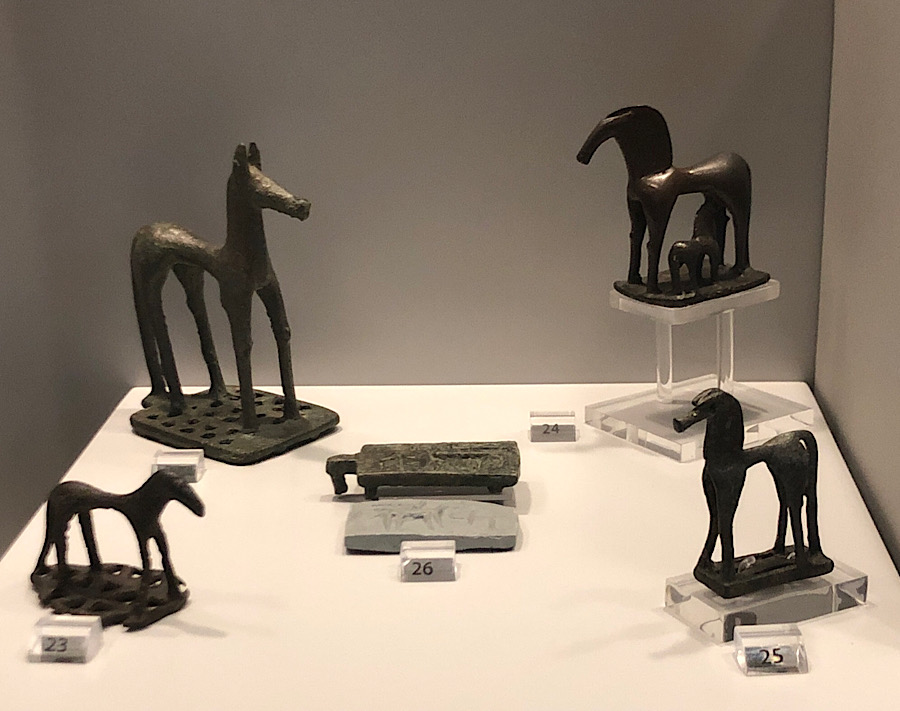
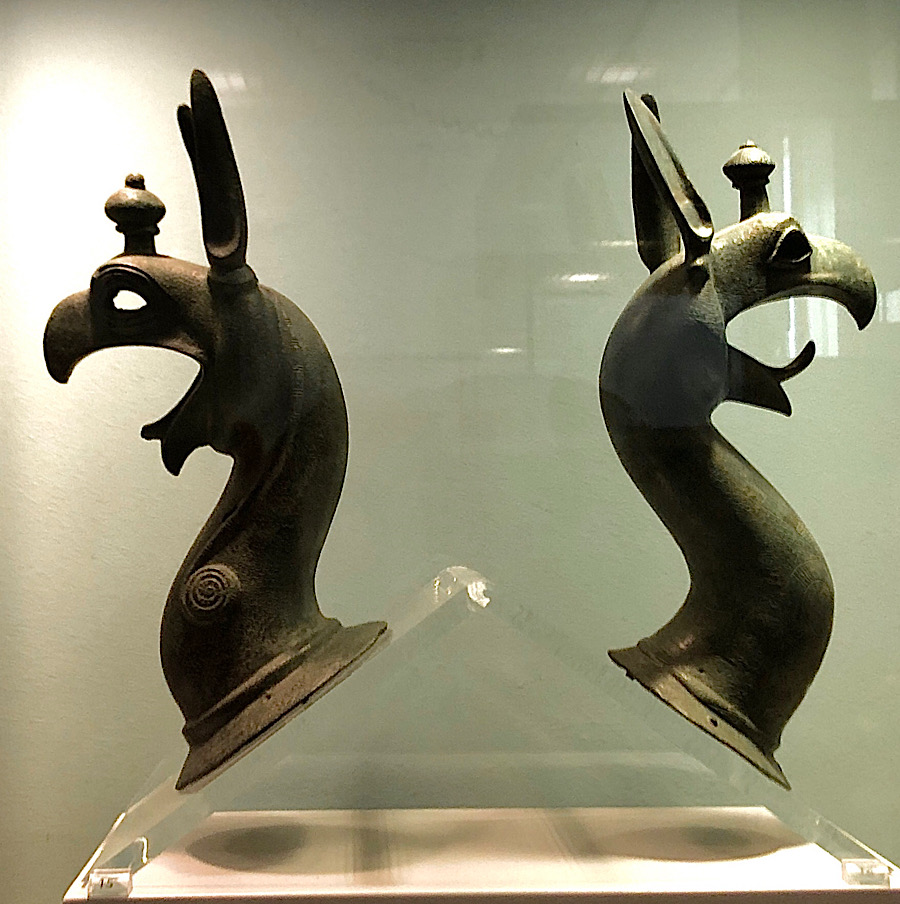
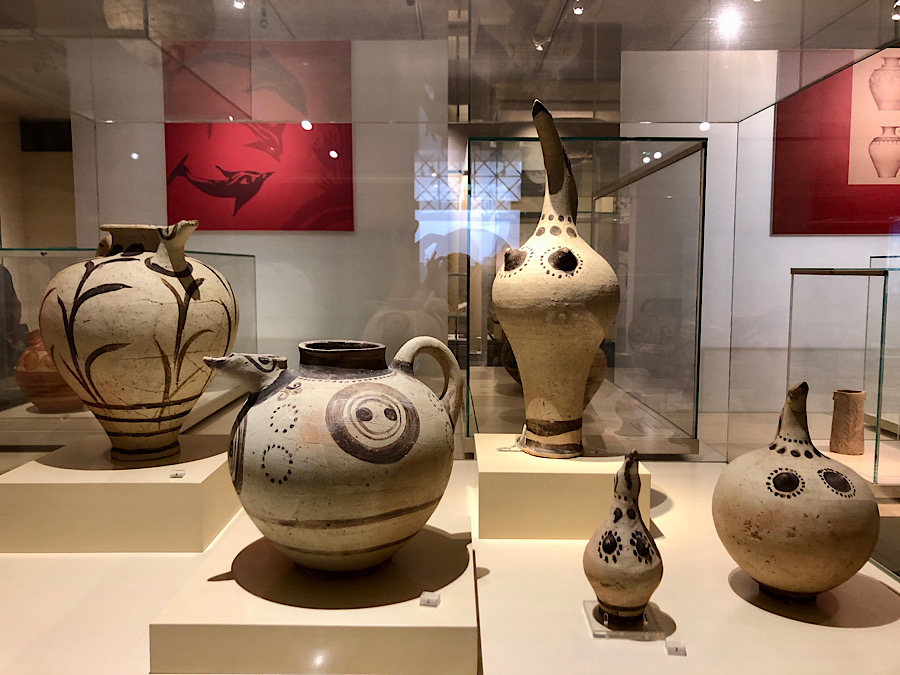
We continued on up past the old Acharnian gate to a great lunch of grilled fish and pork-jowl clay pot at Restaurant Paula. Then, we whiled away a couple of hours in the National Archaeological Museum. There were a *lot* of statues (which we mostly blew past, but the life-size bronze Jockey of Artemision knocked both our socks off) and even more vases (which, as you might guess, I did *not* blow past; however, I will say that due to expatriation [legal or no], the finest examples of red- and black- figure wares from Greece’s Classical period are sadly not to be found in its own national museum). However, the museum does have a dynamite collection of recently discovered Cycladic and Mycenean ceramics, which I’ll talk about more in Ceramics Saturdays this week, but in the meantime, check out the collection from the Thera excavation here.
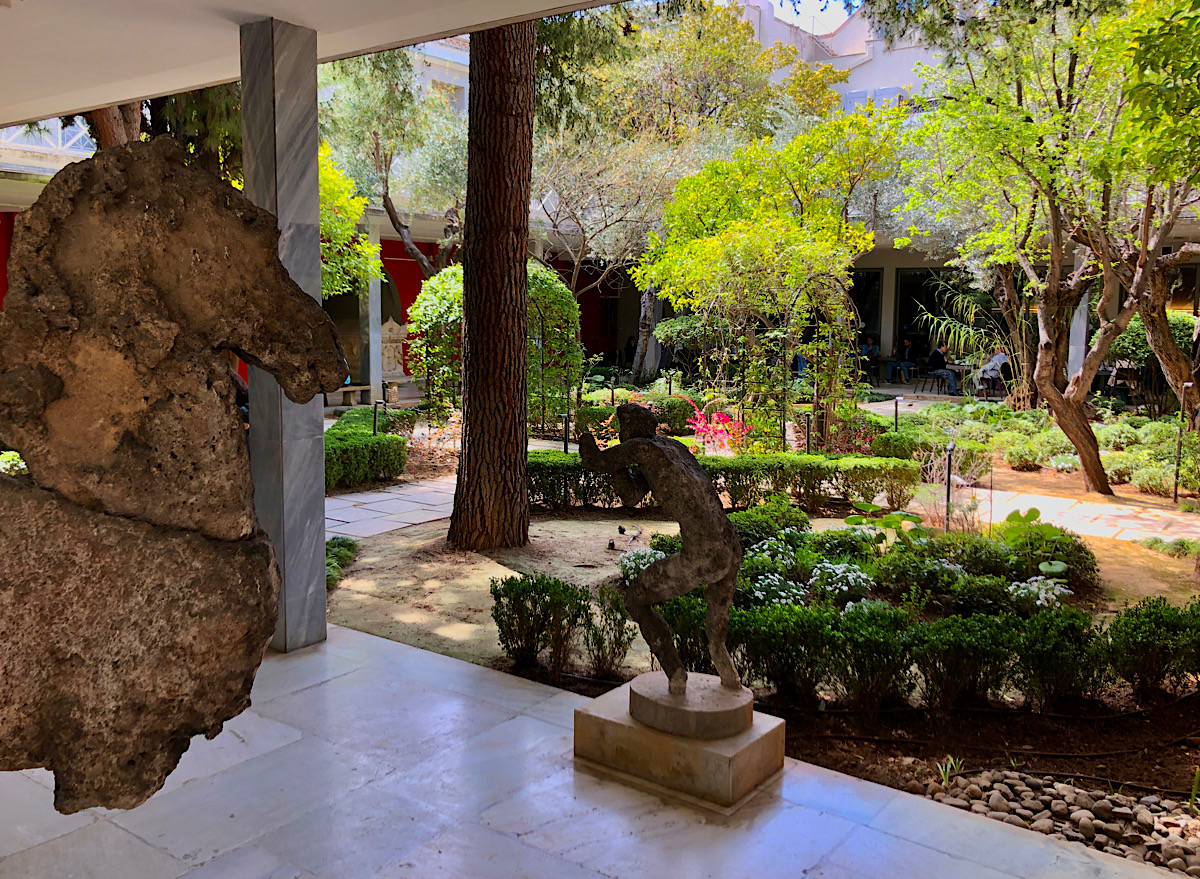
We finished up with a coffee at the museum’s stunning atrium garden cafe, pictured above, which doesn’t require a ticket to the museum to frequent but seems like a bit of a well-kept secret as the tourists there were far outnumbered by locals taking their moms to coffee after church.

 The Rookery
One thought on “Athens Day Three: Aristotle, Dough Balls, and Lots of Vases”