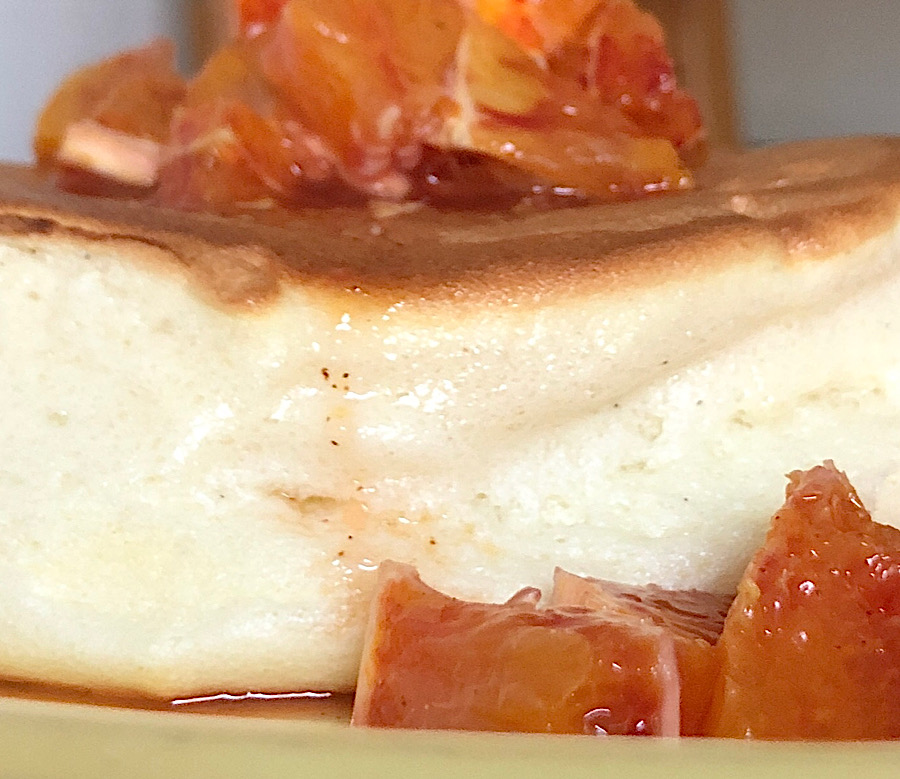
A true saga takes you on a ride. It has Mystery. Drama. Poetry. Heartbreak. And it goes on for waaaaaaaay longer than you hoped it would.
As with all of my Quixotic quests, I don’t remember how this one began. Does it matter? At this point, everyone who likes to cook has seen a soufflé pancake at a café or in a YouTube video. I think they first got popular in 2016 in Japan, the year after in the rest of Asia. Articles and videos started popping up in earnest online in 2018. I don’t remember when I started trying to make them, but I know I got serious early in the pandemic. And here we are, 2 years on, and I’m just now ready to post about them.
At this point, you’re already wondering: geez, is a pancake, no matter how ethereally, Platonically ideal, worth all of that fuss? Of course not. If you’re unfamiliar, my obsessions all graph something like this:
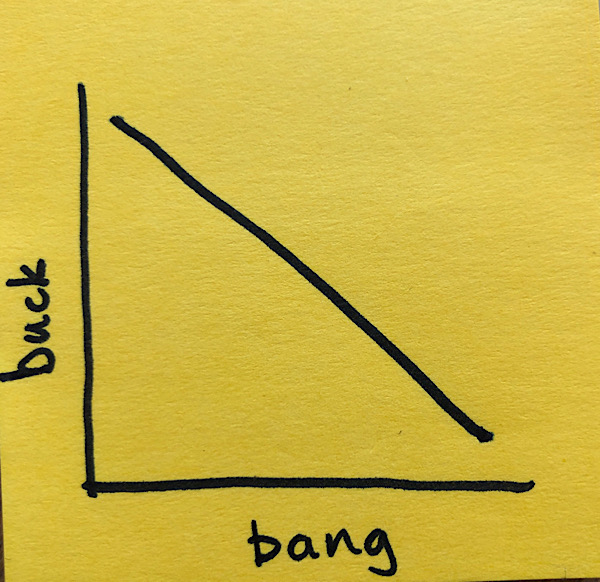
In terms of pancake ROI, you’re better off going with an æbleskiver, a dutch baby, a plins, a crepe, a taiyaki/bungeoppang, ricotta pancakes, blue corn pancakes, or heck, just regular buttermilk pancakes. There is nothing about a soufflé pancake that makes it that much inherently better than any of its pancake-y ilk, certainly not enough to justify a saga. But then again, sagas are never about the object at the end, are they?
As with all sagas, our idiot hero stumbled into this one quite naïvely. Hey, said Mourningdove to herself one fine morning, I like soufflés. I’ve got more eggs than I know what to do with. Let’s make this happen!
[voiceover] Two years later….
The list of alllllllll the many things that went wrong on the way isn’t very interesting. The more interesting question is why I kept at it…and unfortunately, that’s the one part I still don’t have an answer for. Do I have an obsessive need to solve mysteries? Did long-latent chemist genes from my mom’s side finally express themselves? If the latter were the case, you would think they would bring some precision and consistency along with the tolerance for monotonous repetition; they did not, which just made the whole ordeal drag out longer.
TL;DR: soufflé pancakes are actually quite simple to make IF YOU LIVE AT SEA LEVEL. Use this recipe. Or this one. Or heck, any of the other hundreds of recipes on YouTube. If you live at altitude, however, none of these will work. Not in a boat, not with a goat. They will still taste good, though, provided you cook them all the way through; they just won’t look pretty and feel soufflé-y.
The crux of the problem is air pressure. Soufflés are based on a meringue, and a meringue is a foam, and a foam is a network of little air/protein balloons. The egg white protein turns out to need a little help from external air pressure to keep all those balloons from popping when the heat stops inflating them and the protein network contracts and cools around them. I tried a lot of things to help the balloons not pop: more and less baking powder, more and less sugar, more and less cornstarch in the flour, more and less gluten in the flour, changing the ratio of whites to yolks, beating the whites less, fresher and less fresh eggs. All I wound up with was a staggering rainbow of different kinds of failure.
Then, I got to my apartment in Berlin with its crappy stove and too-small pans and only a hand whisk and random German flour and no baking powder (haven’t learned the German name yet) and random eggs and no cream of tartar and rampant over- and under-baking. And the pancakes worked. Every time. It’s so easy, in fact, it’s infuriating.
So, really, I could just peace out here. But, I will go on to share a few things I learned in my epic quest–mostly for therapeutic purposes, and also in case you would like to make soufflé pancakes without a side of saga:
- There are two kinds of soufflé pancakes: the Japanese kind, which are very tall and delicate–more like a true soufflé with a high egg-to-flour ratio–and thus require a support ring of some kind and long baking times; and, the Korean street kind, which are quicker and ring-less and thus rely on a greater amount of flour to stabilize the pancake. I only worked on making the Korean kind b/c for breakfast I can’t be bothered with parchment rings and 40-minute baking times. You may prefer the Japanese kind, in which case, the NYTimes has a recipe for you. I don’t have any reason to believe they will hold their shape any better than their Korean cousins at altitude, however.
- If you want pretty Korean-style pancakes, you’re going to need to pipe the batter in nice circles using a pastry bag; and, you’re likely going to have to employ the 2-layer trick that several recipes recommend (i.e., piping half the batter for each pancake, waiting a few minutes for the bottom to set, then piping the remaining batter on top, which gives you the tallest possible profile without a ring). I like using a scoop like the street vendors do for the first layer and then topping off with a spatula after a few minutes. This produces a nice round shape with minimal fuss.
- You’ll read a lot of conflicting opinions about making meringue. Factors that didn’t seem to matter much for me included the temperature of the eggs; when I added the sugar; or what form I added the sugar in (syrup, powdered, or granulated). The exact amount of sugar didn’t seem to matter much either; it seemed to be largely a matter of taste, though everyone seemed to agree that some sugar helps stabilize a meringue. Factors that did seem to matter, however, included the following:
- The freshness of the eggs . A fresh egg has a stronger white and thus makes a stronger meringue. But you don’t want them too fresh; they need to lose some water in order to make a strong foam. I ended up aging mine about two weeks. There’s a nice test you can do by standing your eggs on end in a glass full of water. If they stay that way, they’re perfect for meringues. If they tip on their long sides, they have too much water still (too young); if they float, they have too much air (too old).
- The speed at which you beat your egg whites. I consistently got the best results when I beat my egg whites on a medium speed in the mixer or by hand with a whisk. This slower unwinding of the protein strands results in a more tightly “woven” network that traps smaller air bubbles and is more stable during cooking (just like less-inflated balloons are harder to pop). While we’re on the topic, don’t over-beat your whites; as soon as you get stiff peaks, stop. You might even want to stop at soft peaks if you live at altitude. It leaves a little stretch in the meringue, which will help it withstand the greater range of expansion you’re going to get under less air pressure.
- Adding acid: Cream of tartar or lemon juice (some acid) does seem to work to keep the meringue foam tight; you don’t want to do more than 1/4 t lemon juice or 1/8 t cream of tartar per egg white.
- Baking powder never worked for me: at altitude, it generated too much boom, which just led to a bigger bust; at sea level, I didn’t seem to need the assist. A little bit might help you get a taller pancake if you’re at sea level and already have a nice, strong meringue working for you.
- The consistency of the batter is important. It needs to “stand up” and hold its footprint in the bowl after you’ve folded in the whites. If it runs at all, your pancakes won’t work well. The easiest time/place to get on top of this is at the beginning, in the bowl with your egg yolk batter; you want this portion of the batter to be thick, to the point where the tracks of your whisk stick around for a few seconds. Add a little more flour if your batter is runny at this stage. Also, don’t “sacrifice” too much of your meringue to “lighten” this batter before folding in the remaining meringue; that will preserve as much lift in the final product as possible.
- The type of flour also hasn’t seemed to matter much, honestly. I think it’s a matter of taste: cake flour will give you a cakier taste and feel; AP flour, a pancakier one.
- No matter what recipe you use, you’re going to have to play around with the baking time and method until you find what works for your set-up. Low and slow is generally the way to go–300°F or less for surface temp. Electric is better than gas for avoiding hot-spots. Depending on my set-up, my baking times have ranged from 10 minutes to 20. Definitely, you’ll want a lid that keeps in heat and moisture; you may also, depending on how humid your climate is, want to add a tiny bit of water to the pan every time you have to lift the lid.
So, in the end, why did I stick with this project obsessively for 2 years? I guess why is the answer as well as the question. I like to know why things work, sure, but I like to know why they don’t work even more. Failure, more than any other thing in my life, teaches me about my world. I’m not talking about being able to control my world: I can’t control the altitude where I live anyway. I’m just talking about reality. If everything I do seems to work all the time, I start to worry I’m out of touch with reality. As Bruno Latour says, we know what’s real because it resists us. I like the resistance.

I also like these pancakes. They’re really pretty tasty….
 The Rookery
3 thoughts on “The Saga of The Soufflé Pancake”