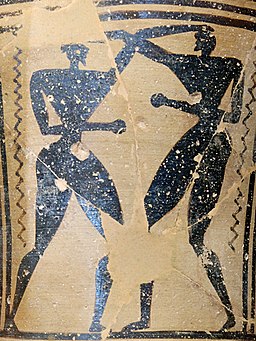
I’m starting a series on aikido and rhetoric because I’m a rhetorician by training, and for the last two years, I’ve been training in the Japanese martial art of aikido as well. I started noticing a lot of similarities between the two disciplines: similar ethics, similar practices, even similar concepts and terms. And after digging a bit deeper, I found these similarities were more than coincidental. Both aikido and rhetoric arose specifically as counter-measures, counter-disciplines, to the problem of violence. In the case of rhetoric, the indigenous tribes of the Attic peninsula realized they needed to stop fighting among themselves and band together if they wanted to save their homeland from colonization by surrounding empires. In the case of aikido, the founder, Morihei Ueshiba, revolutionized the way he practiced martial arts in response to the devastation of Hiroshima and Nagasaki to cultivate peace instead of violence. Both arts seek to transform the energy of conflict into the energy of community.
Instead of writing a long essay analyzing all the similarities between aikido and rhetoric, I’m going to proceed in a way that I think both traditions would recognize. Each week I’m going to set an aphorism from Ueshiba’s Art of Peace beside a corresponding Greek fragment and reflect briefly on the comparison. Today we begin with the first aphorism:
The Art of Peace (aikido) begins with you. Work on yourself and your appointed task in the Art of Peace.Everyone has a spirit that can be refined, a body that can be trained in some manner, a suitable path to follow. You are here for no other purpose than to realize your inner divinity and manifest your innate enlightenment. Foster peace in your own life and then apply the Art to all that you encounter.
And here is the first maxims inscribed on the portals of the Temple of Apollo at Delphi:
Know thyself.
The strongest temptation in any conflict is to focus on the opponent–after all, that seems to be the source of the threat. But both aikido and rhetoric teach that our only genuine opponents are fear of self and ignorance of self. In order to cultivate peace, we must first face who we really are, what we really need, want, and value. We tell ourselves stories about who we are, what we need, want, and value–but often those stories are given to us by someone else. Or we make them up because we’re afraid to face the truth about ourselves. When we face ourselves, we center ourselves. And in returning to our center, we become grounded, stable. Fear subsides. Then and only then are we able to really see the person in front of us, to see who they are, what they need, want, and value. Centering is prerequisite to finding common ground, and common ground is prerequisite to resolving conflict. When we obsess over what others are saying about or doing to us, we find ourselves “thrown off,” “taken aback,” “caught off guard”–all expressions of being de-centered, destabilized. It is the central, and ironic, tenet of both aikido and rhetoric that the only way to cultivate harmony with others is to cultivate self-knowledge, self-discipline, self-love and compassion.
 The Rookery
Reblogged this on HistoryWoman and commented:
Finding food to bring peace to the mind & body
LikeLike