I can’t remember whether I first learned about hoshigaki: it was either on Japanese Style Originator (I think episode 16 on fall foods? It’s not on Netflix anymore, so I can’t check), in which a wife sends her husband out to drink beer with a dried persimmon in his pocket, a traditional remedy against hangovers (turns out the super-fierce tannins in the fruit, when oxidized in the drying process, can actually help the liver metabolize alcohol); or, it was at Minamoto Kitchoan, one of my favorite places in the whole world, where I first tasted suikanshuku, dried persimmon stuffed with sweet white-bean paste.
Anyway, they’re amazing. They’re like a date in terms of their sweetness and stickiness, but they have these amazing floral flavors, a bit like a quince, and a deep caramel taste.
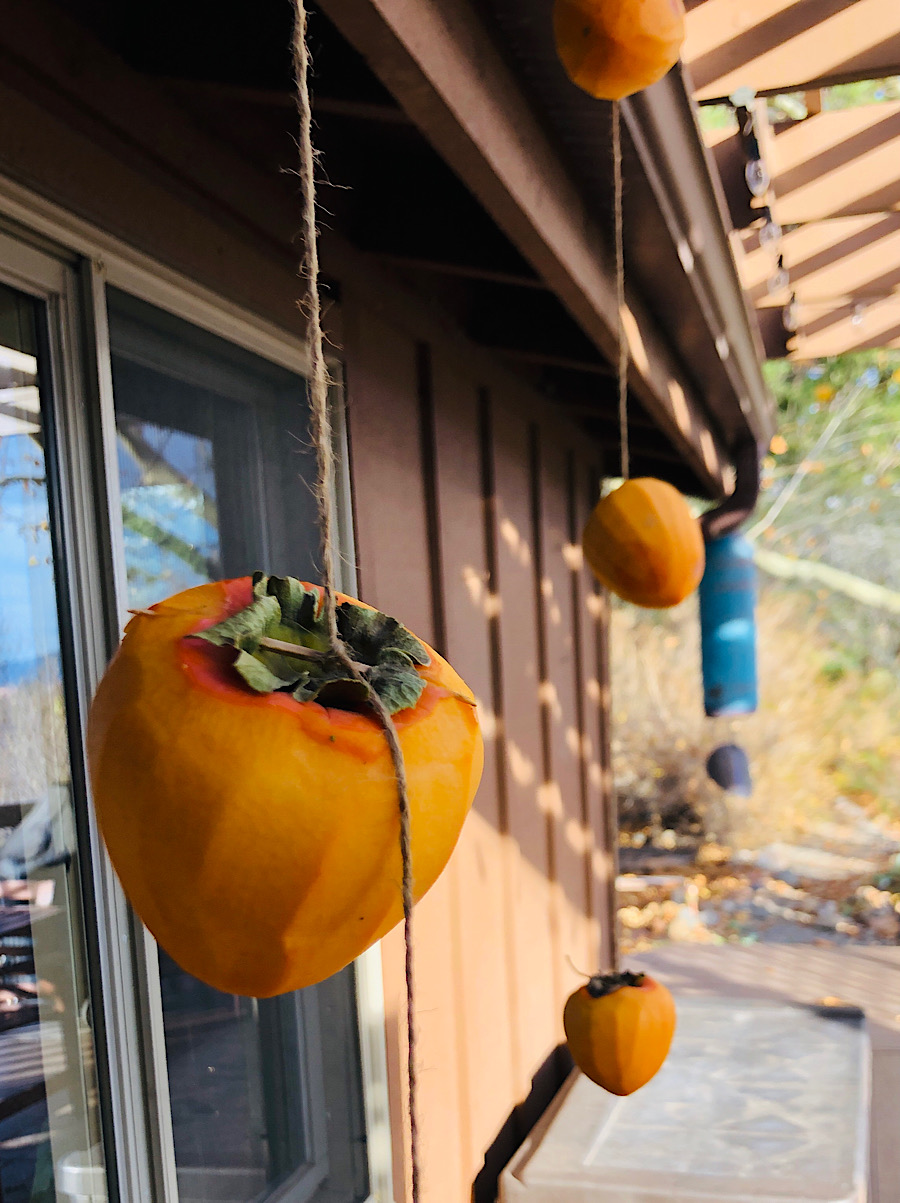
Who knows why I decided to try to make hoshigaki myself? True, I’ll give any recipe a shot that involves drying something because I basically live in a dehydrator here in the East Sierra: chances of success are therefore high, and I can skip all the paragraphs on preventing mold. Basically, you peel and hang them up outside in a dry, sunny, windy spot and then massage them every couple of days until the insides are all squishy and the outsides are all leathery, and then you let them go until they look sugary on the outside: where I live it only takes like 2-3 weeks; most recipes say it takes a month or two.
At any rate, my first attempt last year with 2 persimmons was a raging success, and I even messed it up and just left them hanging in my garage for a couple weeks with totally inadequate massaging. So, this year I’m upping the ante and going for 6.
Here’s a good recipe if you want to try making some yourself (there are also Korean, Chinese, and Taiwanese recipes out there, all functionally the same). Only use firm (unripe) Hachiya persimmons (the pointy ones), and buy them at your local Asian grocery if you can because they’ll be in better shape and cost like 1/3 of what they cost at Whole Foods or wherever else you can find them. The persimmons at Asian groceries are also more likely to come with their stems still attached, which makes hanging them like 80% easier (you’ll see various solutions for hanging them stemless; one involves drilling in stainless-steel screws from the top, which seems like overkill to me; I just bridge a toothpick through the calyx and hang them from that). I messed up and bought my first batch at a bourgie grocery store, and they were too ripe, so I’m saving them for persimmon pudding cake.
Stay tuned, as usual with my crazy experiments….
 The Rookery