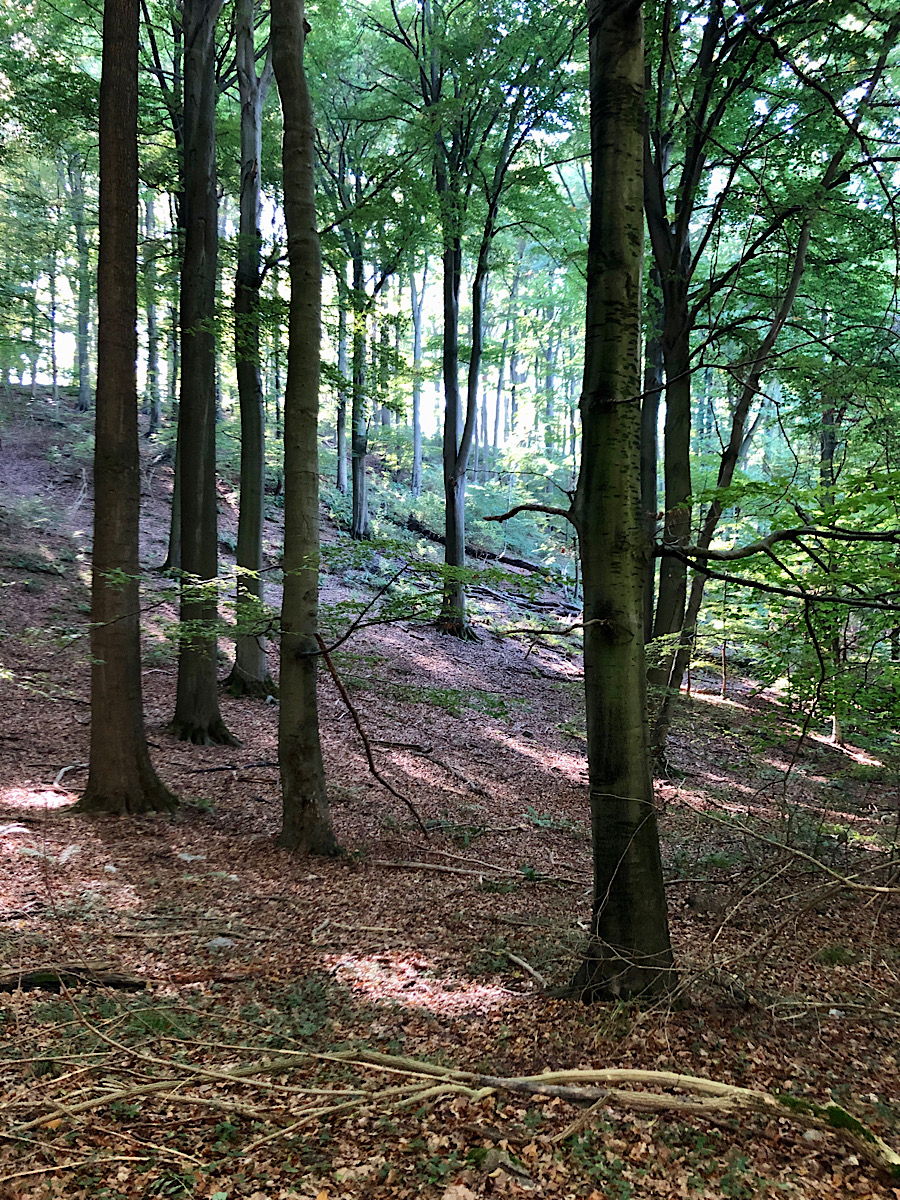
My colleague Birgit and I are working on a book about the promise (and problems) of monitoring forests from space. So, we’re spending a lot of time thinking about forests, reading stories about them, looking at maps of them, viewing art about them, and…listening to them? Birgit recently did a project with her students and the Public Data Lab about different techniques for experiencing forests–from shinrin roku (forest bathing) to listening to the movement of sap under tree bark. So, we decided to test out the project results with a visit to the UNESCO World Natural Heritage Site Grumsin, an ice-age beech forest about an hour’s drive outside Berlin.
The ice-age part of the forest is strictly and understandably off-limits, but several nice paths circle through the newer (still several hundred years’ old) sectors, taking in a glaciated landscape of moraines, rolling hills, sandy fields, lakes, and ponds as well as the charming village of Altkünkendorf, and–of course, because this is Germany–at least one remote little gallery-café where you can pause for homemade cheesecake, coffee, and fresh-squeezed quince juice. (Germans really do not want to get hungry while hiking, and I’m 100% with them on this.) We took a couple folks along with us: Birgit’s colleague Myriel and her friend Andrés, a visiting environmental design scholar from Colombia. All of us sampled the Forest Listening tracks while on our hike, and it made for a wonderful afternoon; I highly recommend you do the same in a wood near you while the weather is still fine.

The church in Altkünkendorf 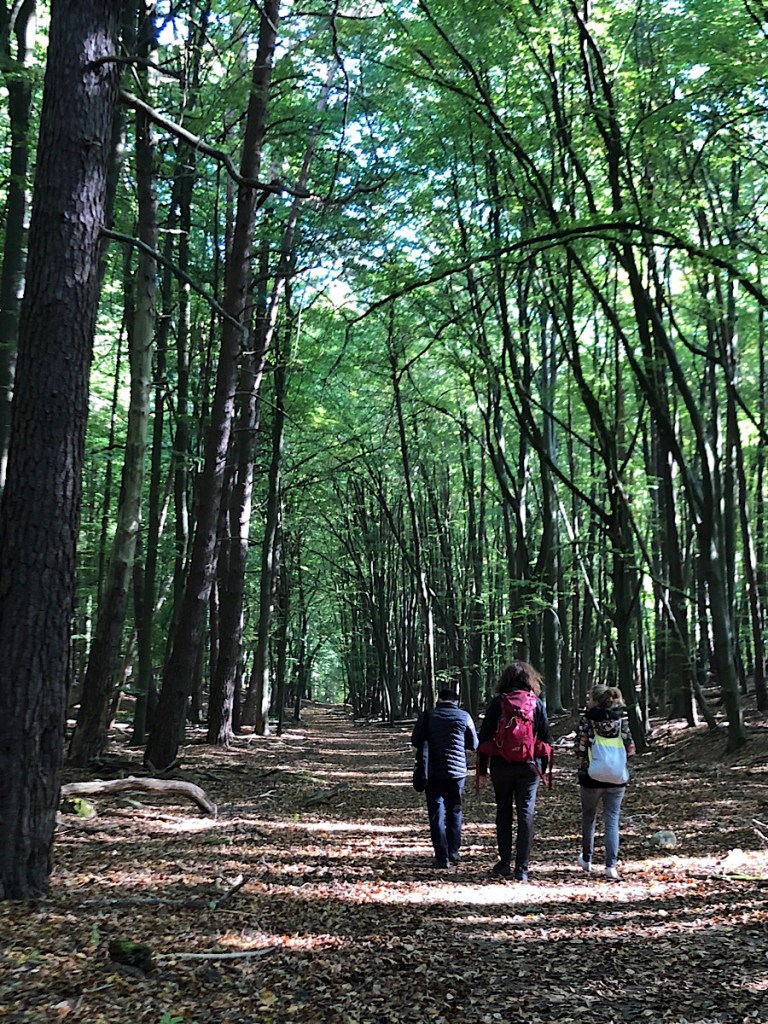
Entering the buchenwald (beech forest) 
They sell local honey here as well, and the pottery, tiles, watercolors, and sculptures are all very good. 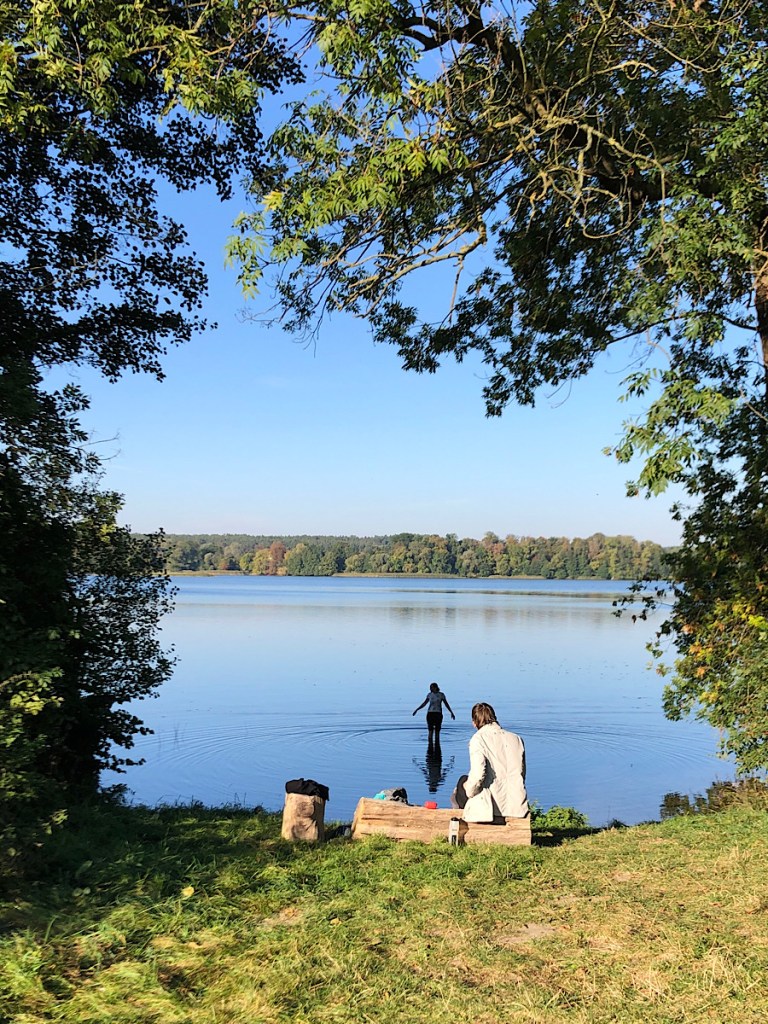
Some folks enjoying a rare fall Indian-summer day on the Wolletzsee 
 The Rookery
Oh, I love this.
LikeLike
Thank you for the oak leaf! Brilliant idea–this is the best way of all to preserve it …
And “Hi, Malena.” (I trust you will re-visit this ‘Forest Listening’.)
LikeLike