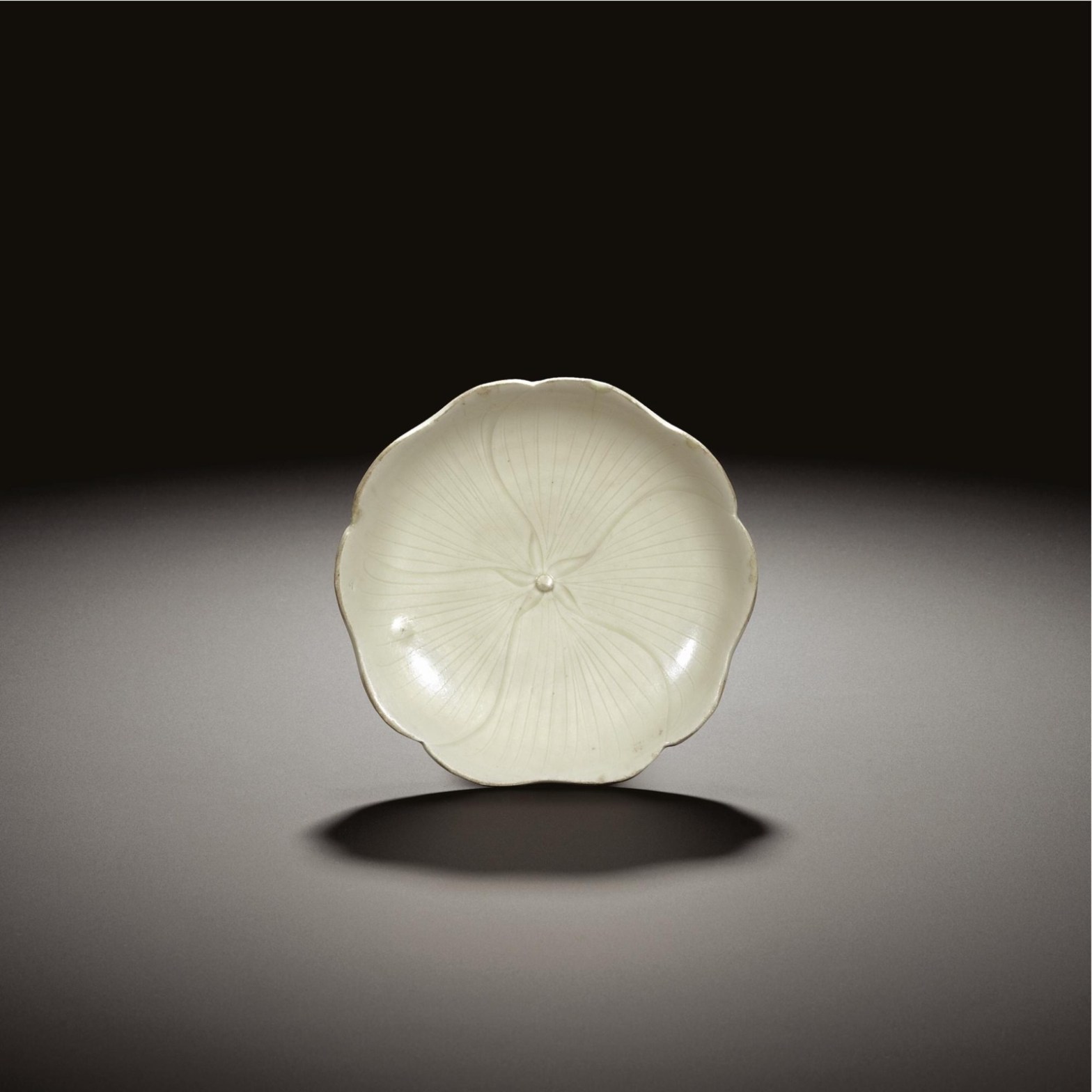
The second entry in our series on the Five Great Kilns of the Song Dynasty…Ding ware was produced at a kiln in the north of China, near Hebei, during what is known as the Northern Song, the first of two peaks of imperial and cultural power during the 300-year dynastic period. Ding wares are typically white-glazed, often with floral patterns incised in the paste beneath, though there are some extant black and red examples as well. Though all Song wares are known as porcelains in Chinese art nomenclature, many are what we would call stoneware, with higher levels of grit in the body; the paste of Ding ware, however, tends to be very pale and smooth, more like what the West thinks of as porcelain. Above is an exemplar from a recent auction at Sotheby’s displaying the classical ivory glaze and floral design. The piece I told you about last week—that the woman bought for $3 at a garage sale and that sold at auction for $2M—was Ding ware. I actually remember her posting it on one of the forums I visit on Song ceramics asking people if they thought the piece was legitimate: I think a few said it looked like a replica while others thought it might be the real deal and recommended an appraisal. So, you never know.
Ceramics Saturdays: Ding Ware
 The Rookery