I see it dawn on you just how old I am. You wonder how I have made it this long, as frail as I seem. You know nothing about me. I have ridden to war; I have been smuggled out of a burning castle at the breast of a princess; I have served tea to emperors; I have been put to sea with my brothers stacked above and beneath me like so many bales of cotton.
But I know all about you, why you have made an appointment to peer at me through this sheet of glass. You are here for the same reason they all come: I was there when Yamamoto Katsushige, one of the last true samurai, committed hara-kiri. While his blood wove a black lace shroud beneath him in the gravel, I sat beside him, holding the page on which he had written his death poem.
It would be ridiculous for me to deny it: it is a matter of historical record. I am even in the famous print of the suicide, made later when “twilight samurai” were all the rage. There are Yamamoto’s hands ready to drive the blade into his powerful belly, there his face turns up toward a few autumn leaves drifting across the corner of the frame. There I sit in the opposite corner with the poem, balancing the composition.
No matter: I cannot tell you what you–and all the others–want to know. No one knows why the Matsudaira forced their chief retainer, a loyal and learned man, to take his own life. It is clear from what came after that the suicide helped the clan survive into the Meiji era, but the why and how of it have been trampled into the muck of history. And so a minor obsession has developed with me, Yamamoto’s final witness. Which is why you are here.
Listen: I cannot remember most of my time with Yamamoto. My memory now feels like a spiderweb, more space than thought. I am as bewildered as you by the samurai’s tragic end. All I have left is a deep conviction, communicated through the warmth of his hand on me, that he was a good man, the best of men. But that is not enough, is it?
Trust me: I have meditated for hours, days, as my masters taught me. As you can well see, in this place, time is the one thing I have in abundance. But each time, just as I am on the verge of reassembling the pieces, they slip out of my fingers. Even worse, I have difficulty telling the genuine article from a forgery—a true memory from a wish, a mistake, a dream.
Still, here you are. And I must say there is something about you that is different from the others who come to give themselves shivers by gaping at me, as if I were the very tantō that sliced through Yamamoto’s viscera. I can read it in your steady gaze, the way your brow ripples like the sand beneath a clear stream: You are convinced that between the two of us, we could put the pieces together. Your earnest face makes me smile, and I have not smiled for so long in this place. All right. Let us make the attempt. But where to begin?
Blood
I am in the courtyard of Aizu Wakamatsu. Though the outbuildings are blackened with fire, the castle still stands, white as sky. Everywhere around me, all is white but a spreading stain. In the midst of that blossoming blackness my master, Yamamoto, slumps forward over his knees with his forehead in his own blood. I am holding down his death waka, to keep the wind from blowing the page away:
Do not ask the sea to mourn the cedar broken by the harbor wave. The sea did what it must do, so did the cedar. Still, the maple remembers the space where the cedar stood.
Naming
The name I bear now was my second master’s name. Perhaps he was my third…I changed hands so often for a time. But he was the most famous of them. Rikkansai. It means…well, it means this: When monks wished to know when the yin of winter would yield to the yang of spring, they would fill a bamboo pitch pipe, a rikkan, with ash. When the wind blew hard and long enough to clear the ash and sound a tone, they knew the season was turning. But so says the old kōan: “When the pipe is not yet blown clear/The wild plums blossom on south-facing branches.” In other words, most of the time in life we are looking the wrong way.
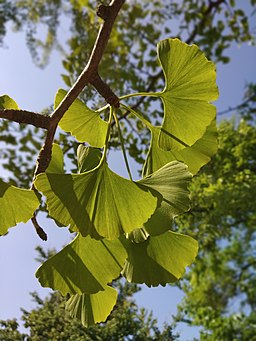
Despite my name, I am not Japanese, did you know that? I suppose you do: You appear to have studied my case most carefully. I am Chinese, from Yonghe in Jiangxi province. There I was named Shuye Tuyang, which means Tree Leaf Pattern. From there we could continue with the definition of “tree,” “leaf,” etc., probably forever. But none of it would tell you what the name means. Nevertheless, if you can imagine looking up in a gingko forest on a sunny day when the breeze is just strong enough to shiver the leaves, you will get an idea of how that name felt to me while it was mine.
Fire
No one blamed Suzuki when he bowed to my mistress, thrust out the hilt of his short sword, and begged her to kill herself. He was convinced Aizu Wakamatsu had fallen to the Imperial troops. Just so was the famous White Tiger squadron when they saw the smoke rising from Iimori Hill, though it was only the outbuildings burning. They committed hara-kiri all together—18 boys lying in a sticky puddle, an entire generation of Aizu samurai wiped out in a few fly-swarmed minutes. Back at the castle, Princess Teru’s servants restrained Suzuki until he mastered his panic, and she forgave him.
Princess Teru was the adopted sister of the lord of the Aizu, Matsudaira Katamori. Many of us wished their spirits could have been mystically exchanged in the adoption ceremony. Katamori was diffident, a scholar in a samurai’s hakama. His hesitation to accept a post the Shogun had offered him in Kyoto nearly incited a clan war. Teruhime, on the other hand, was cast from iron: She divorced her husband when he no longer pleased her, took Buddhist orders, and returned to Aizu Wakamatsu to run the estate. She maintained a female guard corps at the castle who fought the Meiji invaders right alongside the men.
When Katamori surrendered the castle to General Kuroda a few days later, Teruhime took no chances with me. She swept me up from my cradle and bound me tightly in her hiyoku, over her breast, then wrapped her kimono in such a manner as to hide me. We went out from the castle like this and down to the carriage that would take us on the long journey to our confinement at Myōkoku-ji. Although the Imperial troops treated her with dignity, still she waited until she was secreted in the brocaded darkness to release me. She beamed down at me. Still suffused with the tender heat of her breast, her pale face swimming above me in the darkness like the moon, I had never felt safer.
Shipwreck
That feeling brings with it, like a line dragging up a trap, a much less happy memory. My brothers and I were to be sold, so we were bound together, locked in the hold of a ship in Hangzhou, and sent off into a terrible storm. The waves pushed the ship back into the coast where it foundered. I remember the cargo crashing all around us, icy water seeping into the hold, the terror of drowning. And then nothing for a very long time. As I told you, there are maddening chasms in my memory. I fall into them and there is no way to tell when I will crawl up into the light again.
Tranquility
This is the next thing I remember. As you can see for yourself, I have a birthmark on my face, the perfect image of a gingko leaf. On this day in my memory, my first master, Hu Je, was entertaining the new young grandmaster of a Japanese tea school. Though long out of fashion in Shanghai, the tastes running now to steeped tea and Yixing clay pots, Song style was all the rage in Japan. So Master Hu served Master Taiso old-fashioned white whipped tea and brought me in expressly to serve it. The masters drank and noted the scholar’s stone in the tea garden, the heavy draping of weeping cherry—all with only a few words, precious like jade, because of the language gap between them. Suddenly my birthmark became visible to Taiso, and he drew a surprised breath, turning me gently round to get a better look. “Yes,” Hu smiled, for the gingko leaf was the crest of Taiso’s clan, the Urasenke. “A gift from my humble house to yours.” This was how I came to Japan with Master Taiso, and how I was given the name Rikkansai, which was also his Zen name. I wish I remembered more of my time in Master Hu’s house, though. He struck me as a remarkable man.
Myōkoku-ji
In this memory it is bright day, so bright that the two figures sparring with polearms in the temple courtyard look at first like shadow puppets. It is my mistress Teruhime and Yamamoto, who has been assigned our bodyguard while we are under house arrest. Yamamoto is skilled at the polearm and makes a good match for Teruhime, who trained under the grandmaster Akaoka. Today she wears the hakama of a samurai, covered for modesty’s sake with kimono and obi. She strikes with astonishing speed, her feet spinning up white ribbons of dust. Tendrils of her hair cascade down over her eyes, which do not flinch from Yamamoto’s. The samurai parries her blows apparently effortlessly, but his respect for her is plain in the set of his jaw and the corded muscle of his bare arms.
I am watching and waiting to serve them tea from the shade of the pavilion. I sit to the right and just behind Katamori. Next to him sits his adoptive son and heir, Nobunori. I can see in Katamori’s eyes that his mind is not on the contest in front of him. And I know he worked hard to avoid our humiliating circumstances. He saw what was coming. He tried to make peace with the Meiji Emperor, but his old enemies at court—jealous of the Kyoto promotion—machinated against him. His hand was forced when Aizu rebelled; at that point it was take up the sword or see his patrimony burnt to cinders. And now here we are. I look from his eyes to Nobunori’s and find only boredom reflected there, boredom and annoyance. At a glance one could say the son resembles Yamamoto; Katamori has ribbed the samurai before about this. And yet there could not be a greater chasm of character between them. What will happen to us when Nobunori becomes our lord? If we live so long.
Now the lord and his son are gone; it is coming on evening. Teruhime and Yamamoto sit in the pavilion alone, writing poetry. I think this may be a different day, later in the season. The maples in the temple garden are red as ink. A chill is seeping into the viscous warmth of the green tea I hold.
Teruhime lifts her waka and reads it: The evening mists rise; the white hare sits at the gate. The wise scholar who yearns to paint the limpid eye will bide his time in silence.
Yamamoto lifts his poem: Breaking autumn’s peace, the stream courses to its end. If we wait to grasp the maple leaf floating by, the season will escape us.
My mistress claps her hands together and laughs. “My lord, you have excelled your teacher in this contest.” She bows to him, and he blushes deeply and returns her bow in silence.
War
This one is unbearable. I am trapped in the cellar of a building that is burning. Explosions shake the ground; the wood groans as it is incinerated. Are we at Myōkoku-ji? Where is Yamamoto? I don’t know.
Spring
Teruhime prepares tea for Yamamoto in the temple’s cha-ji. We have been confined here for almost two years, and the strain has brushed in quarter-moon shadows beneath the princess’s eyes. A branch of cherry froths up behind her in the alcove beside a beautiful calligraph of a poem by Jakuren that she painted and gifted to the abbot. Carefully, holding back the sleeve of her kimono, she kneads the thick koicha into the hot water with a whisk. She does not look at Yamamoto but smiles deeply as she stretches out her arm, directing me to the samurai. He keeps me close for a moment with a hand on me, saying nothing. His eyes watch the steam rising as if something is about to burst from it like a pheasant from cover. When he lifts the tea to his lips, he closes his eyes. He sends me back to Teruhime with the remaining tea. She, too, drinks, causing her painted lips to graze the spring-green surface so that no froth clings to them.
When the ceremony is done, I return with Yamamoto to his quarters to serve him, a gift from Teruhime. The change feels like the morning one awakes and realizes from the angle of the light that the season has turned.
Industry
The view makes me dizzy. I sit near the window in a Taiwanese skyscraper; I can make out the Penghu Islands in the distance. Two people are speaking, their voices muted by the glass around me. A woman speaks my name. I hear her explain to her companion that I came to Taiwan with the Japanese invasion and that my past is checkered. Her companion laughs at this. Shame washes over me. What have I done? I can’t remember. She speaks of Yamamoto’s suicide, but just as those memories begin to glimmer like goldfish in a murky pond, I hear her say the real reason her boss bought me is he is a descendant of my first master, the great Qing scholar Hu Je. My survival all these years is nothing short of a miracle, she says. She says it is fitting that I have returned home.
Crossing
This memory is a very small one, broken, like a shard of vase in which you can see half of a couple embracing. Teruhime carries me across the little bridge in the temple garden. Her wooden sandals slip on the dewy planks. She gasps, but Yamamoto catches her elbow and saves both of us from tumbling into the stream. He holds her arm firmly and helps us finish the crossing. When she thanks him she does not look down but up, right into his face, and still he holds her arm in his scarred brown hand.
Loyalty
It is late night in Yamamoto’s rooms at the temple. From where I sit I cannot see faces in the flickering candlelight, but I think it is the lord speaking. Katamori’s voice catches in his distress. I hear only spurts: “A misunderstanding…the little bitch did not have his name, thank God…tore his coat…went wailing to her uncle with our crest in her hand. And would you know her uncle is General Kuroda? Oh God…he is demanding blood.” I hear something else—sniffling. It sounds like Nobunori.
“It is not just the Matsudaira whose heads are at the blade here. It is all the clans, what’s left of us. This idiotic misunderstanding…they will make us all commit seppuku, put Teru in prison….” Katamori’s voice breaks. No one says anything for a long time. Then, I hear Yamamoto bow himself slowly on the rice-straw mat. When Katamori speaks again, his voice rasps like the hinge on a cemetery gate: “Yes. It is for the best.”
“My son,” he says after another moment. And it seems to me he is not speaking to Nobunori.
Fire Again
I do not remember this of course, but I remember Teruhime telling Yamamoto that I was born in the fire of the kilns at Yonghe sometime at the end of the Song dynasty. The clays there were not so fine, but the gorgeous blackbird-wing glaze smoothed over any imperfections, and the ingenious Jizhou potters came up with a further way to entice wealthy buyers: a single tree leaf, dipped in a lighter glaze and pressed into the bowl before firing, would leave its gold-veined ghost to float forever in a glassy midnight pond. Here in Japan the style is called konoha temmoku: konoha for the leaf and temmoku being a Japanization of where they thought the clay quarry was—tianmu shan, Eyes of Heaven Mountain. They were wrong about that. But did you know? It is one of the few places left in the world where gingkos grow wild.
My first memory is waking in Rikkansai’s hand when he saw my birthmark emerge from the white tea haze in Hu’s garden. Just so I emerged: at that moment I saw the sunlight, felt the temperature of the air, heard the chiming of the fountain in the garden. I learned so much from Rikkansai, most of all the meaning of patience. He taught me to honor the long black silences of my memory. I remember his answer once to a student who asked how the master knew the water was at the right temperature for koicha–was it a certain number of silver bubbles in the iron kettle, or their size? Rikkansai did not answer for a while, looking not at the kettle but out into the tea garden at Konnichian. And then he said, “You will know the right moment because it looks like no other.” The student bowed to hide the frustration in his eyes. I pitied him because I had felt the same exasperation every time I emerged from the shadow of forgetfulness—how much had I missed, and of what importance? But Rikkansai taught me that that moment when the fog finally lifted and everything was perfectly, unbearably clear was the right moment—how could it be otherwise? Rikkansai died young, scarcely into his thirties, and truly I have never stopped mourning him.
That is all that will come to me.
You are standing back from my case now, your eyes no longer on me but turned inward. What are you thinking? You are trying to fit the shards together, all the different sizes. You are seeking the shape that originally made a whole of them.
Here is the question that has stayed with me all these years when nothing else would, tormenting me, whispering in my ear like a vengeful ghost. What did Teruhime believe about Yamamoto in the end? Did she really believe he had abandoned her, raped Kuroda’s niece, and died in shame? Or did she learn the truth somehow? I don’t know if they ever spoke again after that dark night with the Matsudairas. Nor do I remember Teru speaking of Yamamoto after the suicide. But I am convinced the infamous print of it was made from a sketch of hers. Look: It hangs right here, clever curators. I tell you it is unmistakably her style; I saw her paintings often enough.
Now you are leaning in to look at the bottom left corner where the printmaker has incised my gently conical body, raven-black but for the golden leaf. I guard Yamamoto’s poem against a chill autumn breeze that tugs at the corner of the page. Your eyes are narrowed; you adjust your stylish glasses on the bridge of your nose again. Are you straining to read the poem? Don’t: It is transcribed in the cartouche at the upper right. I assure you it is accurate even though Yamamoto’s original poem was destroyed when Myōkoku-ji burned in the War. I know those words better than I know my own mind. Still, you stare stubbornly at the bottom corner. You’re pulling a notebook out of your bag, in a rush, yanking it free. What? What have you seen? The print has dogged me a hundred years like a prodigal brother; I have spent months here trapped beside it. Trust me, there’s nothing down there but a few scratches in the wood to mimic the poem on its page. But you’re scribbling away so fiercely the notebook shakes in your hand; you look up and down, up and down. It’s not possible. Is it possible? Could Teruhime have left a poem of her own in place of Yamamoto’s? A clue? I can’t see. Oh, no. Don’t slap your notebook shut, grab your bag. Your hands are twitching with such excitement that you can’t work the clasps. Say something!
But then, why would you say anything to me? Anything at all.
You’re gone. It may even be a different day–who’s to know these things? Someone else is here to gawk at me with eyes as wide as a white-rimmed Cizhou bowl and just as shallow.
Oh, my dear lord Yamamoto. My dear, beautiful, fierce Teruhime. Wise Rikkansai, my master, have pity on my foolishness. I cannot make sense of this last riddle you have set me:
Why are you gone, and I remain?
 The Rookery
One thought on “Rikkansai (short story)”