I logged a lot of time at the kids’ table in the kitchen processing fruit for my mom. She was bound and determined to give her city girls a country education, so she and my dad transformed our backyard into a decent facsimile of an orchard in Michigan, where they grew up. We had two different cherry trees (pie and sweet), a peach tree, an apricot tree, a pear tree, and an apple tree. Not to mention the grape vines and the (somewhat underperforming) strawberry patch. And being a good, frugal farm girl by upbringing, my mom was loathe to let any of that bounty go to waste. So, after my sister and I had picked the one-pound peaches and been sent up the mutant 25-foot-tall Bing cherry tree like trained monkeys with old (cleaned) paint cans belted to our waists and told not to come down until they were full–which took quite a while at my typical “one for the bucket, two for me, one for the bucket, three for me…” pace–the canning marathon commenced.
Man, I hated it. True, all winter I enjoyed the little, glistening dishes of summer peaches and pears, and the cherry cream-cheese dessert. But as far as I was concerned, stoning/coring and peeling fruit was the most tedious work on the planet, and even though I’m sure my mom only managed to conscript us an hour at a time, still it felt like we spent days every August in a steamy kitchen up to our elbows in sticky juice and hemmed in by a growing pile of peels destined for the compost.
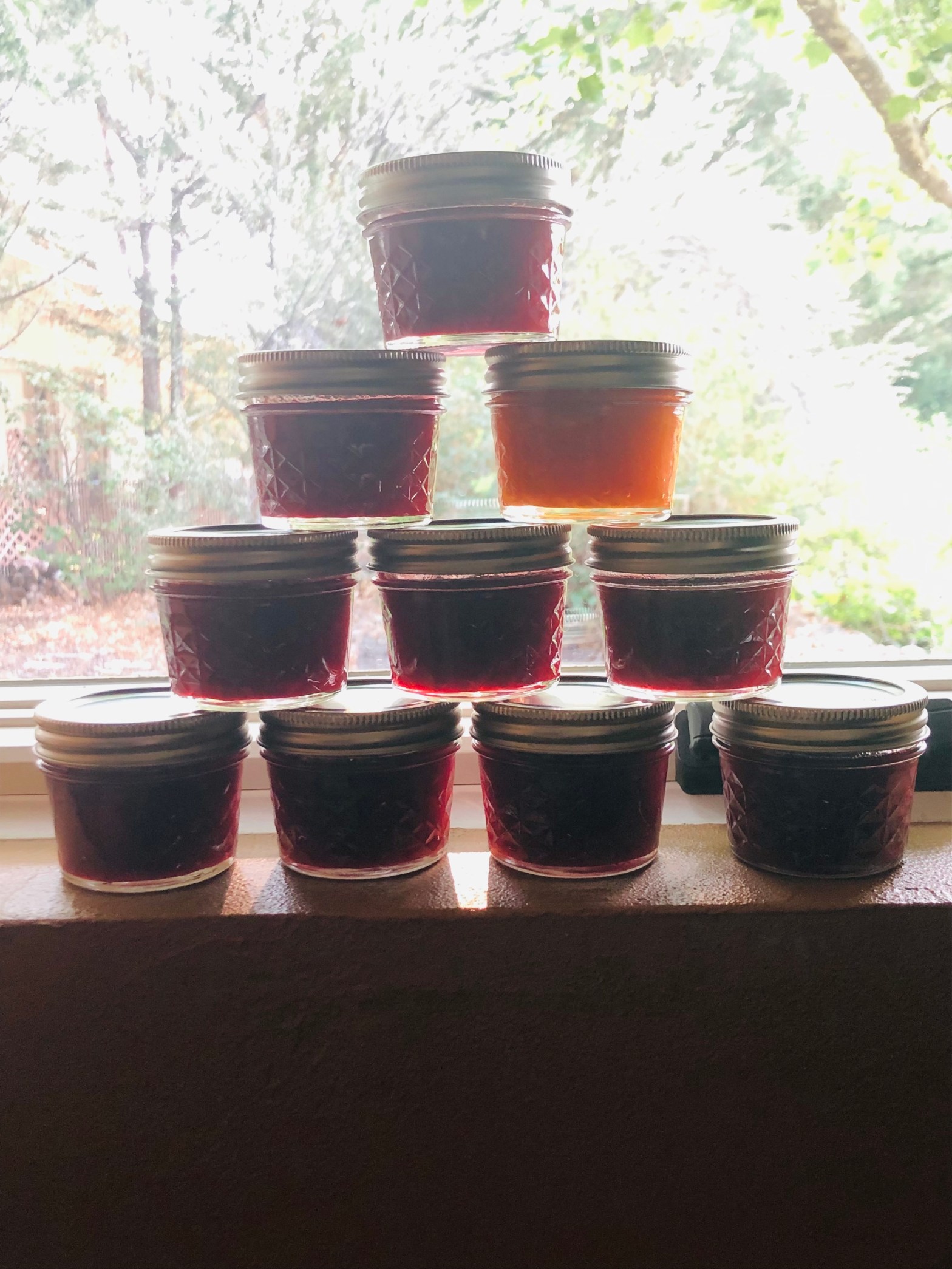
Fast-forward 30 years or so, and wouldn’t you know it, I now relish the very task I hated as a kid. Except instead of canning my fruit, I make jam (with the exception of wine-poached pears, which are just too good to pass up, heated up in the winter and served with vanilla ice cream). It just couldn’t be easier for plums and apricots–you don’t even have to peel them. You just have to cut the stones out by your method of choice, weigh the pulp, and add about half to 2/3 of that weight in sugar (and about 1 tsp of lemon juice for every 400g of apricots to keep them from turning brown on you; I also add a tiny bit of orange flower water because it plays nicely with the apricot flavor). Then, you boil that mix down on medium heat until it gels a bit (turn it down to low as it starts to get thick and stir often to prevent burning). Since I don’t add pectin, I do the old-fashioned plate-in-the-freezer gel test, but you’ll get an eye for the consistency you like after a couple batches–big bubbles, slow to pop. Then, ladle into hot, sanitized jars, cap, and process in a boiling water bath according to the instructions that come with the canning jars. That’s it. I can usually do a batch in an hour, start to finish, including sanitizing my equipment (I boil jars, lids, funnel, and ladle in the same water bath I use to can the finished jars to save time, but you can use the sanitize cycle in your dishwasher with no soap as well). I find 1200g of (pitted) fruit will yield a little more than 6 cups of jam, and I like to put some up in little 1/2 cup jars to give as gifts at the holidays–but only to people I really like. Summer in a jar is a precious commodity.
P.S. You can also turn any apples you can’t eat–including mushy grocery-store apples–into apple butter. I use this recipe and put the steamed apples through my food mill to remove the peels before continuing with the butter reduction; and, I use five-spice powder instead of the spice mix Amy + Jacky use.
 The Rookery
One thought on “Summer in a Jar”